 Messed!Up
Sweden’s reputation for indie rock superiority has spanned decades, and it continues to deliver new great acts every year. Critically acclaimed Pale Honey are however far from being newcomers on the scene and their self-titled debut album in 2015 caught the attention of several prominent music websites, including Consequence of Sound, Stereogum and Clash.
Ahead of their debut show at the Roskilde Festival in Denmark, Messed!Up sat down with Nelly and Tuva to talk about recording a third album, the endless comparisons to female bands in general and PJ Harvey in particular, and about being raised on the Gothenburg scene, famous for its production of well-known Swedish bands and artists.
Gothenburg-based duo Pale Honey make minimalist rock but branches out in terms of sounds and structure of their songs, and have been hailed by the major music magazines around the world for their self-titled debut album. In 2017 they released their second album “Devotion”, taking the minimalistic rock to a new level of simplicity, and won the Manifest Awards for best song writers alongside being nominated to Best Rock/Metal and Best Band at P3 Guld Awards.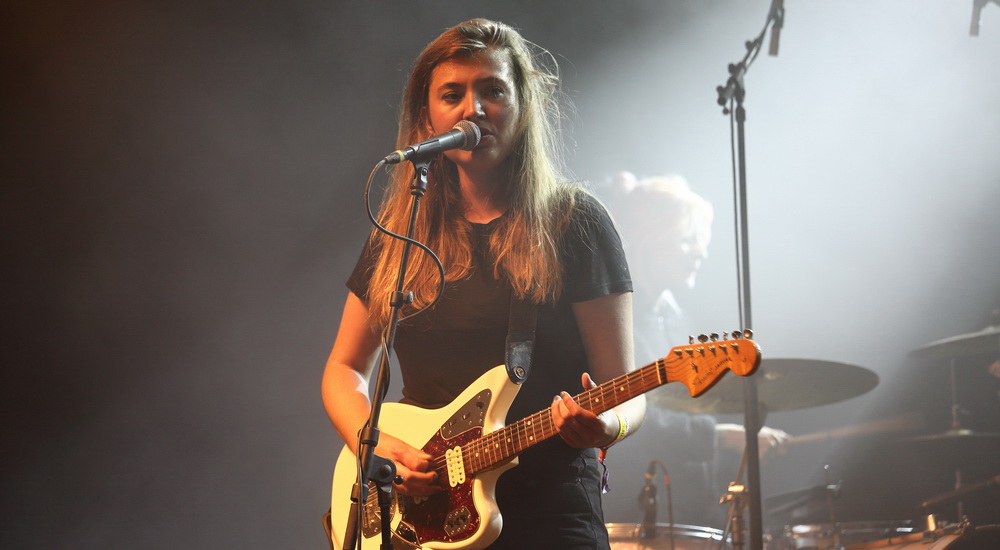
After an initial misunderstanding about the meeting spot and long run across the whole festival area, we finally sit down with Nelly and Tuva who tell us about the development of the band since the release of their debut album in 2015.
Playful as Eagles of Death Metal
Describing the sound of Pale Honey is a tricky task. The musical references stretches from PJ Harvey to Queens of the Stone Age and Warpaint, with bits and pieces of The Cardigans 1990s sound. However, while some songs entail tentative synths and strings swelling and growing, creating an eerie atmosphere, others use guitars and punchy drums to create their key signature – minimalism in the concept of rock music.
Great to finally meet up with you! I’ve followed you since the release of your debut in 2015. Is this your first gig at the Roskilde Festival?
Tuva: Yes! I haven’t even been here before and really look forward to this.
You’re up for a rather big festival tour in Scandinavia this summer and will play, for instance, the Way Out West Festival and Popaganda. How important are festivals for a band at your level compared to doing club tours?
Tuva: It’s a slightly different audience and many people who haven’t heard of us before. Most festivals promote bands by making Spotify lists, I usually listen to those before I go to festivals myself just to discover new bands. Being on those lists is of course a great opportunity for us, just to get people to our shows.
Nelly: Club shows follow a schedule and are organised in a different way than festivals. When I go to festivals I usually have something like three bands I want to see and then I usually listen to a few songs from four or five other bands on the Spotify list and often end up in “Bloody hell, this is really good, why haven’t I found this before!”.
To be picked up by the Roskilde Festival is amazing for us if you consider the size of the festival and all the people that come here.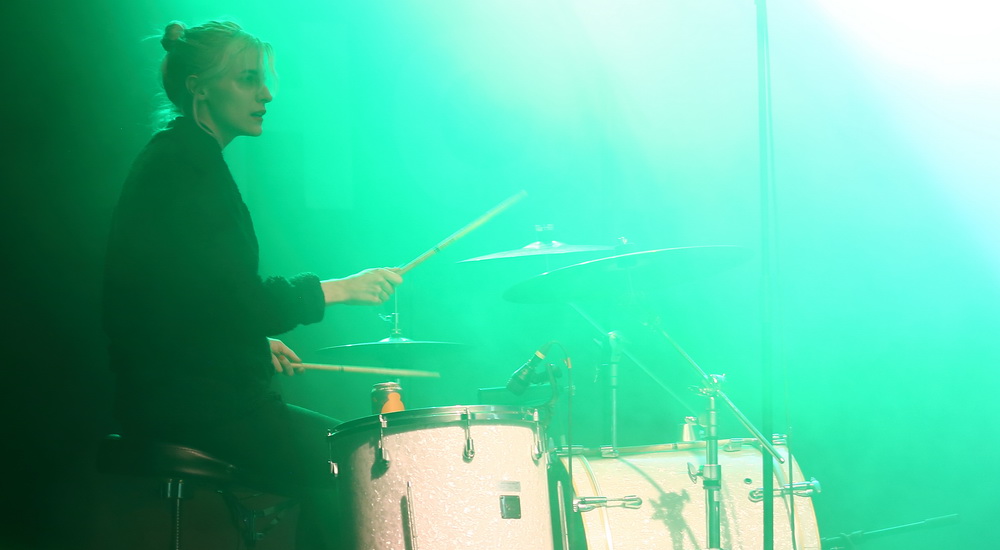
You have two records in your back catalogue, your self-titled debut in 2015 and ”Devotion” from last year, two albums that received amazingly good reviews in high profile music magazines as Stereogum, Consequence of Sound and Clash. But most critics point out your “minimalistic sound” or compare you to PJ Harvey, and I can’t really hear these references clearly myself, or maybe I have different interpretation of “minimalistic”? How would you describe your sound?
Tuva: If you ask me we’re really good at moving between genres although we have some sort of common theme in the music. Minimalistic; maybe at times but not always, but we may have a minimalistic way of thinking about music when we write new songs or lyrics, a simplicity such as playing on only one string on the guitar, I often play like that.
Nelly: And I really don’t play that many drum solos either (laugh).
Tuva: We’re getting into more and more rock music but everything isn’t rock like ”Why Do I Always Feel This Way”. On YouTube people write ”What the hell, is this rock?” and write stupid comments about it, but it isn’t rock music! However, other stuff we do is rock music.
After two successful records, several nominations to the P3 Guld Awards and the Manifest Awards and much attention among music critics, and much hype after supporting Iron & Wine, there might be some pressure when recording a third album. How do feel about the upcoming record?
Nelly: And don’t forget The Sounds! It’s insane since I listened to them when I grew up (laugh), and I had the opportunity to meet them!
Tuva: To be honest, I think we had quite much pressure already when we recorded the second record. The first record entailed songs we wrote as teenagers, at least most of them we wrote when we were fifteen, and my first thought was “Can we really do it in the same way this time?”. In the end I think the result was much better on the second album.
About the next album; I just feel like “I don’t give a damn if nobody likes it but we will think it’s our best album”, that’s how I feel when we work on it. If someone doesn’t feel good about that, fuck them (laugh).
Nelly: That’s my point as well. The first record was only about getting it out on the market and it was more like “Let it be like it is and don’t mind about the lyrics”.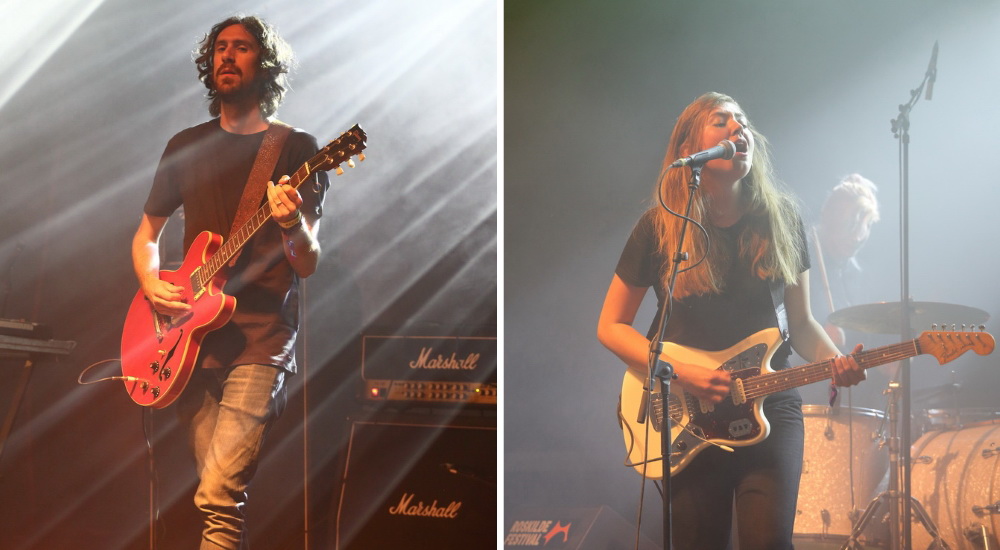
But how important are lyrics today?
Tuva: On the second record they were really important, on the first we didn’t care that much. We were only fifteen when we wrote most of the songs to the first album (laugh).
Nelly: We went into the studio and just made something up; ”How’s the melody? Yeah, I feel happy, let’s right some lyrics about it” (laugh), but we really didn’t understand or had the confidence to change anything back then. When we recorded the second album we put loads of effort in working with the lyrics.
I experienced quite much external pressure as well, especially from our record label and felt like ”This record needs to be awesome, we really need to work on it”. You don’t need to hear that, you understand it anyway, no one is as critical as yourself and you really don’t need someone else to put pressure on you. I just felt “Keep your mouth shut, we know how we want it to sound”.
Recording the third album will be easier because we are much more confident in our working methods and I’m sure it will end up in a bloody good record. And we do songs we like ourselves; if we don’t like them why would we put them on record or play them live?
I know that you are fans of stoner rock bands as Queens of the Stone Age and massive fans of Eagles of Death Metal. But your music sounds far from that. Where do you get the inspiration to create the characteristic sound of Pale Honey, and I don’t necessarily mean musical inspiration, rather life experiences?
Nelly: It’s a mix of a lot of things. Of course the basic inspiration is to have fun in the studio but it has also become a way to get things out of the system, to sort out thoughts in a “I have to sing this” way. It’s really important to put those thoughts on print.
But you need good harmonies to create a good song, harmonies to make you happy or that make you cry. That’s how it should be.
Tuva: And speaking of Eagles of Death Metal; I think they inspired us to use playfulness in our song writing. When we learned to know each other we listened quite much on them, Nelly introduced their music to me. It sounded dirty, noisy and a bit dark but you could feel how fun they must’ve had when doing those songs, especially “Miss Alissa”. They do all these simple things that makes it sound fun.
Your previous albums were recorded at different locations – Paris, Gothenburg and Stockholm. What are the pros and cons to record in another city than at home?
Tuva: It’s both good and bad. When we recorded the first album we travelled around a bit more and it becomes more intense when doing it like that, to only focus on writing songs. The recording process at the second album was spread out in time and we recorded some weeks and then had weeks off in between. When doing it like that you get time to reflect on what you’ve done and get new input to create new songs.
Nelly: When you take time off in between you actually realise that ”This song sucks” while you find another song much better and continue working on it instead. At the first album we only had old songs and just wanted to record them; on the second album we started out like “I have these pieces, what to do with it”.
But it’s really lots of pros and cons whatever process you choose; it’s intense to go to other cities and to make something good out of it, just like when we were in Paris and knew we only had three days to record the songs, that’s a lot of pressure. Wasn’t it the last day we were recording vocals and drums? [turning to Tuva]
I’m a self-taught drummer and can’t play drums in a professional drummer fashion and the technician said “Time to record the drums and you have to play to clicks”, and I said “I’ve never done it before!” (laugh). The guy just looked at me and said “We have a whole day for it but you have to make it in the end, can you play it in this way” and I was like “Absolutely not” (laugh).
Always being compared to female bands and artists
One of the topics when we met up with Rome Is Not A Town a few weeks ago was their experiences as female musicians on a male dominated scene. In Sweden the debate started off in inequalities in terms off getting equal pay or enjoy the same opportunities to play live as male musicians. Tori Amos wrote a chronicle about being a woman working in a man’s world, concluding that your gender is acknowledged constantly and ended the chronicle with ” ‘Woman’ Is Not a Genre”.
It pains me to make this into gender equality, but women must be given credit where credit is due, particularly in the context of a field historically dominated by men. The golden era of indie rock as embodied by four white dudes jamming in a basement, writing songs about their semi-depressed lives, is over, and that point of view no longer has the default relevance it once enjoyed. The “all-girl band” or “best female guitarist” qualifiers help no one; statements like, “Wow, you can really play guitar for a girl”, or, “You know, I don’t really like female drummers but you’re alright!” are downright patronizing. 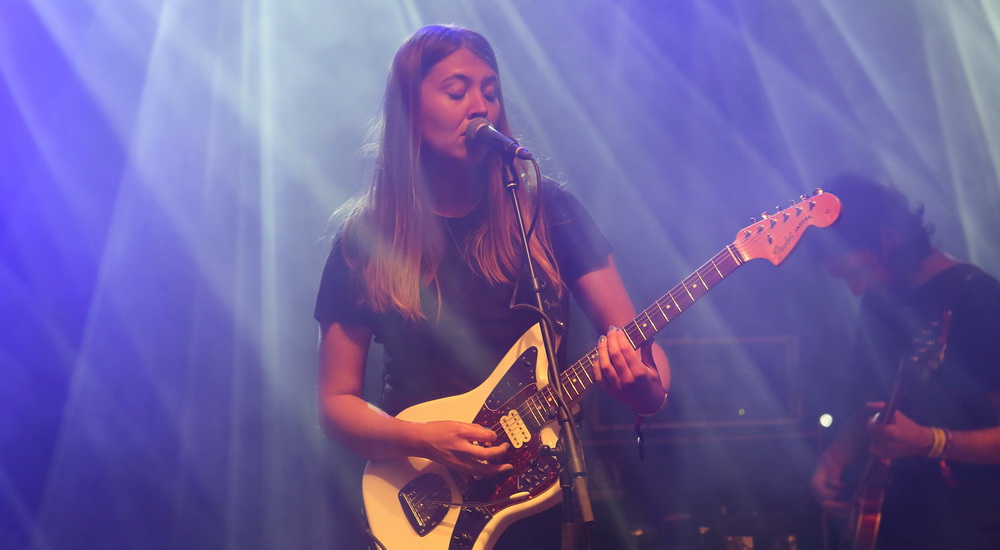
That said, the times are changing. There are more women in the game than ever before, infusing rock with perspectives outside the white male default. More importantly, they’re flooding rock with great songs. At the same time, the rock community needs to be aware that it’s going to take a lot of work to achieve true equality. Nelly and Tuva share their experiences of gender equality in music, starting off in the neverending comparison to female bands and artists in general and PJ Harvey in particular.
The PJ Harvey reference seems to turn up quite often. How do you feel about it, in particular to always be compared to female artists and musicians?
Nelly: Of course it’s great comparison but it’s also a classic one, to be compared to other female artists. That’s what happens when a woman sings and plays guitar. Stupid.
Tuva: And there is quite a few of those female artists as PJ Harvey, Björk and a few others, and considering our music they [critics] just pick the PJ Harvey reference since we sound more like her than the others.
But is it typical for female musicians to be compared to other female musicians?
Tuva: Of course! Have you ever heard of male band being compared to female bands?
Nelly: Critics seem to think that if there’s a female voice on the songs you have to be compared to female bands and artists.
It’s interesting because we interviewed Rome Is Not A Town a few weeks ago and they shared experiences on similar problems but also added that you’re not being trusted in how to handle equipment and technical stuff when you arrive at the venue for soundcheck because you’re a woman. What’s your take on that based on what you have experienced so far?
Tuva: My experience at this point is rather the opposite, that women in music are spotlighted which I feel is really good of course, and it should be like that. On the other hand, I don’t want to be booked for festivals and gigs just because I’m a woman. It’s really difficult to deal with at times; on one hand I don’t want to be on stage and feel I’m there to fill a quota, on the other it’s necessary when you consider how it works out.
Nelly: It’s good that people start to think about the problem, to challenge the norms. Just take an example based on my rock influences, it’s often like “There’s just a few women in rock music and those who play – are they even good?”. Of course, when there’s loads of men playing rock music there will be quite many more good male rock bands and musicians but what people don’t understand is that there’s loads of crappy male bands as well, they just don’t get that part of it.
I remember in the beginning of Pale Honey when we played these music competitions and went through to the second round and people said, often these stupid dudes, “They just went through to the next round because they’re girls”. But it’s different now, a complete change actually. Organisers and bookers are much more conscious about the ongoing debate and are careful about how to behave.
Tuva: But we need more women in other parts of the music industry as well, not only among artists, maybe even more in those parts since they make the decisions that affect musicians.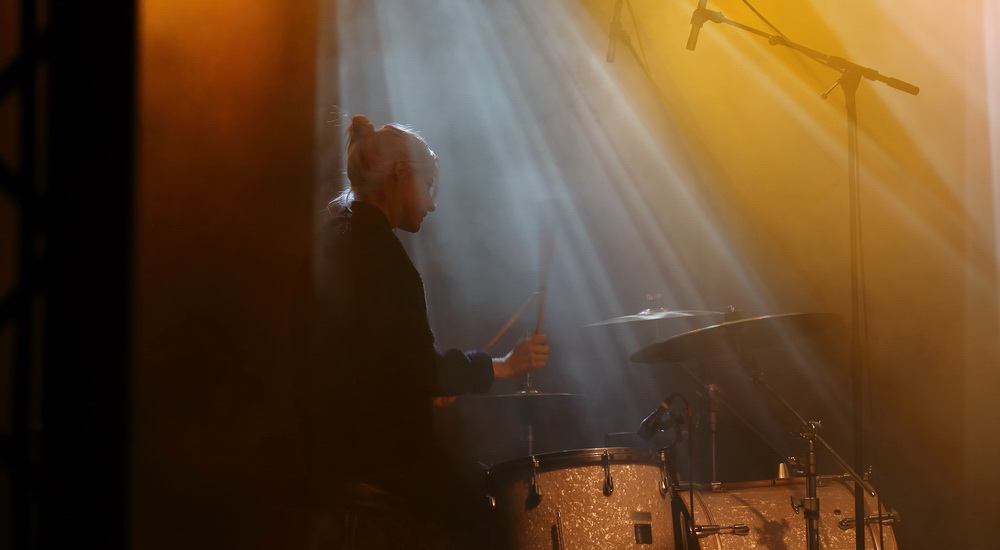
But what do you think need to happen?
Nelly: Let’s say you try to get 50/50 on the line-up for a festival but also do it with technicians and everyone else working at the festival. If there’s only one female sound technician and she lives in Skellefteå [far up in the north of Sweden], fly her in for God’s sake! (laugh). I don’t only want to work with dudes.
(The interview takes a temporary break because of two drunk dudes trying to hit each other’s naked asses with a football just next to Pale Honey, just to confirm that dudes are not always in the front line of the evolutionary process)
Tuva: Exactly, to have it as a goal, a complete 50/50 share at the festival in general.
Nelly: Of course it’s difficult to make it happen but why not ask all those women that wait for someone to ask them about a job, they are quite many! If we could pay on our own thus making the decisions on whom will work with us, we would have used more women.
Never move to Stockholm
The Gothenburg music scene has been praised in international press several times for its astonishing ability to produce a neverending stream of new, interesting bands and artists as Pale Honey. It’s an eclectic mix that entails heavy metal, experimental electronic music, and laid-back progressive rock. Acts like metal bands In Flames, At The Gates, or Hammerfall put Gothenburg on the rock map; electronic music wizards The Knife, Fever Ray or Anna von Hausswolff; singer/songwriters Jens Lekman and José González; or progressive rock bands as Union Carbide Production, or Soundtrack of Our Lives. Or how about a great punk scene in general.
However, as in most cities with major in-migration from the countryside due to concentrated labor markets, there is a pressing need to build new residential areas – and those areas often collide with the interests of the local music scene.
Since Gothenburg is where I have my origin I’m always interested to talk about the local scene because it has produced many great Swedish bands over the years – Håkan Hellström, In Flames and everything that has a connection to Karin Dreijer, to mention a few. Is it still a good scene for creating new Swedish acts?
Tuva: I would say so if you consider that there’s quite many venues to play. It’s ten years since we started, when we were eighteen, and back then we played Henriksberg and Sticky Fingers. But maybe new bands don’t want to play those venues today (laugh).
Nelly: But we played quite much at youth clubs as well and took every chance we got.
Tuva: Oceanen is another great venue, some sort of a tiny Pustervik. It’s always great bands and lots of people going there, maybe a bit away from all other venues and not always the best listening experience but they put much effort in being a cultural centre. If you want to play in Gothenburg, there are many opportunities.
But I’ve also heard about clubs being shut down or need to move because of new residential areas.
Tuva: What’s happening with Trucken [Truckstop Alaska, a venue] is really, really sad, and it’s a similar problem with studios as well.
Nelly: We had to leave our studio last year because of new apartments being built in the area and it was really tough to find a new. But this is the case, politicians really don’t care that Gothenburg has produced many bands that made Gothenburg famous for its music scene, they just don’t give a shit about it.
Tuva: Politicians are very proud about Gothenburg being a ”City of culture” and then they only support these massive arena shows. I really don’t think that is what people in Gothenburg want, Truckstop being the best example of it.
Nelly: If Gothenburg wants to keep its status as a music city they really need to support venues as Truckstop and keep the studios for young bands. I can’t really see a conflict in building new apartments and integrate them with new studios and venues for bands, but it’s just not a priority.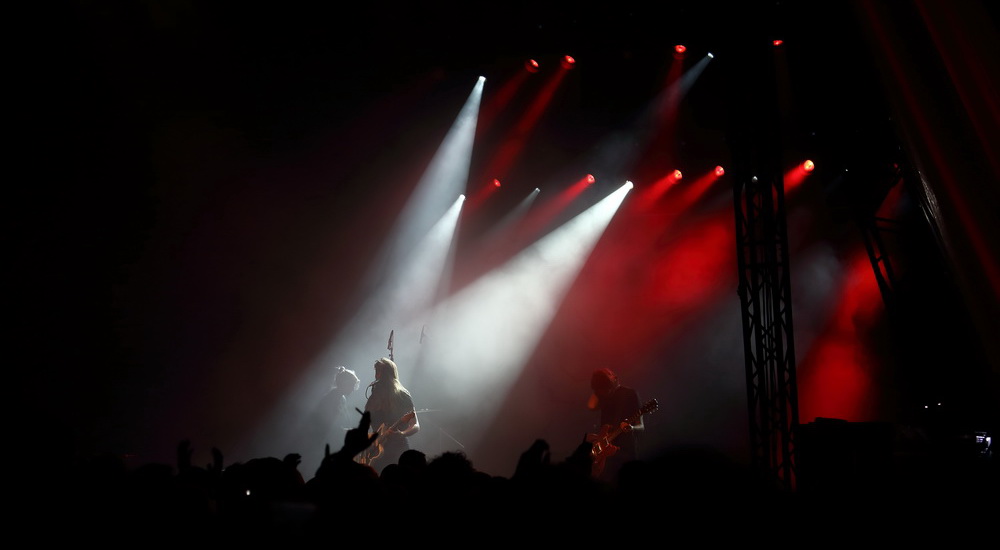
Everything you’ve done so far have ended up quite successful, are you going to stay in Gothenburg in the future or do you have to move to a bigger city to take the next step on the ladder?
Nelly: I’m not moving anywhere else in Sweden although many people tell us to move to Stockholm, but it’s not going to happen. I can’t stand that kind of superficial attitudes you meet there.
Tuva: Hell no! It’s not going to happen!. It’s not really a scene for rock music either, it’s a scene for money.
Last but not least since you need to eat before the show; what’s your expectation for tonight?
Tuva: Madness and sweaty people in the crowd!
Nelly: It’s a great atmosphere here and quite many have already come but I for sure don’t want to see more naked male butts. And please guys, don’t fucking pee everywhere. I really love Denmark but I also appreciate less public peeing (laugh).
Photographer, concert: ©Henric Karlsson
The interview is also published in partner magazine Drefvet (in Swedish)
Pale Honey pages


Messed!Up recommends
