 Messed!Up
Signed by cult label Startracks and on Thurstons Moore’s NME list of the five most underrated bands already after the release of their debut single “Stupid”, the boisterous indie rock four-piece Rome Is Not A Town from Gothenburg have gained much media attention for their dirty, shoegazy sound and cocky attitudes on stage.
Messed!Up caught up with Kajsa, Susanna, Caroline and Emma in Hamburg before their show at Nochtwache, about the dying Gothenburg scene, being disrespected by dudes in the music biz and why the play pranks on Dolores Haze in their latest video “I’m In A Brand”.
There aren’t very many bands that start their career being praised by a music icon. Post punk/noise rock giant Thurston Moore, the founding member of Sonic Youth, discovered Rome Is Not A Town after the band asked his daughter Coco Moore to contribute with pieces of her art on the sleeve-work to their debut single “Stupid” in 2015, a collaboration ending up in being mentioned in NME a few weeks later as “one of the most underrated bands today”.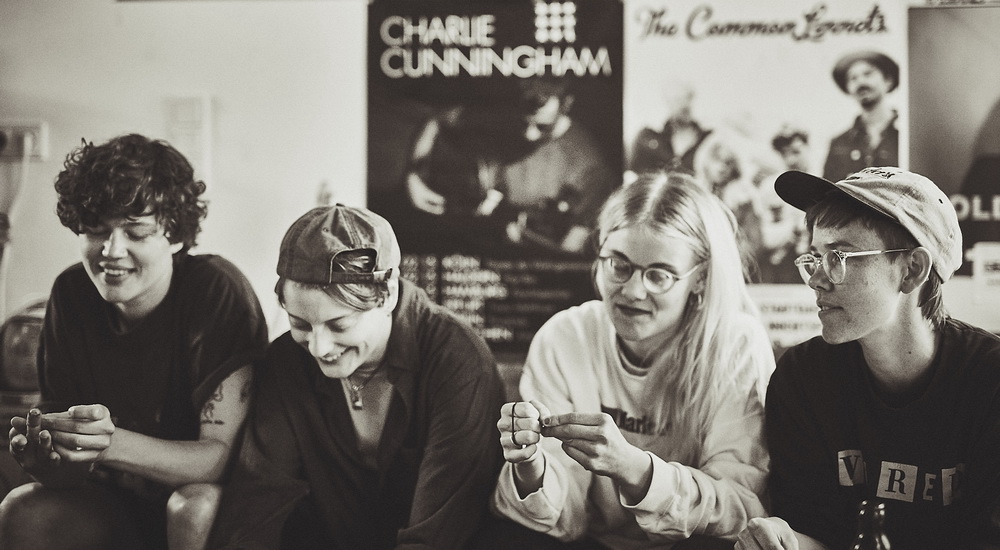
All ways to fandom are good ways and a year later they released the EP “Careful Like You Cared” leading to double nominations on the Gaffa Awards, and yet another year later the Swedish four-piece delivered a stunning debut album, “It’s a Dare” followed by three nominations on the Gaffa Awards.
In 1988 Sonic Youth proved with “Daydream Nation” that you can sell lots of records with making noise, and so almost every major company wanted to sign them. Having the Thurston Moore connection, initially through Coco Moore and later as a support act to Thurston when he played Sweden, there’s no reason why this can’t come true for Rome Is Not A Town. However, although they’ve been a band for a while it took quite a time before they actually ended up playing in a studio together for the first time.
That kind of band that started by hanging out together
Great to meet someone from my hometown of Gothenburg – welcome to Hamburg! The mini-tour started in Gothenburg last Saturday and tonight is the first of eight shows in Germany. You’ve also played South by South West (SXSW) earlier this year. How does it feel to be in Rome Is Not A Town at the moment?
There’s a great harmony in the band at the moment. Sure, we’ve had some intense periods meaning that it’s tough at times but we have managed it really well and organized it fairly good with rehearsal periods, gigs, shared responsibilities and everything else surrounding the band. Susanna lives in Stockholm which makes it kind of natural to plan things, and we manage to avoid the tension that easily arises from being together too much.
What does it mean to be on Startracks, a label with a really strong artist roster if you consider bands as Refused and Fireside?
Mostly it means something when people connect us to the scene that was in the beginning of the label history and they think ”Now it’s happening again, here’s the new wave of Startracks with new bands leading the way to a new era of fame and glory”.
And does it feel that you’re taking the lead in this new wave of bands from Startracks?
Let’s hope that it is like that, it’s now or never (laugh)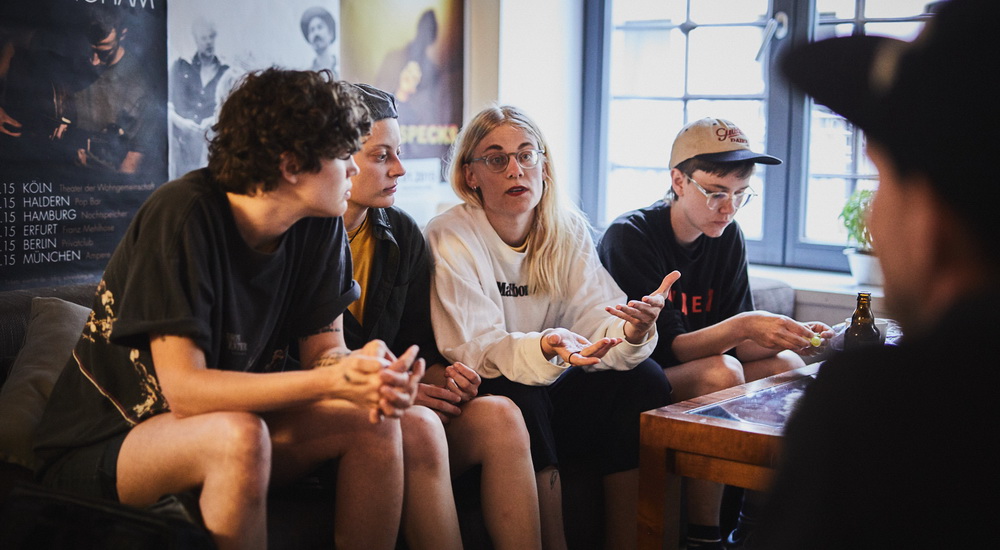
Although you’re a new band on the scene you have quite amuch experience of playing in other bands. When did Rome Is Not A Town become the band, the priority, and not just a side project to other bands?
We were a band quite long before we even walked into the studio for a first session, that kind of band that is started when you meet up on a club and have fun together but didn’t actually played together at all. We knew each other but not that well, just hanged out at the same places but nothing happened for a very long time. Then we ended up at the same concert and just said “We have to get together in the studio”, and that’s how it started (laugh).
And now Rome Is Not A Town is the priority?
It’s different depending of whom of us you talk to but at least it’s some kind of a priority. It’s now we’re going to split up because of this discussion (laugh).
But it’s fun to do what you like, and although you’re not going to stop with other projects this takes some time from the side projects, that’s just how it is.
For some reason it feels that all the attention just happened by chance through this connection with Thurston Moore’s daughter. What’s your take on that?
We were about to release our first single and needed a cover and were under lots of time pressure, and we discussed how the cover should look like and who were going to do it. We just had one simple idea, that it should be some sort of art but we had different opinions on who to refer to, and she [Coco Moore] ended up at the top of our list. We contacted her, she replied – it’s not more than that! And with that came the Thurston Moore comment in NME (laugh).
It’s awesome to be compared to Sonic Youth but the initial reference is not from our music, it’s because of Coco’s sleeve-work.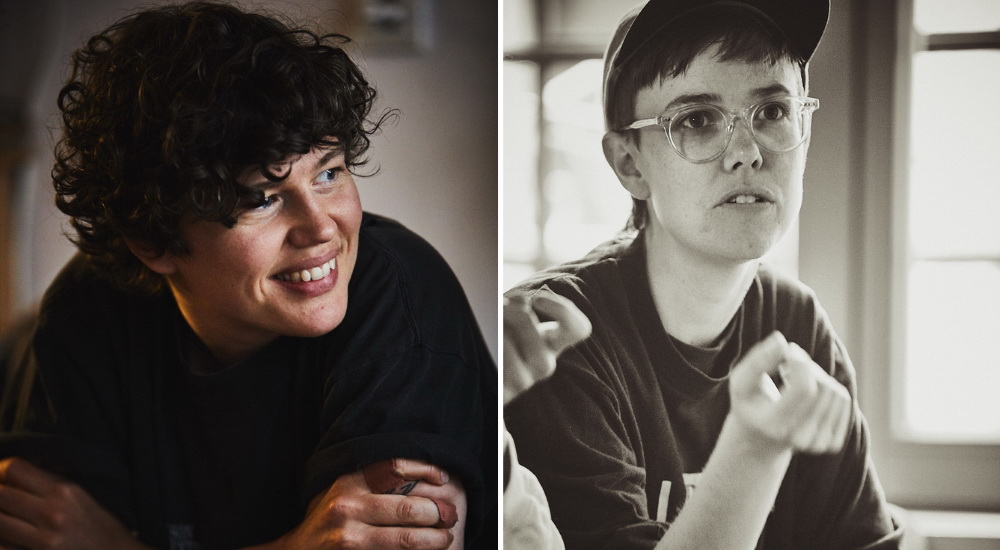
“We’ll never use a drum machine”
Musically Rome Is Not A Town don’t offer any compromises. Dissonant and noise-laden song structures with distorted and raw guitar playing are key signatures and it doesn’t become repetitive or boring, rather it sounds as something made at dirty rock clubs among people with dubious criminal records – above all, it’s genuine, authentic and everything that has not gone through thousands of studio filters sounding overproduced. The point is where bands as Sonic Youth, if we stick to the Thurston Moore connection, have crushingly loud guitars that make noises you don’t always hear guitars make, RINAT always have a hook, something that makes it possible to catch on to melodies in their songs.
Working with producers Olle Björk and Per Ståhlberg, known for their punk rock productions, the ambition is to use even more guitars in the future – and absolutely not involve electronics such as drum machines. It’s also in this “cockiness” of not following any rules for song structures they unravel their hilarious sense of humor and engagement in shenanigans, involving Dolores Haze.
Already from the start and the EP ”Careful Like You Cared”, and in particular after your gig at the Gaffa Awards, I could see many references to a band as Savages, not because it’s a band of female musicians rather because of the same dirty sound and cocky attitude on stage. You have also often been compared to Sonic Youth ever since Thurston Moore highlighted you on radio. But where do you get the inspiration to your sound?
You know, we were at this Savages show a few years ago and it was awesome, and some of us had that kind of moment when you start to cry. But we all listen to quite different music. I [Emma] became really inspired about the bassist in Savages and how she moves on stage and the way she plays the bass.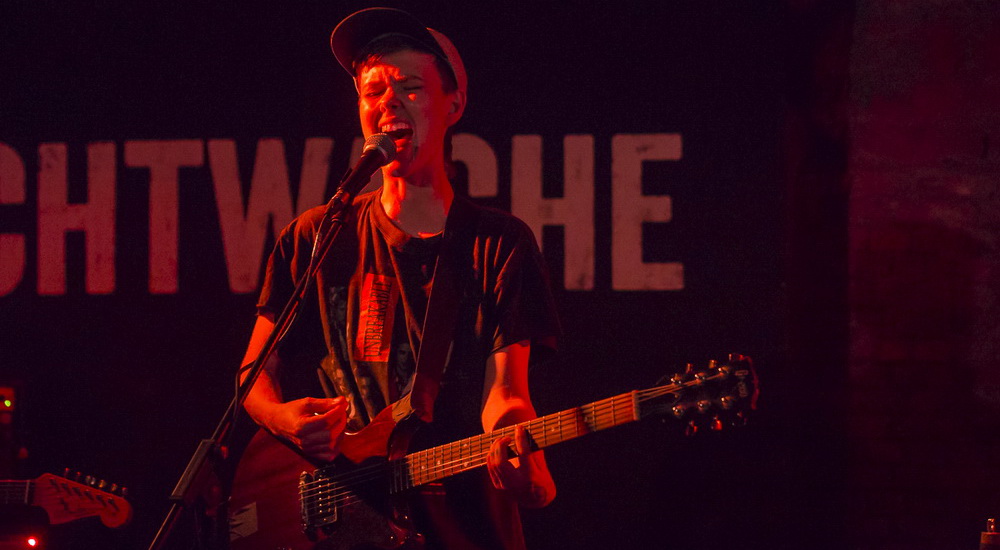
You recorded ”It’s a Dare” at Welfare studios with co-producers Olle Björk and Per Ståhlberg, with a background in punk rock acts as Division of Laura Lee and Pablo Matisse. How much have they influenced your sound?
They were involved both on the EP and the album and have been our sound technicians and producers but together with us, the sound is our own. But of course, they’ve made the process easier but got paid for it and did their job (laugh).
The sound has to change when you play together and want to explore new things, that’s what motivates you. Our sound has continuously changed since we started and is a melting pot of our different musical backgrounds and influences – and it was quite a mess in the beginning. You can see us as Radiohead who started at one point and just experimented with their sound. Who knows, maybe we’ll do an electronic record in ten years.
And that will make you go in a different direction on the next album?
No no no, there won’t be any synthesizers (laugh), we want more guitars! I can promise you that we’ll never use a drum machine in any of our songs, it’s a disease (laugh). But that’s what brings us together, that music should be played live. Of course you can play music in many different ways and you can probably do great drum machine music but that’s not for us, we do something completely different.
It’s about the energy between us, in the studio and on the stage, that’s the bottom line of it. But the sound will be different; just destroy your amp, buy a new one and you will get a different sound (laugh).
You also made a great video to ”I’m In A Brand” which could be interpreted as an hilarious prank on the Dolores Haze’s sleeve-work to ”The Haze Is Forever”. What’s the idea behind the video?
(jumping around and screaming beyond the allowed decibel limit)
Finally! You’re the first who asked us about it! Suddenly it happens, gold medal to you! Where’s the champagne? If we had some kind of prize with us you would get it!
We did it out of love! There were many different ideas and we thought “Why not make fun of things”. It’s so boring to play rock music and just use references to rock dudes and we thought “Which great rock bands do we have in Sweden which are not dudes”, and Dolores Haze are one of those so we decided to go for it. That cover is awesome and became kind of their tag. But no one has reacted on it until now and we have really waited for it! No one probably dared to ask us because it would sound like “Didn’t you have any ideas on your own”.
In the nineties they had babies in pools, like Nirvana did, and we wanted to find a similar theme but different.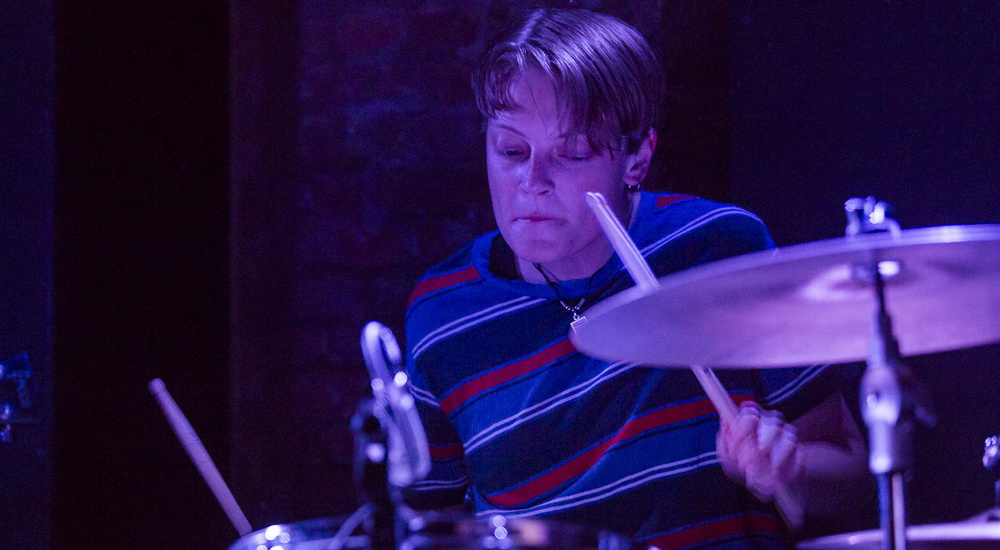
Gender equality in the music biz?
Women’s difficulties breaking into the music business are well documented; in a study by Dr. Stacy L. Smith it is demonstrated that across six years in the pop charts, females only account for 22% of all artists, 12% of songwriters were women and only 2% of all producers are women in the overall popular music culture. The UK music industry association SoundGirls doing studies of the overall music industry, not only considering musicians but also sound engineers, technicians, label staff etc. working in the business, also show that more than two-thirds of the live music acts performing in the UK will feature no women on stage. And then we don’t have space enough in this article to start a discussion on the 49% gender pay gap between men and women in the music business.
In my role as a music researcher I’ve met too many female musicians sharing anecdotes of the frustrations and vulnerabilities they’ve felt as artists with one of them saying that “If you prevent women from seeing any examples of them achieving, then it prevents them from believing they can achieve it […] If you’re underrepresented in an industry, you’re going to feel like you have less reason to put yourself forward or less chance of getting support”.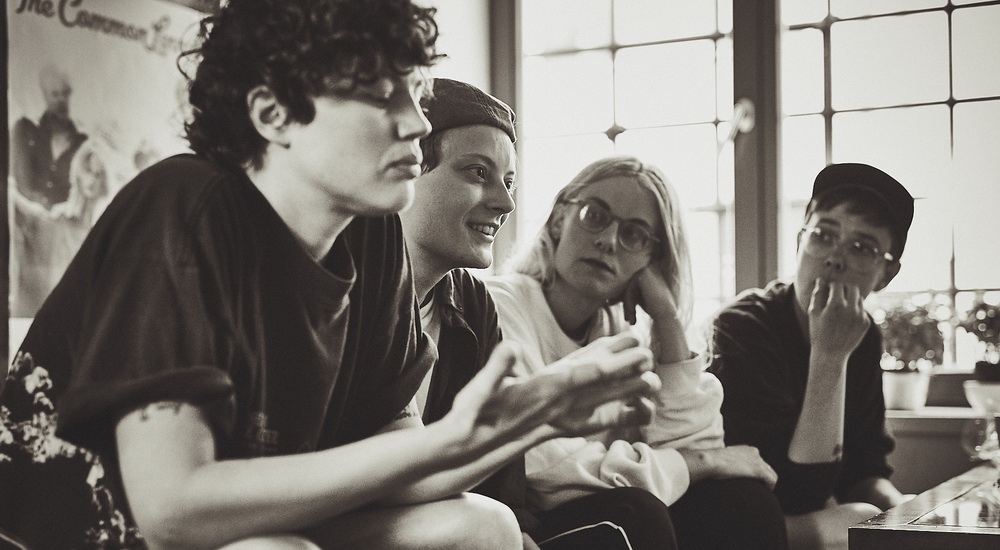
For a four-piece band of female musicians as Rome Is Not A Town, struggling hard to make it on their own, and it’s fair to say that they’ve made it better than most bands at the same level so far, the everyday encounters with the male dominated music business can be frustrating, in particular the treatment they will encounter at venues and the common assumption that women have no knowledge of instruments or equipment.
When I was a music researcher we had this huge debate in Sweden about female musicians and bands having to work really hard to get stage time on clubs and festivals, and same payment for gigs as male musicians. That was a few years ago though. Have you seen any change after this debate and those organizations that was created to support female musicians in Sweden?
At least it’s a bloody up-to-date topic and everyone is talking about it so for that reason it’s good, but concerning female bands it’s difficult to say. There’s rather a feeling that everything new and interesting in music is created by bands who are not men, at least in terms of organic music. We haven’t had any role models or a plan to follow and since we need to work much harder it will be a much better end result. But of course, it’s not good that we should have to work harder for it.
In fact, we can’t give you a proper answer on it, not more than commenting on what’s happening around us, but the process to change the system could of course be quicker.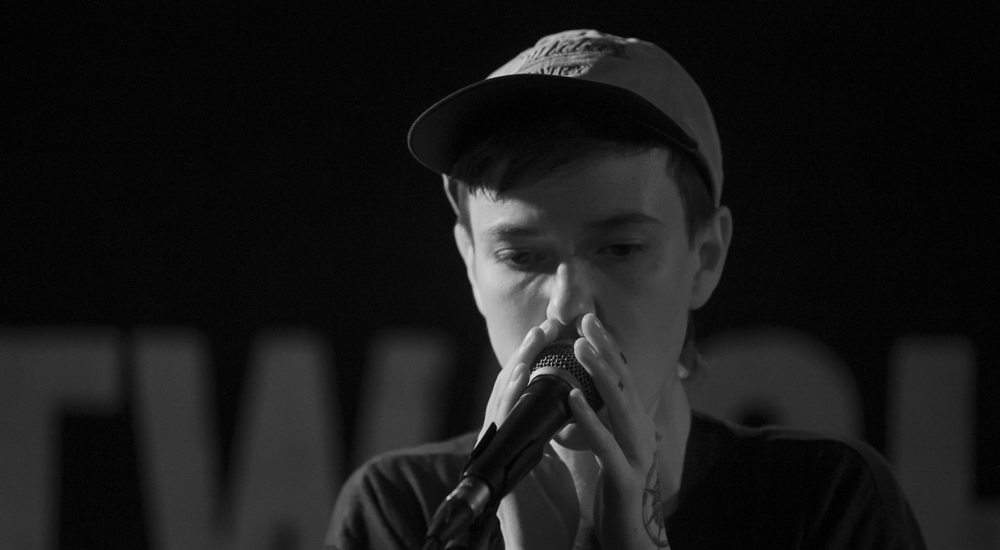
But what has to be done to improve female musicians’ opportunities to work as artists?
Everything! Everything can be much better! The whole scene is dominated by men and bands with female member have to get much more space. Just look at festivals; on paper it’s equally many women as men but the female acts are mostly solo artist, no bands, and for us it really sucks.
But it’s also about how you are treated at the venues, and that has been kind of tough. You don’t know how it will be when you arrive to a gig, if they trust your knowledge especially when it comes to technical things, and that’s always bloody boring. You have to restart the process every time there’s a dude behind the decks, but the Me Too movement has changed a few things. Today it feels like they [male sound technicians] think something like “Now I need to be careful to not say anything stupid or do anything wrong” when you meet, that’s the impression we get.
Sweden is known for their gender equality and may have come much further than other countries in how to treat men and women in the music business. Is it different abroad than on home turf?
It’s difficult to compare with another country when we only stay for a short while and don’t really have time to learn how different cultures work out.
The Gothenburg music scene is slowly fading away
Gothenburg have a worldwide reputation of being a hotbed of great metal and rock bands, and have delivered heavy rock acts as In Flames, The Haunted, Dark Tranquility, At the Gates and lots of more bands that together have founded the Gothenburg Sound. But it’s more to it. Gothenburg is also the home of many bigger Swedish pop, indie pop and indie rock acts such as Broder Daniel, The Knife, Ace of Base and The Soundtrack of Our Lives gaining much national and international attention.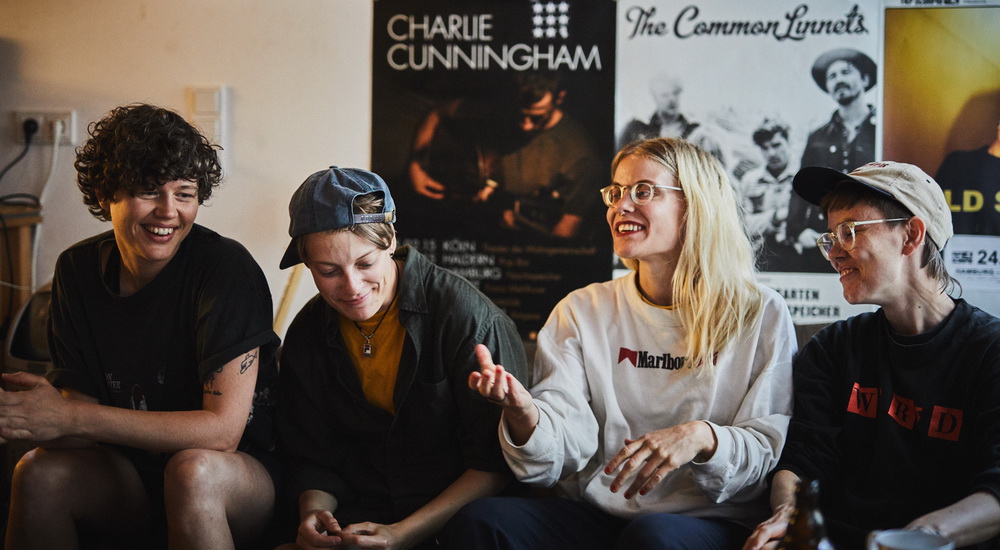
Despite these musical differences, what brings these bands and genres together is that they were brought to life during an era where rehearsal studios, smaller venues and local promoters were supported by the local politicians, thus creating a rich music culture. Today much have changed and as in many cities culture is affected by gentrification, sacrificing artistic meeting points for office spaces and new residential areas – and new residents don’t want to have musicians as neighbors.
As a Gothenburgian I remember a great music scene in Gothenburg but recently I’ve read that many clubs had to close down or have to move because they rebuild these areas with new and expensive apartments. How good is the live scene for bands like Rome Is Not A Town in Gothenburg today?
The Gothenburg scene is in some kind of transition at the moment and there is not enough clubs to play at. It’s just Pustervik and Oceanen left, and all those punk clubs you shouldn’t mention by name because they [local politicians] will close them down then.
But something must happen soon, there are loads of bands who need places to play and lots of people who want to see them play. In terms of venues, the scene is much smaller today although there are more bands. It’s so bloody boring that Gothenburg choose this type of development, not only concerning the bands, it also affects all those people who want to discover new bands. Today, all bands go to Plan B [club] in Malmö and then end up in Stockholm. For just a few years ago most small bands came to Gothenburg because there were venues for those bands to play and there was this feeling that you go to Gothenburg to find new and interesting bands, the next generation of festival headliners. If nothing happens soon, we won’t have that again in Gothenburg.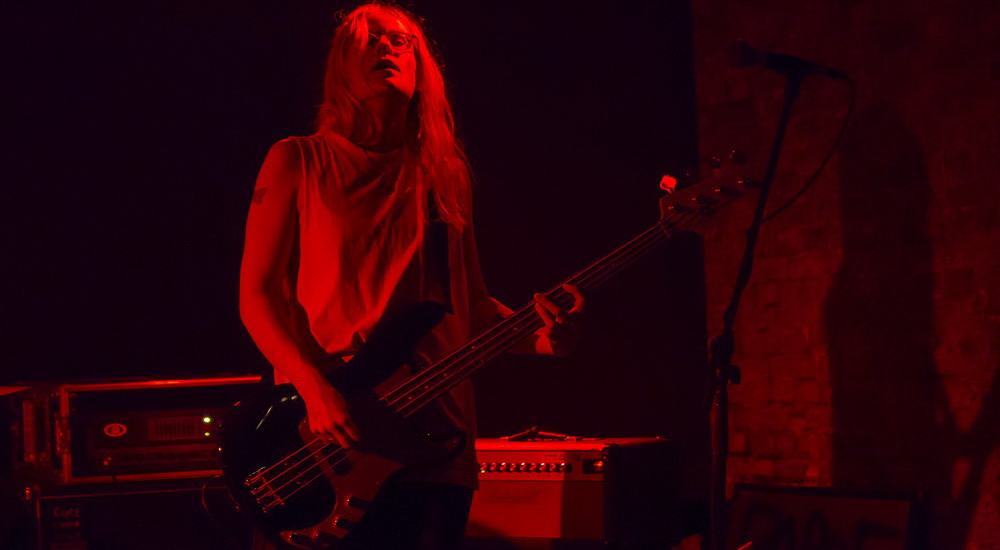
It’s also about finding inspiration; when a great band at our level plays Gothenburg, it’s inspirational for us. You don’t hang out with all bands at Pustervik, it’s too big and you will be at a distance from each other. The hope is that it starts to grow something under the surface which pops up and give birth to many new DIY scenes. It doesn’t matter if it’s industrial venues in the suburbs or in Kungssten [district in Gothenburg], or whatever it might be, it just needs to be done.
Quite many studios have closed down as well and you read at least once a month “We need to close down this studio and then that one”. We lost ours a few years ago when the city decided to build new luxury apartments which basically means pushing bands and people away. The new residents don’t want us there. This stupid idea of turning Gothenburg into an event city made politicians turned on to the idea of more arena shows and “unique” Håkan Hellström [major Swedish artist from Gothenburg] experiences. And they didn’t ask themselves “Where did Håkan Hellström play before he reached the arena level”.
It feels like Gothenburg city put all their effort into ”Let’s rebuild this city” with the idea of the event city only, just because of the 400th anniversary celebration in a few years. They actually believe that it will be a modern city but everything will turn out to be bloody boring and sad because they’ve destroyed the local culture.
But it’s also at this point you find hope, in the resistance to these changes. Usually the idea of “How do we solve this problem” turns up and you need to be extra creative to start new venues.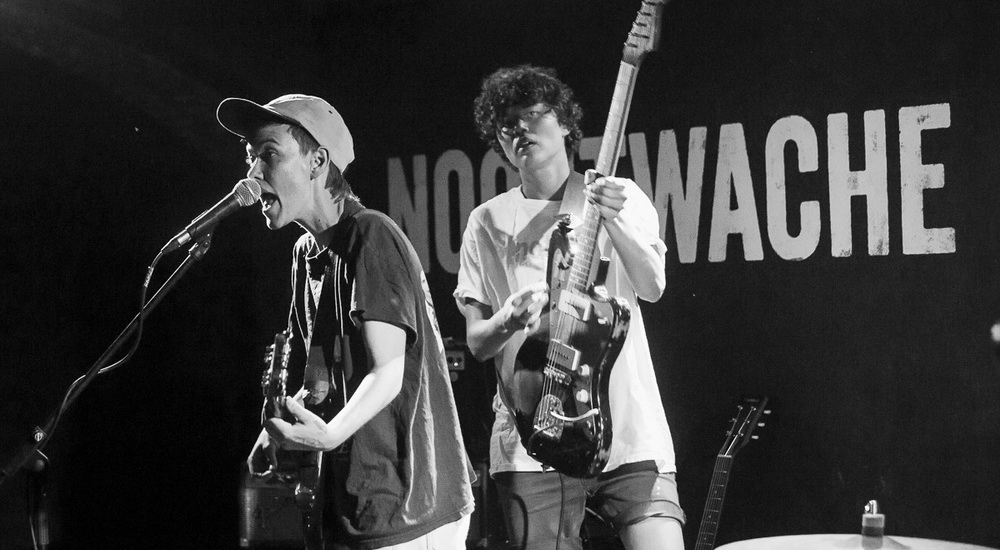
The difference from your last adventures in Europe is that you are the headliner this time, last time you supported Tiger Lou. How does this difference unfold?
You have to carry more things on your own (laugh). But it’s amazing to go on a headliner tour! Just to arrive with your car and have your own parking spot with our posters on it – that’s more than enough (laugh) – rather than going behind the tour bus with the main act, arriving and just say “Ok, we have to go to the hotel and park the car and then we’ll come back”. And hotel; it’s rather the cheapest Airbnb you could find.
For quite many reasons Swedish bands are popular in Germany, at least here in Hamburg. How is it with your fanbase in Germany?
Actually, it’s kind of difficult to know. There may just be one or two or three (laugh) tonight but at least it’s more than on the previous tour although it was a good tour.
What do you expect of tonight’s show?
A really good show with lots of friends and a good atmosphere. We don’t require much (laugh).
Photographer: © Julia Schwendner (interview) and © Mandy Privenau (concert)
Photo gallery
The interview is also published in partner magazine Drefvet (in Swedish)
Rome Is Not A Town pages


Messed!Up recommends
