 Messed!Up
In a current landscape so fertile with talent that there’s no need to look across the pond or down towards the big London smoke in search of the good stuff, The Dunts are yet another amazing act to prove that Glasgow keep their reputation across the world for its mighty music scene.
The first time out of the UK to play Molotow in Hamburg, Rab, Div, Colin and Kyle sat down with Messed!Up to talk about the Glasgow scene, their collabs with Johnny Madden of Baby Strange and world domination on the punk scene within three years.
*****
Glasgow is a hotbed for music and has delivered a wide range of international bands through the years as Franz Ferdinand, Mogwai, Primal Scream, Glasvegas, Baby Strange and The Twilight Sad just to mention a few.
Festivals in small spaces, indie record labels releasing some of the most interesting music around, local bands perfecting their art and everyday people organising shows purely for the love of music, is just a snippet of what makes Glasgow’s music scene one of the best in the world and highlights just why it has earned the credentials of Unesco City of Music.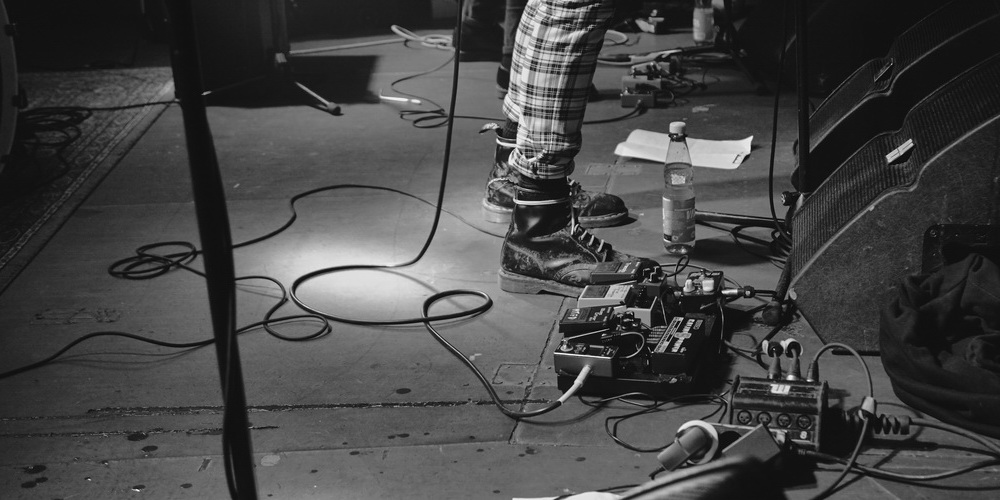
The four-piece The Dunts are another of Glasgow’s new breed of punk-fuelled indie rock acts burning up the scene. After a massive inaugural year as a band in 2017 and making friends with Johnny Madden of Baby Strange, they had their peak with the Madden-produced debut EP “Not Working Is Class”.
More than just a testament to the fertile environment that they’ve sprouted from, The Dunts should not be used as a demonstration of how good the Glasgow scene is but should be viewed on the basis of their own considerable merits. 2018 saw the arrival of singles “The Birds and the Beez” and “Witch Hunt”, both ending up on their second EP “Self Proclaimed Council Punk” released in September [not released at the time of the interview].
And if you ask the lads themselves, it’s all about the amazing Glasgow music community and the talents of producers Johnny Madden and Chris Marshall.
Feeding off the Glasgow community
Welcome to Hamburg! This is the first time you’re out of the UK?
Yes, it’s first time out of the UK. Molotow just emailed us asking if we want to come play and were like “Of course” (laughs).
We were going to try to organize our own shows just to justify driving through the UK doing parties and stuff on the way but all of them fell through so we ended up with this, the only one that was still happening and we’re just doing this one.
When we first got the offer from Molotow we didn’t have a booking agent and we would have had to try to book all the other gigs ourselves – we got a booking agent now – and it was probably a bit late to organize more shows.
You’re yet another of these amazing bands coming from Glasgow and I grew up listening to many bands from there, as Mogwai, Primal Scream, Glasvegas, but also newer bands like Baby Strange. How do you explain the creativity on the Glasgow scene?
It’s funny because we know most of the bands, we’re all really good friends and have a really good community, and nobody is jealous of each other, no competition, just friendly. So all the newer bands you listen to probably have something to do with our friends.
Meaning that the Glasgow community is good at supporting new bands and push bands as you into the spotlight? We’ve interviewed of few new bands from there as well, like The Ninth Wave.
Yes, we know them well! Haydn, the lead singer, was telling me about this place.
We all help each other out and wear other bands’ t-shirts and stuff like that, and we’re trying to push each other as much as possible.
But is any of the older bands still involved in local music scene?
Not that old, and Mogwai is mainly post-rock and still going, but our scene is more about some kind of punk scene. Baby Strange are probably the original band for everyone of us and the reason for all us being in a band.
You did some kind of a mini tour during the spring, or let’s say single shows but quite many of them, I think it was about 15 shows all in all, and played both the Reading and Leeds festivals, and ended up at the Electric Fields festival.
We did something like five in a row, Scottish and English ones, and for the following two months it was probably fifteen or twenty more when the festival season started.
And Reading Festival; just to get to that point. We wanted to play that and we were joking about it like “Let’s play Reading and Leeds next year” but we didn’t know how to go about it and in the end we just got this email out of the blue and freaked out (laughs). We just got off a plane from our holidays and we got the mail and it was like [growling sounds], it was crazy! And of course it was an amazing experience.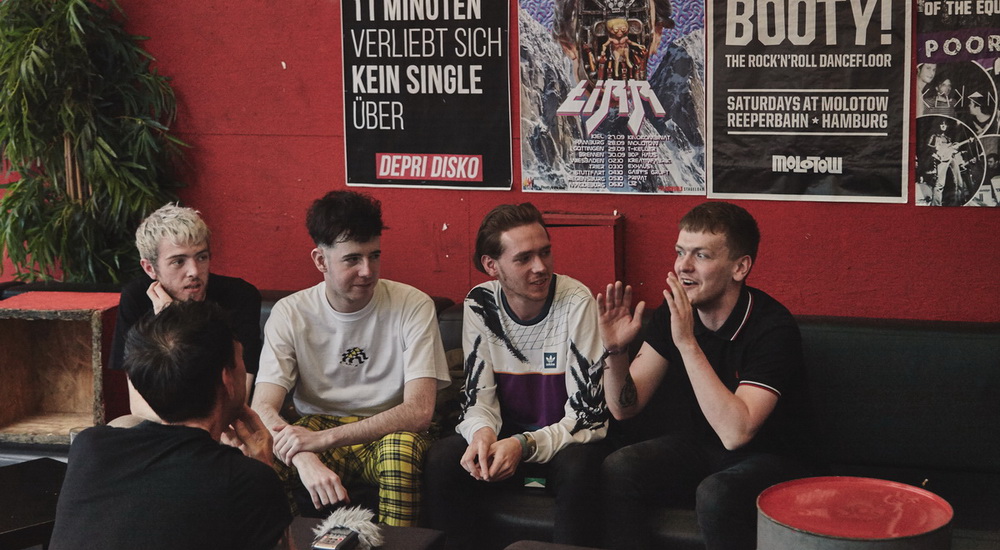
We have been working really hard on the set and tried to get the songs tight, and that gave us a chance to show what we’ve been working on, and we’re really glad to that chance because we wanted to show what we do live as well.
But after this year is over you’ve probably got passed 40 shows – that’s impressive! Don’t you get tired of going around every weekend? Or is playing live as much as possible how you reach new fans?
(laughs) When you say it like that, it sounds crazy, we never thought of it like that.
In the beginning that was the reason [playing many shows] and now when we started to get attention we can start to pick the shows and play the “right” shows. But definitely, when we started that was the mentality, to play anywhere anytime, and it seems to have worked for us and done a good job.
I know that Johnny Madden of Baby Strange, together with Chris Marshall, produced a few songs for you like one of this year’s singles “Birds And The Beez”. How did you meet up and started to work together?
All of the songs we have released have been done by Johnny, and we ended up with just by being friends.
We had a first gig that we played and we just put up an event of all of it so people could see, and just by chance he saw it. Then one of his friends contacted us about a gig and the next week he booked us to play Club Sabbath which is a pub he’s been running for a few years with Baby Strange. Just from that first night they all seemed really interested in what they could do of us and we ended up with Johnny Madden and Chris Marshall. And it was just such a good experience that we wouldn’t want to go anywhere else to record, not even if there would be a label.
We’re still going to take them with us! They’re like a part of the sound and how it was developed and are really involved in that, it’s the best combination with the two of them.
And he will be involved in your debut album as well?
Most definitely! We’re not really sure on what the specific terms will be, as to where we record it, but we know what we’ll be asking for when it comes to the staff on the album and it will be Chris Marshall and Johnny.
You’ve also gained quite a following because your many shows, do you feel pressured to finish your debut album to have something to hand out to your fans soon and get more gigs?
No, not really, and we will have enough after the next EP is coming [out at this point]. What we’ve kind of done now is that we wrote some new songs and we feel as soon as we get the EP out then we get the rest of the songs out we wrote ages ago so people can hear them for the first time. Then we can start to write a lot more, and that of course comes with a bit of pressure.
But we get gigs anyway; we played one gig at Stereo in Glasgow, which has a 300 to 400 capacity, and it was 14+, the first time we did a 14+ gig, so we didn’t realize that there would be all these fifteen to seventeen-year-olds who were listening to our music and it was just chaos and crazy when we got in (laughs). That was a pressure, but we always play well under that kind of pressure.
Hopefully it will be the same here tonight.
But you’re not signed to a label at this point? “Not Working Is Class” was released on Pulling Teeth Records but you’re not with them anymore?
We’re kind of had them as a distribution label but nothing more. Johnny Madden had an idea about releasing an EP or a physical on a tape cassette, just a niche thing but it’s just something when you get a physical copy of the record.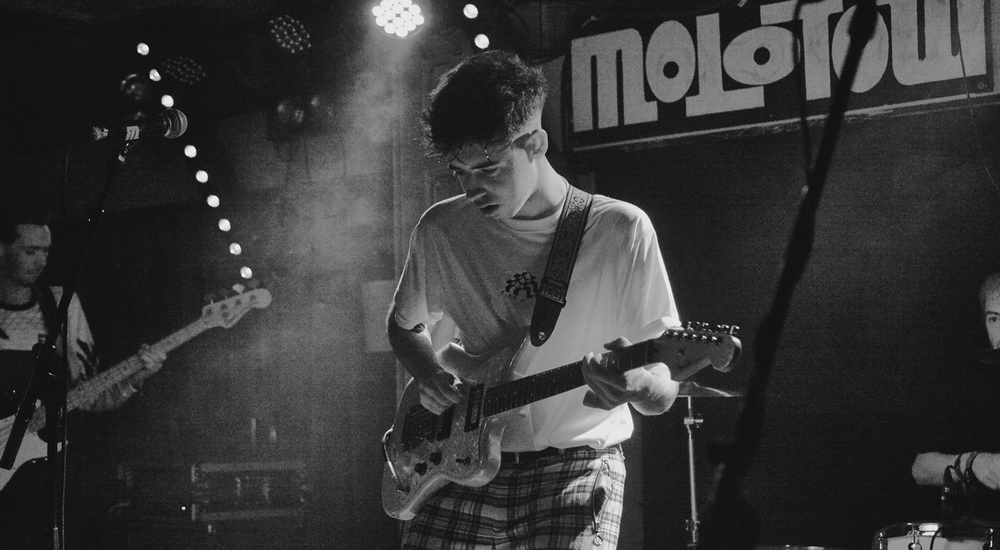
In terms of labels, it’s not something we’re too bothered about because we’ve been able to self-release and self-record to this point. But for an album we will definitely need that too.
But finding a label is still important? You don’t want to go in the DIY direction?
It’s definitely going to be the record label way, and then it comes down to the choice of a major label or indie label and we’re definitely going towards an indie label. But the label kind of thing will probably start falling into place after we played London in November, that’s when we will have a clearer idea of who wants to snap us up.
“We didn’t give anybody a chance to ignore us”
While digital music has created more opportunities for independent artists than ever before, there are also some new hurdles to conquer. With access to music across the globe growing exponentially, how can artists effectively cut through the noise and get their own music heard?
Nowhere else than in the UK, with its thousands of new up-and-coming bands every year, this reality have plagued every new band, and several of our interviews this year – e.g. with YONAKA and The Ninth Wave – bear witness of the struggles every band need to endure. But The Dunts have a simple strategy to become visible on the scene.
We mentioned the music tradition in Glasgow earlier with both older bands as Mogwai and Primal Scream, and more recent bands as Glasvegas, PAWS and Baby Strange as influential bands. How has the scene influenced you?
To see bands like Franz Ferdinand and The Fratellis start off gives us the belief that we also can do it, they’re from the same place as us and went so far as they did. But it’s mostly the bands we play with that influence us and the fact that everybody write their own songs and release their own singles.
And we learn from each other as well since we’re such a big group of people; everyone is so different and bring in different things to the table basically, and it kind of pushes all of us.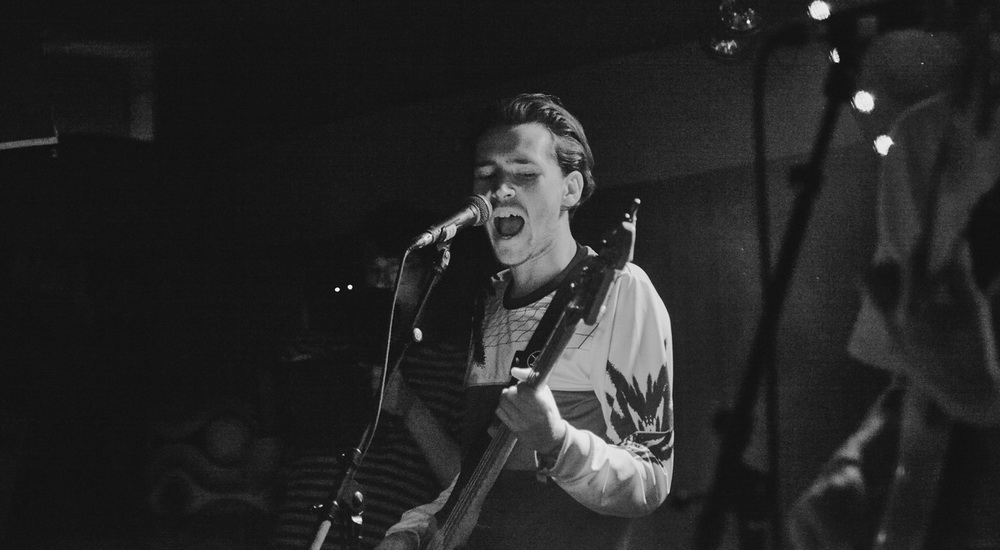
And then there’s all these small basement venues you can play. It’s like a ladder so it’s definitely a lot easier to rise up the ranks rather than going from basement venues to thousand-capacities directly. Glasgow has a lot of good venues where you can climb up whereas other cities don’t have that kind of music venues, there’s just no space to go in between two stages, and you either need to tour and hope that you somehow evolve and get more magnetic, or you just don’t do it.
But do you feel that your position on the Glasgow scene has changed after one rather successful EP and a second coming out soon?
If you go on the reviews we got on our EP they called us underdogs in the start and stuff like that, and then we have been slowly rising and now they say we’re near the top. We’re just kind of happy to be part of it. Just the fact that if we would play Glasgow we wouldn’t necessarily have to play a smaller venue or if we did it would be packed and selling out fast and that’s kind of a good feeling at the moment.
We’ve made a series of interviews with up-and-coming bands from the UK this year, just like The Ninth Wave we mentioned earlier, and always end up in a discussion on how difficult it is to break through in the UK – there’s just too many bands. How do experience it?
For us it comes down to the mentality we had in the first year of just playing anywhere. We basically didn’t give anybody a chance to ignore us because we were just constantly gigging, constantly in people’s faces.
And we just kind of believed in the songs, and if we played these songs to all these people they would definitely like them. You can play all these gigs but if don’t have the songs then you might not get anywhere, but we have that belief that what we’re doing is good and it seems to have got us a lot of attention.
I know that there’s some kind of a rivalry going on between Glasgow and London and it’s difficult to get gigs in London if you’re from Scotland or get good response at gigs. What’s your take on that?
Yeah, that’s right. We already heard so many stories on how London was because that’s where we first played in England, but we got a really good response and really enjoyed it and were a bit surprised about it. It’s different in the way that no one’s rowdy, they enjoy it in a silent kind of way and let you know at the end of the song if they enjoyed it.
But we do agree with that. For a while there was a lot of talk about Glasgow, and having all these bands were like “What’s going on up there?”. But it was just so many bands doing so many things that mocking was hard to avoid.
About London, it’s so huge so in London there’s probably a lot of London teens competing with each other before they even think about competing with Glasgow – I [frontman Rab Smith] couldn’t even comprehend how big it was the first time I was there (laughs).
But do you also feel that the north of UK has a much better punk scene than the rest of the UK? It feels like that when you consider how many bands with a kind of punk attitude having their origins in the north.
That’s where the politics of the UK comes in because the north is traditionally working-class and very industrial and obviously there was a lot of pain and anger in the eighties and the nineties of how the government was treating people. Growing up as a product of that environment; I wouldn’t necessary say anti-government but it’s definitely punks against the system kind of thing.
It’s not that the southerners had it easy but it was probably less aggrieved people down there, less people that had something to share, whereas up in the north we’re angry (laughs). Lots of bands are working-class and a lot of the audience are working-class, and it’s kind of going hand in hand. It’s not that you can’t enjoy or you can’t take part of it if you’re not working-class, because obviously not everyone is going to have the same background, but we just want to say those things we want to talk about to give people an idea what we’re about.
World domination in three years
Considering everything that happened up to now, do you think this will be the major breakthrough year for The Dunts?
It wasn’t last year at least (laughs), we thought it was going to, but then it wasn’t. But now, not many other bands can say that they’ve done Reading and Leeds, especially not that early in their career. In that sense it has been a kind of breakthrough year – but what is a breakthrough? I [Rab] don’t know what would constitute a breakthrough.
But we have done the festivals and that’s the main thing because it’s something we wanted to do for ages and something our friends have been doing for a while. We took the opportunity when we had it on Reading and Leeds, and at Electric Fields as well, and people have started to take us more serious now because they have seen what we can do live and what our songs are like.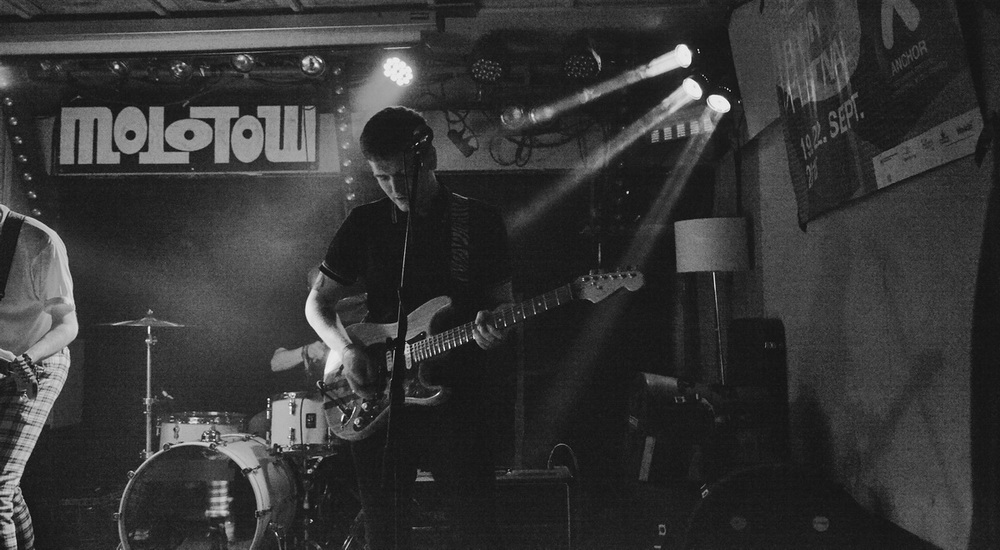
How far up on the punk ladder will The Dunts be in three years from now? What kind of mark would like to have done on the music scene?
(lots of laughs)
Colin: I feel I would be happy to be remembered in Glasgow for organising young people and gigs and they talk about it when they’re adults, to be remembered for something and that we have progressed as a band, and hopefully make other people want to play guitar and start bands. We don’t expect anything, we’re just happy to be here at this moment.
Rab: I would say world domination! (laughs) That’s what I want and that’s what I’m determined to get. In three years, if anyone is going back and listen to this interview and it’s not world domination, don’t speak to me about it (laughs).
Photographer: ©Alexander Schmitz
Photo gallery
The Dunts pages


Messed!Up recommends
