 Messed!Up
Music media often focus on the legends, icons and pioneers that we love to celebrate and pay tribute to from a very young age when we pin their posters to the wall in our childhood rooms. Messed!Up have used this kind of terminology as well, especially in our articles about Midge Ure and Anton Newcombe, two musicians that rarely need any introduction at all; there are books, documentaries, thousands of interviews and reviews that help you build the impression of a “pioneer” or a “legend”. And they truly are, but there’s more to it.
What is often forgotten is all those musical geniuses in the background, working with producing, programming or even sing on some these pioneering artists’ albums, thus contributing to their fame and glory, above all their prominence and stardom on the music scene.
One of these prodigal sons is found on the electronic music scene and has a résumé that very few musicians can show up or even achieve during their whole music career. After work with Depeche Mode, Moby, A-Ha and The Kills, just to mention a few highly reputable acts, Kurt Uenala finally took the step to release his debut album under the moniker Null + Void.
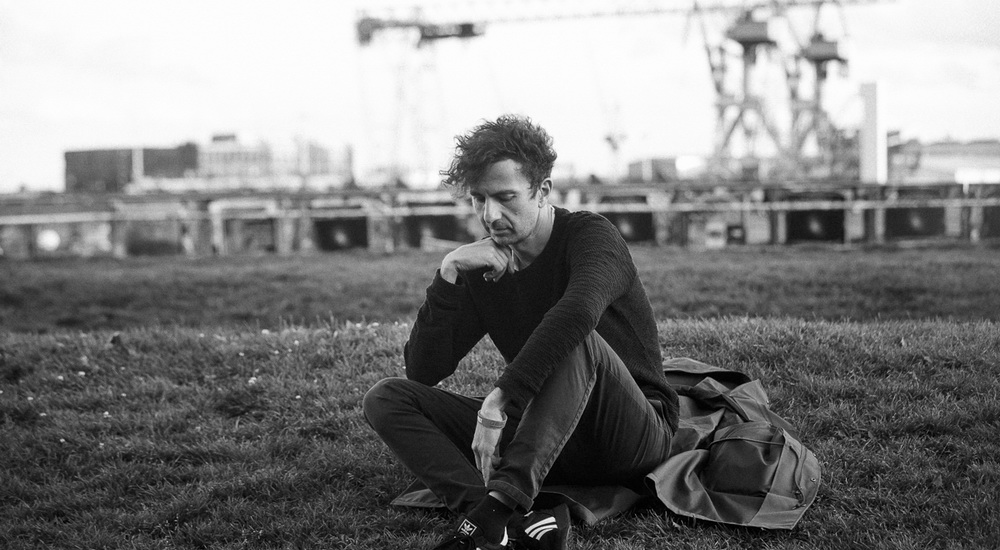
Messed!Up sat down with Uenala and HFN Music’s PR manager Philipp Brüning a few hours before the show at the Reeperbahn Festival and discussed how it is to take the role of the frontman, collaborative work and (not) letting go in the creative process.
*****
*****
Few artists have the opportunity to release a debut album involving collaborations with some of the most prominent artists there are today. On the other hand, Kurt Uenala isn’t an up-and-coming artist although this interview takes place at a showcase festival with the purpose to promote new artists to the crowds.
On his debut album “Cryosleep”, released in 2017, he brought in guests as Dave Gahan, Black Rebel Motorcycle Club, The Big Pink and Shannon Funchess of Light Asylum, and incorporated their musical talent in his dark minimal electronic soundscapes, yet with some bright synth strings contributing to its overall cinematic feeling. The collaboration with Gahan on “Where I Wait” was even originally pitched as something Depeche Mode would record but didn’t had time to fit into the schedule of the recording stage of their latest album.
On “Cryosleep” Uenala displays the full range of his production abilities and his passion for details such as those tiny sounds filling the empty spaces in his creations. And during our ten-minute walk from tonight’s venue St. Pauli Museum to our interview location, the image of a person who’s never as happy as when he is surrounded by his machines slowly becomes visible.
Therefore the discussion starts in how he feels about the changing role from being in the background of other artists with his machines to take the step into the spotlight himself.
Standing on his own
Welcome to Hamburg Kurt!
Just as a start; Reeperbahn Festival is primarily about showcasing new emerging talent on the music scenes. How does it feel to be a “new” talent in 2018?
(laugh) It’s great to play for HFN [the label] at St. Pauli Museum, and there’s a lot of history in Hamburg, especially in that area.
I was just in Iceland so it wasn’t a big jump to come here either, it wasn’t the New York-Germany flight and therefore easy to do it; I’m not exhausted and will do a good show I hope.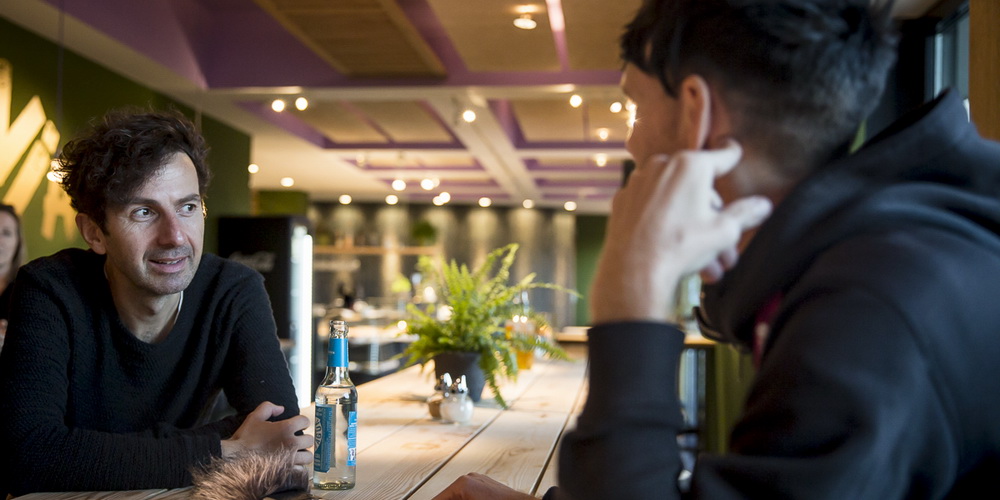
I need to start in your impressive music career. You have worked with some of the iconic electronic artists and bands such as Moby and Depeche Mode, but how different is it to finally stand on your own and be in the spotlight as yourself, not the producer or programmer behind someone else?
It was always the plan anyway but the album had to be written in between things, those things you need to do to make a living in New York, even if I always give a hundred percent when I work with other projects; you do that with anyone you work with, otherwise I wouldn’t bother.
I always write songs and make music, and some of the songs I did became my own and was released on the album at HFN, and some of them ended up with other artists. In between I did all those things you need to do in New York to make a living.
But haven’t you ever felt when you’ve worked with artists as Depeche Mode for instance, that some of those songs you write could have been your own instead?
(laughs) Actually no! I understand the thought of it but none of those I wrote has been huge hits so it’s ok (laugh). Often when you are working with someone so talented you don’t mind giving it all away, not holding anything back, no hidden jewels (laugh). I know that there are other things around the corner.
Although you’ve worked in a wide range of other electronic music acts through the years before Null + Void, you also released a few EP’s as the electro project Kap10Kurt. I guess it’s definitely put to a halt since nothing has been released since the 2011 EP “Speed Demon” but what was the project about? It was very far from what you usually do.
Yes, “Speed Demon” was the last one (laugh).
I got this new synthesizer, SH-101, and I wanted to make music that was very much bassline oriented, like chords but where the bass is similar to the chords and that you can play it on one key, and I wanted it to be a portable project. It was basically just a drummer and me and a small rig of samplers.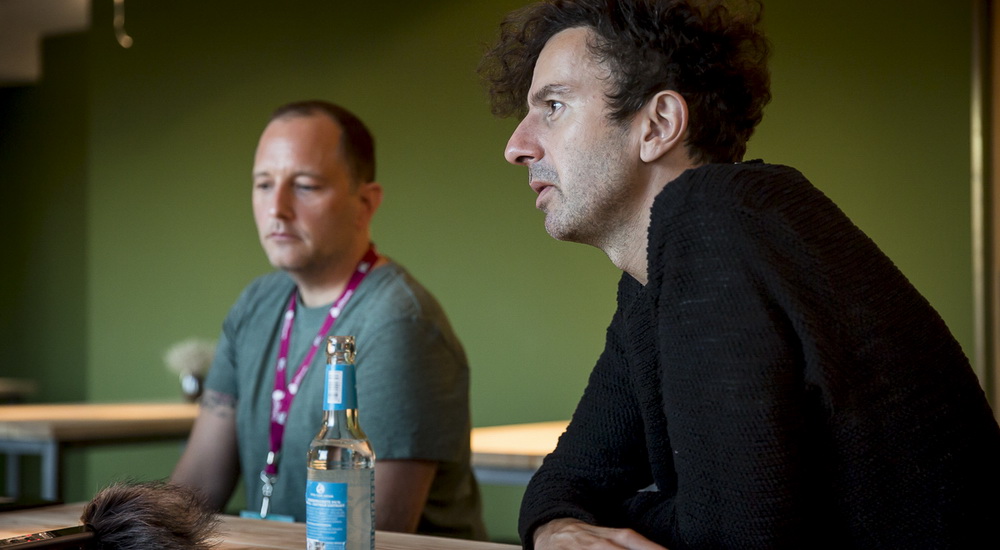
I just wanted it to be fun and have high energy, but that last release in 2011 was just so depressing. It was on a pretty cool label, I thought. I met the label owner in Helsinki on New Year ’s Eve when we did a club gig together and he wanted to release “Speed Demon”, and I had high hopes for it but it was really depressing and just thrown out on the market on a Tuesday – and that was it. No promotion, nothing. I don’t even know if physicals exist, I don’t have any myself at least, maybe they pressed a vinyl – I have no idea at all. After that I wasn’t interested anymore.
“Cryosleep” on the other hand, your debut album, is probably one of the darkest electronica albums of 2017, and the kind of dark, desolate and eerie atmospheres you create fits really well with the vocals by, for instance, Shannon Funchess from Light Asylum on “Hands Bound”. What affected the dark electronic direction when you produced the album?
Life happened. Two break-up’s and then my dad passed away, and after that I went away to work on “Spirit” [Depeche Mode]. I was with Depeche from February that year and my album was kind of done, but not fully written, and I finished the songs a bit in isolation wherever I was with Depeche at the moment. But mainly the break-ups and my dad’s death affected it most. It’s just this phase in life that happens to everyone.
You have several guest vocalists on the album but if you consider the fact that you have been a backing vocalist a few times, how far is it to take the step to do your own vocals and be the frontman of Null + Void?
I have toyed with the idea but it just doesn’t feel right, I’m not that kind of personality and I don’t think I can handle it emotionally. You have to be the type that is able to stand there and I’m most definitely not that type, I don’t think I can do it really. But when I play vocal songs live I have to kind of do it because there’s no vocalist with me, but I sing with a vocoder, in this electronic voice.
Since vocals give songs an extra dimension and considering that most songs on your debut is instrumental, you didn’t toy with the idea before you produced the album to have two separate projects? Or is the combination of these worlds that give the album its strength?
No, not really because on this album I musically felt that the songs are a nice collection to be able to do the “album journey”, I like to have the mix. I think they really go well together and I like to work with different things. If I would have had to commit to a band project it would be too much; it’s usually too much work and band politics.
The collaborations are on the vocal side of the album. What’s your take on collaborating on the production side?
In general, I kind of can work with other people and I have done it in the past a million times when I worked on other people’s records, that’s always collaborative. But when it comes to my own stuff, that’s when I should work on my own, that’s when it’s time to do exactly what I like because I collaborate so much anyway. For this project I would probably not collaborate but you never know (laugh).
In general in this project I like to work alone because I can take my time, I can decide when to sleep and when to work. Often it’s also a geographic problem; you’re somewhere else and not close to those you work with. Otherwise I’m open for collaborating.
About the geographic problem; “Cryosleep” was released on HFN Music here in Hamburg. How did you end up there? Was it because your work with Kasper Bjørke [Danish electronica/deep house artist]?
Of course, Kasper has been with HFN for many, many years and Trentemøller as well, so it was just logical. They spoke highly about HFN and Kasper have years of experiences with them and told me that “You don’t need to worry about anything like making statements and stuff like that” (laugh). I also have to say that I like the German work ethic and the pride they put in their work, I trust it because things get done compared to how it is in, for instance, New York.
It’s much more relaxed in Germany; in New York labels are often run by artists which is not ideal. When something good comes in, the label owner/artist will grab it for himself first and throw the bread crumbs to the rest. I feel good about being on a real label.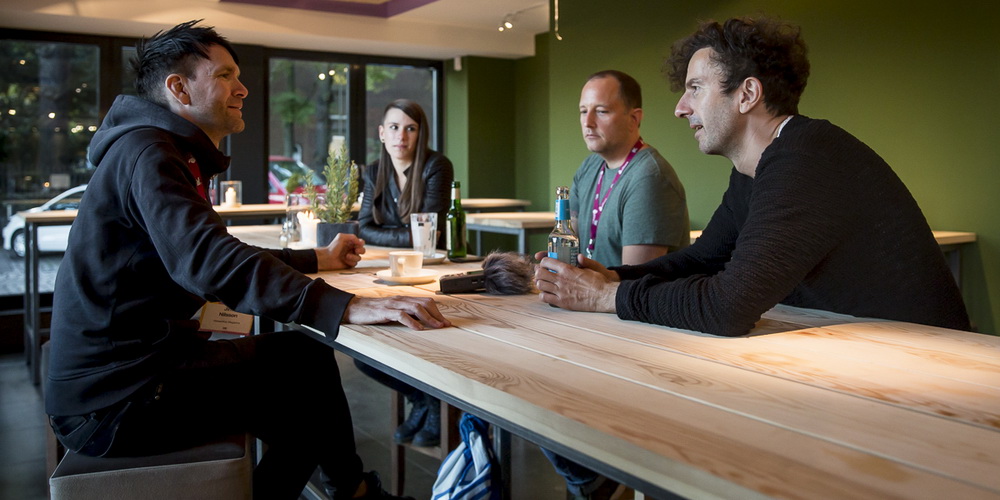
“I often work to the last second”
A painting can take up to hundreds of hours to complete, but the burst of inspiration can sometimes only last a few hours.
In many of our previous interviews artist often repeat the same problem, how to wrap up your projects and hand in your work. Many of those musicians we met point out that there’s a troubling frustration all songwriters know: that feeling when you’ve started a new song, feel great and inspired about it, envision it being so powerful, then getting stuck in the details. It’s difficult holding onto that initial spark, and it’s even more difficult feeling defeated by a powerful idea that you can’t quite finish, especially when you work with deadlines and have to hand in your songs for mastering or to your label.
Another frustration is when you think you’ve finished a song, then listen back or have a friend listen back, and realize you’re still not quite there. You want to be prolific and produce new material, but sometimes there’s a wall that just won’t seem to come down.
Even an experienced musician as Kurt Uenala finds it frustrating to reach the point of saturation and often works to the very last minute.
You’ve done a lot of production work with Depeche Mode, a band known for taking care of the details in their music. The point is that many artists we have interviewed point out the problem of not being able to let go of the details and will never be satisfied with what they’ve done. How difficult do you find this kind of dilemma in the projects you’re involved in?
Most definitely! I have big problems to let go and normally keep on going to the deadline. Often I work to the last second, just like in Null + Void where I didn’t finish until 9AM after being up all night. I know I have to hand it in to the mastering guy but I often write him an email saying “Please, one more hour”; I’m totally down to the last hour for sure (laugh), so I definitely need deadlines otherwise I would tweak my time a bit.
But how often does it happen that you go back and remake your songs, get back to your label and say “This is how it should sound like”?
It has happened many times! On this album I think it happened three times [turning to PR manager Philipp Brüning] – I sent you a copy on email, didn’t I? I sent three songs, went to sleep, woke up and listened again and was like “God damn it!”.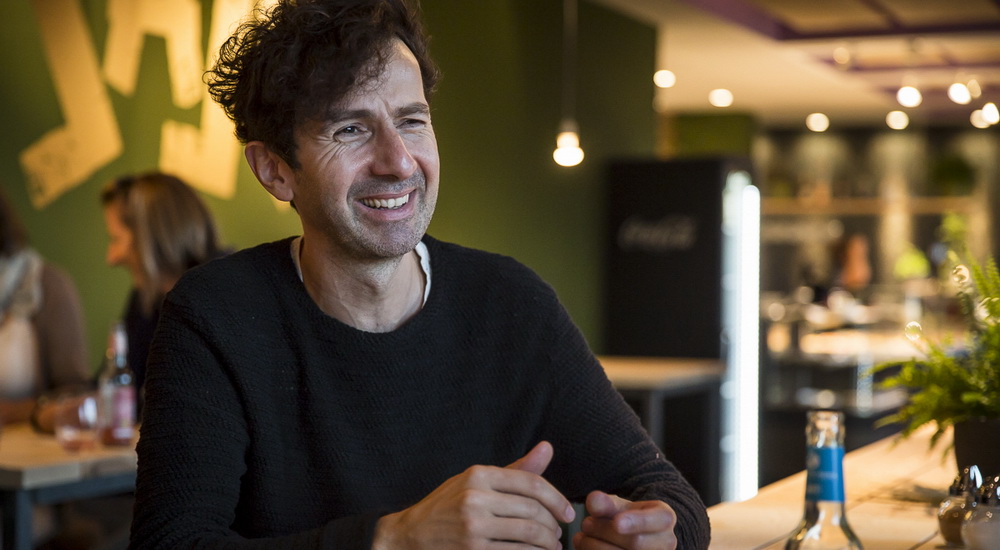
It’s often something stupid I forgot like a little bit distortion on the hi-hat and I’ll be like “I hope he didn’t finish it, here’s a new file” (laugh)
[Turning to Philipp] And you don’t hear any difference when he does like that?
(laugh) No, not really. It’s really hard to hear or hard to locate what has changed or going on, so mostly not.
Speaking of not letting go; you don’t get creatively blocked at times and need days off to do nothing before you restart working on songs again?
You can say that I work quite slow and that the creative part is spread over here and there in time. However, at the deadline stage I’m in the mixing phase of things, the songs are written and it’s just about details – levels, hi-hats, filtering and a little compression here and there – which is very important in electronic music, and in that part of the production phase I’m never blocked because it’s all craftsmanship, it’s not about grandiose, creative revelations anymore; at that stage it’s long gone. The needy, greedy hardcore mechanical stuff the last few days before you have to hand it in is not a problem.
But of course, there’s a million ways you can go about it and make changes but that’s not about being blocked, it’s about just trying stuff out, and at times screwing it up and not realized you’ve done it (laugh). But that’s one of the tricks I use – I sleep on it. It’s a really good trick! You sleep on it and listen to it again the next morning.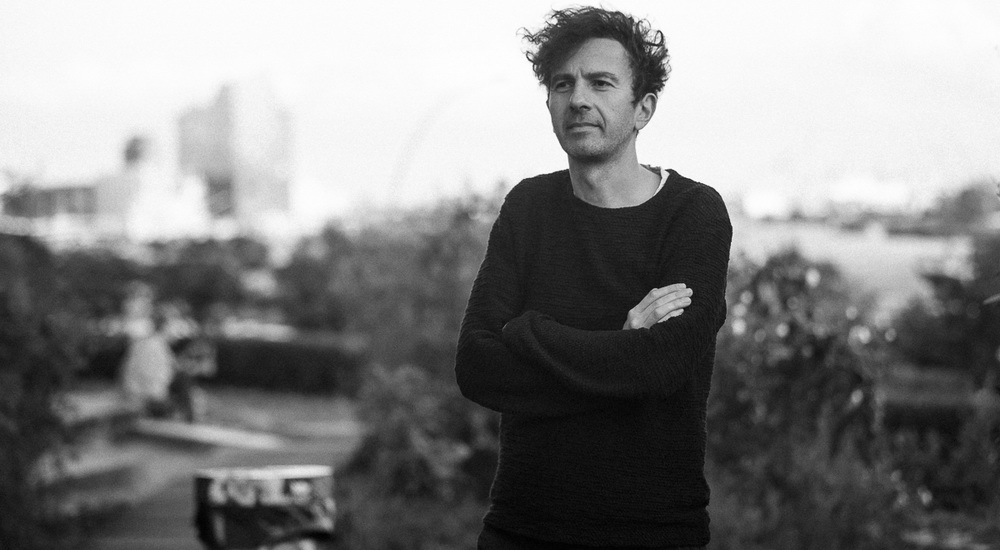
And that also goes for writing and composing, like in the early stage of a song; I make the song and then I don’t listen to anything else before I go to sleep. Often you try to modulate from one key to another which is really hard to do elegantly, I try to find the chords but I can’t, but if you listen to it before you go to sleep and let it sit, in the morning when you’re half-awake you will start work on it automatically and go through it again and often you find a solution.
I often walk around in the studio. In the mixing stage I walk around and listen from different spots in the studio, it’s a great idea. I think that’s how people listen to music anyway; nobody just sits there at the perfect spot, like someone would’ve put an X on the floor to mark it up, with their eyes closed in a nicely tweeter room with bass traps in the corners – no, they don’t! People walk around and listen.
Shooting lasers
Having a solo project is a very different experience than having a band. You don’t have anyone to bounce your ideas off of, and like anything else, going alone provides another set of challenges that don’t exist in a group. The great advantage of being a solo artist however, is that you only have to worry about yourself, and you can be in control of anything you need.
In fact, the myth of four or five guys who shake the world has served us well from the Beatles to the Roses, and since 2012 solo projects and two-piece bands are now the industry-standard. For already minimal electronic setups a similar kind of “downsizing” is manifested in the harsh economic reality that keeps guest artist interactions on stage at a minimal.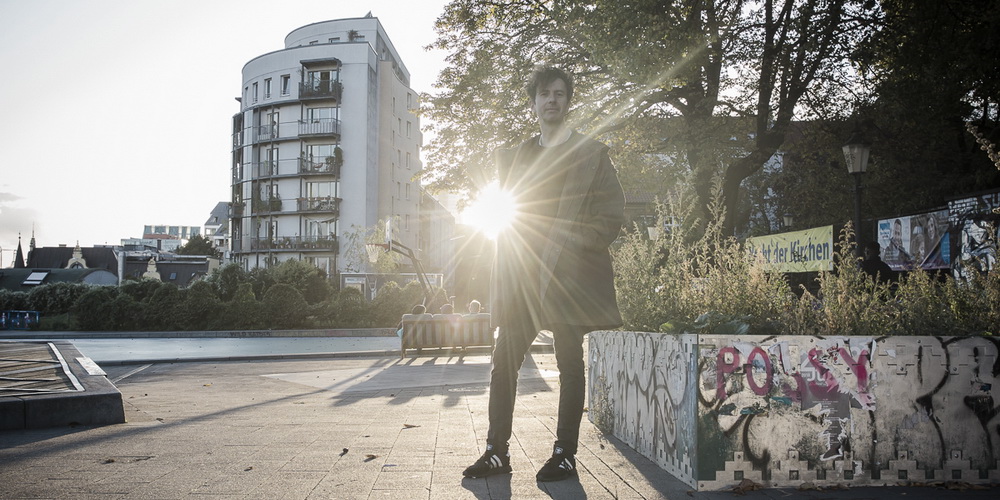
Recessionary factors are undoubtedly at play: for the acts, it’s cheaper and easier to pack the gear, travel, get gigs and make ends meet.
Although Uenala doesn’t plan to bring guest vocalists on tour, a visual artist or a drummer would be that extra desirable element to bring on stage – but at this point it’s a budgetary issue.
I guess that your set tonight will be a DJ set, especially since you play the St. Pauli Museum.
No! No singers; how many vocal songs are there? Just two vocal songs tonight I think.
Doesn’t it feel lonely on stage if you consider that many songs involve vocals?
A little bit. It would be nice to have someone with me but it’s also one of the reasons why I chose null and void. One day when I have a better budget I would love to bring on one more person, one person on synths or maybe a drummer again.
To balance out the “loneliness” on stage many solo artists put much effort into visual effects in their shows and visual stimulus can certainly enhance the impression of music. As a solo artist, being on stage on your own, do you work anything with the balance of sound and visuals?
I do! Actually, I spent two weeks in Seyðisfjörður on Iceland in a fjord making laser visuals because I’m a bit tired of normal projections. I think they came out really good but we can’t bring them tonight since there’s no smoke allowed and you can’t see the lasers without smoke. But I used it at a gig in South America and on Iceland when I played at Sónar.
The visuals are very geometric but I don’t do them with films or videos and that stuff because the music is a bit improvised meaning that the visuals can’t be pre-recorded, they have to react to the changes in the song structure so normal projections won’t work.
There’s this guy making beautiful visuals, Praystation [Joshua Davis] he calls himself, an American. He’s a monster and a very famous visual designer, and he did visuals for the whole album and used it at an exhibition in Barcelona and then said to me “Man, let’s make visuals to your gigs, I can even come with you if there’s a budget for two people” – he can really do crazy stuff. But again, since I improvise it’s tough because we would have to sit next to each other and I would have to show him exactly when I twiddle the knobs.
And how has touring been so far in terms of response from the crowd?
They turn up (laugh). Budapest was the first show after the album came out so I didn’t have any visuals ready at that point but South America was the best one so far, and Sónar in Reykjavik was of course a good show; I was more ready on those shows. In Budapest I wasn’t fully there yet.
I did one in New York before that and I brought so much gear! The Eurorack, a Moog Size Modular and lots of other stuff (laugh).
Can we expect Null + Void to be a permanent project and that you return with a new album soon?
Yes, it is permanent. And of course it will be a new album, I already have many ideas about it. I think I have something like seventeen sketches, and just have to sit down and mix them a bit.
But it’s not that other projects will come first, like a new Depeche Mode album, and then you will focus on Null + Void again?
No, this is priority for now and I’m already a little bit behind the schedule for a new album – Null + Void is the priority.
Photographer interview: ©Mandy Privenau
Photo gallery
Null + Void pages


Messed!Up recommends
