 Messed!Up
There is a point when you realize you’re listening to something special when you see those amazing songs you’ve listened to the last couple months being performed with such an incredible emotional intensity by a frontman that gives everything and more to depict a man fully immersed in the stories those songs tell you. That’s what The Twilight Sad are about.
However, rather than meeting up with two miserablists or perennially unhappy people as they’ve frequently been described by the press, Andy McFarlane and James Graham are two cheerful chaps thrusting themselves into a discussion about touring with The Cure, the upcoming album “It Won/t Be Like This All The Time” and why there needs to be a balance between happiness and unhappiness in life.
*****
Most fans of The Twilight Sad I’ve met have a special relationship to the band because of the emotional power their songs contain that will get you stuck for months or even years whenever a new album hits the brick and mortars. And it’s a loud emotional power brought to life by Andy’s layers of reverberated post-rock guitars, the signature sound that places them between noise-laden indie rock and the sound of Glasgow’s post-rock heroes Mogwai, who’s label they’ve recently signed to after more than ten years at FatCat Records.
But you can’t fully understand the powers unleashed until you experience the intense live shows that’ve become their trademark. That’s how they’ve built their fanbase, because their music and performance combined mean something more. Or as one of their biggest fans, Robert Smith, say, “Consistently brilliant, emotional, intense, inspiring and entertaining”.
And being supported by Robert Smith has its advantages, taking them out on tour with The Cure thus delaying the release of upcoming new album a bit.
Time off because of The Cure
I just have to say that I’ve never seen you at a small venue, just on festivals, and I remember the first I saw you, at the Roskilde Festival in 2007 when I was walking around at the festival ground to find some friends and heard you play in one of the tents.
Andy: I remember that festival well, it’s really nice, and we didn’t have enough songs to play the full set. I think we were contracted for an hour but we only had something like thirty minutes, we couldn’t even play an encore and we just tried to spread out the set as long as possible (laughs).
James: I think we even played the same song twice (laughs).
But that’s a really good festival, Roskilde. Muse were playing at the same time as us.
Andy: No, we went up after them!
Roskilde is really good at promoting smaller bands and put them on at weird slots during the day, and you really get a good chance to play to more people.
It’s four years since the “Nobody Wants To Be Here” record and you’re about to release your fifth album “It Won/t Be Like This All The Time” in January. What has happened during this hiatus?
Andy: The Cure happened (laughs). Normally it’s two years, next album and then another two year, but it was after those last two years and coming home from tour that Robert [Smith] asked us to go on tour with him, so that took up a whole year.
In a way we bought us some extra time and after it we just felt that we needed a break and took an extra year to just not tour and try to build on what we’ve been learning throughout the time of recording the fourth album. But we weren’t just sitting in at home watching the telly, we were actually developing the writing and the songs.
James: It was important to take time-out because we’ve been doing it for about ten years at that point and we’ve been touring and recording constantly, and it was time to take a step back and reflect on what had happened and where we wanted to go next.
People said to us “You should take advantage of these Cure tours and you should be out on the road right after it picking up the fans that came to see you” and we were like “No, we can’t do that”; I think it would have been detrimental for our brains. We just needed some time to truly reflect on what had happened and really just get home to normality.
We don’t write music on the road because when we’re touring we’re just focused on touring and nothing else, it’s all focus on the gig. You’re travelling all day and even though the gigs are brilliant and the tour is amazing there’s not a lot of inspiration from being in the back of a van. You really need to get back to normal life to get back to inspiration.
Just before you released the latest album you said that it was going to be your last album. Have you had similar thoughts during this break as well?
James: I actually didn’t say it was the last album, it was a misunderstanding, I said I didn’t want it to be the last album but it’s hard financially. At that point we were aware that it was hard to sustain touring like we did it. It’s a big part of your life and financially it’s not easy, and I said “I hope the record does well enough so we can make another record”, and luckily The Cure happened (laughs). I didn’t mean that it was the last record, I hoped it wasn’t the last time we would be able to go on tour and be out there promoting an album.
Andy and I will always write music together, there’s no doubt about that, but there’s a dedication to come out and tour for two or three years to promote a record so you got to make ends meet (laughs). Luckily we’re in a position where we still are able to do it.
What I understand from recent rumors is that you are going back to a much more noisy sound on the next album. What can your fans expect in terms of the sound?
Andy: It’s got a lot more energy than before but basically we wanted the record to sound like we were all playing together and actually enjoying it.
I think that after the fourth album there was that point where we could have burned ourselves out, and we had to do something and refresh ourselves. Today it sounds to me like a band that actually enjoy it. But yes, it is a bit more noisy.
James: It’s also more melodic at the same time, we’ve ramped everything up and it’s more energy. The guitars are noisy but it’s a different way of doing it. You’ve [turning to Andy] kind of developed as well and the way you do things, but to me it’s a lot more atmosphere within the songs, and I think it’s a really good combination of who we are this time.
And that noisier sound certainly works well with your new label. You finally signed with Mogwai’s RockAction label after years of collaborating with FatCat Records. Why the change?
Andy: Our contract just ran out and we felt that we needed a change and Mogwai have always been there and been huge supporters of the band, they’ve helped us out for years so it just makes sense. We’re really good friends and we’re also huge fans of what they do. And they’re in Glasgow as well which just makes it easier.
James: And I’ve worked at the label as well and I know how it works and what we were getting ourselves into (laughs). What they can do for us is exactly what we want.
We’re really grateful to FatCat for everything they’ve done for us but like anything you got to move forward; to progress you got to change what you do and work with different people, just to push yourself. We thought “Now it’s time to try something new” and we’re very lucky that Mogwai are our friends but also believe in us, we have the same ethos when it comes to music.
We look at them and the way their career has progressed, and the way they went about what they do is really inspiring. If we can do half of what they’ve done it would be great; it’s really an honor to work with them.
And now you have released three singles from the album so far and I know that “Videograms” will be the last track on the album which is kind of interesting when you consider people’s attention spans today and how they listen to albums. The label haven’t pushed for it to be the opener or at least among the three first songs on the album?
Andy: (laughs) It’s interesting to stir things up exactly because of what you’re saying. Everything has to go with this formula where you have one song, then you have the single as the second and then another single. It’s quite good to have one of your lead singles as last, it’s quite unexpected, but maybe it will make people listen to the album differently as well; they will listen to the full piece because that song they recognize is at the end.
James: I think the first four songs are really strong anyway that people will pay attention, it’s strong enough even with one of the main singles at the end.
We’re lucky to attract people who like to listen to albums because we make albums, we don’t make songs for Spotify playlists, although it’s nothing wrong with that. That’s not me being negative towards that, it’s just who we are, a band that make records. It got to be a listening experience where every song is a chapter in the overall story of what we’re trying to say.
Andy: And when you listen to the full context you will understand the story of the album as well. We’ve never tried to think of how people listen to songs, if they listen to the overall album or just songs but that’s not what we’re about.
James: But that’s what we’ve been told [to put the lead single in the beginning] but we don’t listen to it (laughs), we’re making it for ourselves and if people like it, it’s great. If it doesn’t work it is our own fault (laughs), we only have ourselves to blame.
Andy: And it’s better doing it like that. At that time that’s what we felt sounded right, to have it all in that order just trying to capture that kind of wee pocket of time and leave it like that. You may come around later and say I wish we had swapped that around but that’s not what we felt at the time so we just stuck with that and put it last.
The therapy of playing live
The music of The Twilight Sad is full of emotional content as anticipation, resolve, and acoustically familiar reverberations, resulting in a listening experience that is fascinating because of the emotional thrust of the lyrics: the unbearable distance between people, existential pressures, and feelings of isolation and alienation are echoed in the wall of sound in the songs.
Because of the emotional sensitivity in the lyrics they’ve often been described as the “perennially unhappy Scottish indie band” several times, but that’s something else than the Andy and James you meet off stage. However, they believe in the value of music’s emotional epiphanies and often devote their lives to the transitory rewards of participating in gigs.
I’ve read lots of reviews where critics say your music sounds “perennially unhappy” and a band that “inject some real emotions”. How much of a therapy session is music to you?
James: For me that’s the reason why I write songs so I can get things off my chest that I won’t be able to speak about in everyday life, and I’m realizing that’s more important for not just me but for people listening to our records.
You just can’t be permanently happy and you can’t be permanently sad, you need them both to counteract each other; you need sadness to have happiness, you need happiness to have sadness. I focus on things I can’t see in everyday life. Like Andy is saying as well, for me every album is a snapshot of who I am at that time and what problems or what feelings I have at that time, to make it a documentation of my life at that point.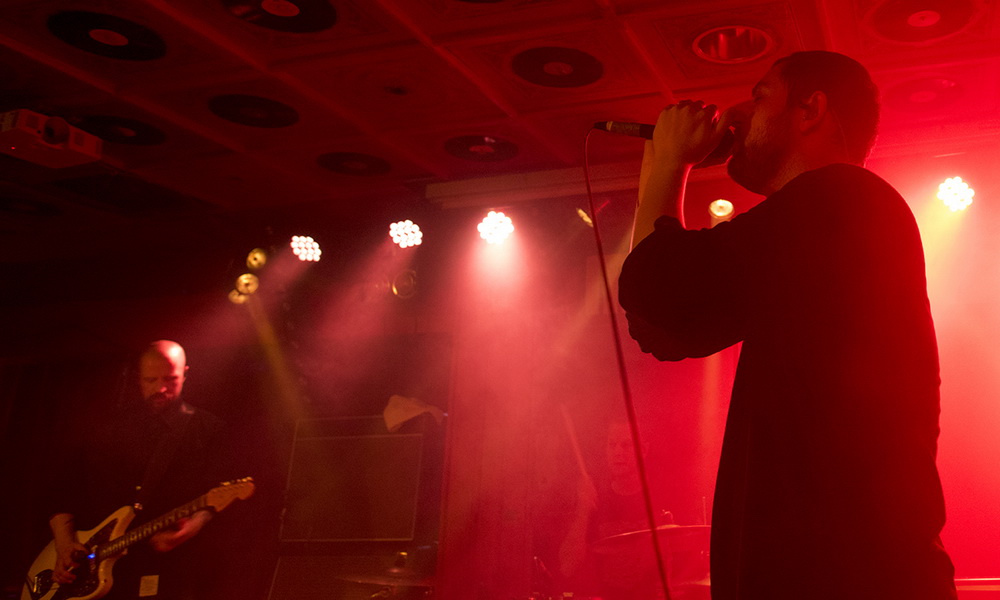
This album has really dark subjects on it but at the same time a lot of hope within some of the songs and I felt it was important to have both, especially at this stage when the world seems to be quite a scary place. Then it’s important to show that there’s light at the end of the tunnel.
But it’s also important to talk about the darker stuff like being sad and unhappy, or about passion and things like that. The more we talk about that the more we understand each other, and especially at this stage it was really important for me to do that. That’s why I think people commit with the music, just to get things out and if you don’t get it out it’s going to fester and tear you apart.
Many musicians – too many actually – I’ve met this year feel that creativity and anxiety go hand-in-hand and that it’s really hard to switch roles, between being on stage a few times a week and the everyday life in the periods in between with no gigs in the schedule – it’s too much of a conflict between these worlds and it just tears you apart. How do you experience the change between these roles?
Andy: In that respect it’s just a main set for me: you just can’t take yourself too seriously that you start to trapping yourself up. When it comes to the music I take that very seriously but you need to be able to take that step back to see it from other people’s point of views and not get too caught up in the pop-like view of it or get to caught up in reviews and stuff. Just try to distance yourself from all of it so you can have an objective view of it.
James: I obviously put a lot of passion and stuff in the music and in the lyrics. James on stage is a different James than right now, very different actually (laughs). But I’m very lucky that back home I got a really good life, I’m very happy with my family and things like that.
All I want to do with this band is to be honest, I couldn’t be anybody apart from myself, so James on stage is a bit different but is still part of me. But I understand it can be tough to be another person off stage, but when I come off stage I’m just normal (laughs). That hour and a half we’re on stage we get that side out of us, that’s what it is to be on stage.
So being on stage is a therapy on its own?
James: Yes, definitely, but we’re very lucky to have each other, we’re all really good friends, and there’s no image or ego or anything like that which maybe some other bands have, but we don’t have that. For us it’s more than being a guy in a band; I even think that to be just that guy in a band would be very boring. That’s why when I’m at home I’m James.
And our band is very honest, and very honest with people who like our music because people really connect with it. We’re not just a band they like a little bit, I’ve noticed that people really care about what we do and it’s because we don’t bullshit anybody. They really understand where we’re coming from, that we’re just normal people – or I like to think that we’re normal people (laughs).
The Robert Smith effect
It all started when Andy asked Robert Smith if he would cover “It Never Was the Same” for the 7-inch single release of the same song over the summer of 2015. Smith said he’d love to but added “but can I do ‘There’s a Girl in the Corner’ instead?”. Since that moment they’ve kept contact and Andy and James have sent their demos to Smith for reviews.
In 2016 they supported The Cure on a huge tour, playing arenas all over Europe in front of thousands of people in the crowd. And it has had an impact when they’re out on their own tour, in fact they’ve seen a considerable change in terms of selling tickets.
You supported The Cure at the Barclaycard Arena here in Hamburg not too long ago with a crowd of fifteen thousand and tonight it’s sold-out but will not be more than three hundred. How is it to go between these types of crowds?
James: It’s good for us, it’s good for variety. You play the same type of gigs at the same venues every night and it’s definitely good, but it’s nice to have different kinds of atmospheres, it keeps it really interesting for us. We’re more used to play like downstairs [Molotow in Hamburg]. That The Cure tour and playing arenas every night was not normal (laughs).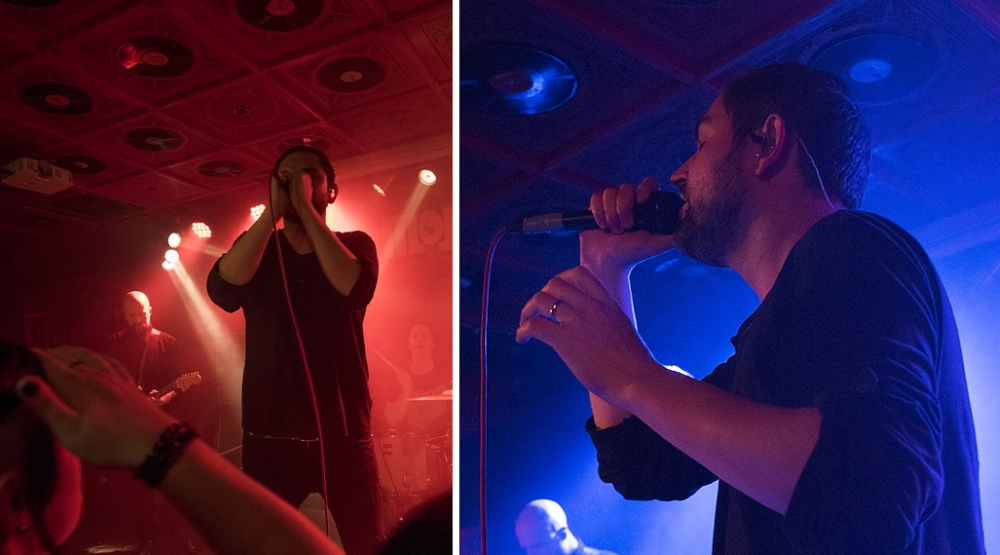
I know that you once said “We’re not trying to sell records, if we were doing that we’d done it by now” but how much has it helped you by being embraced by a person like Robert Smith?
James: Basically when it comes to touring. Before, when we were doing a tour like this, maybe this gig wouldn’t be sold out, and now it was sold-out three months in advance, so things are changing and I think it’s the momentum.
But to have somebody like Robert Smith who not only want to be your friend but also cares about what we do and wants our music to reach more people – that’s the biggest compliment you could ever be paid. He’s one of the greatest song-writers of all time. Also to get that stamp of approval; and not just that stamp of approval but he pushes us in front of other people (laughs). It’s mind-blowing and we still need to pinch ourselves.
And if someone for ten years ago would have suggested that you’ll be friends with Robert Smith in the future what would you response be?
James: “Fuck off!” (laughs).
Andy: But when you actually meet him, he’s so down to earth, just normal like everybody else, and from that point of view it makes sense that he wants to hang-out with us because we’re doing the same kind of stuff. But if someone said that I would have been “No, not a chance, never!”. I still can’t believe he covered one of our songs, that’s still massive.
James: And he’s still helping us, like taking us out on gigs. We played some gigs in Europe and will play some gigs next year with him. He helped out when we were writing the record; we were sending him the songs, the demos, and he got back to us with some advice on them. To be able to send your new songs to one of the greatest song-writers of all time for critique is like “We must try harder” (laughs).
Andy: And it’s very scary but at least it wasn’t like “It’s great, that sounds great” but he actually helps us move on.
James: What was it? “Eight out of ten, could be a nine” (laughs). No, we will be happy to support him.
So when will you ask him to support you on tour?
(laughs)
James: I think I probably will try that out when I’m drunk some time, “Come on Robert, just once” (laughs).
*****
Photographer: ©Guido Rangnitt
Photo gallery
The Twilight Sad pages


Messed!Up recommends
