 Messed!Up
In Europe, every country claims its own hip-hop identity, with many countries, as France and the UK, making their imprints with their unique and formidable characters. In recent years, a lot of German acts have been drawing on Germany’s unique social flavor, creating a socially-rooted rap scene.
Like Germany’s ever-growing international community, the scene is broad, accommodating all types of hip-hop. From dancefloor-oriented Peter Fox to the goofy witticism of CRO, from Berlin rogue troop K.I.Z. to the comedic and easy-going nature of MC Fitti, there’s a rich variety for all. There’s even room for a group consisting solely of hand-puppets, the Puppetmastaz. Building on this backdrop, a range of new exciting German acts are about to throw their rhythms onto the scene and climb the hip hop ladder.
One of these new artists grew up in Göttingen, most known for being a center for academic knowledge and far from the beat-driven clubs you associate with the hip hop scene. With her signature sharp-yet-ethereal sound, rapper Haszcara, today based in Berlin, releases her debut album “Polaris” in just a few days. Messed!Up sat down with a very open-hearted and cheerful Haszcara at Gängeviertel in Hamburg to talk about using diaries as inspiration, astrophysical themes and how women on the hip hop scene always have to prove their skills.
Hands-on in the creative process
Just to start with, how does it feel to finally, or at least in a few days, have your debut album “Polaris” in your hands?
I never had a baby but this is how it must feel like (laugh), and at the same time it feels like I’m having birthday. I’m really proud of myself because I’ve worked so much with it. It’s just like baking a cake; you have all the ingredients, you mix them and now it’s in the oven and will soon be ready (laugh).
How much blood, sweat and tears have you put into the recording process the last year just to complete the album?
It has mostly been tears but necessary tears to write those tracks on the album, especially some of the songs. Sure, it has been lots of work but I also loved it, the process to do it, and I really wanted this to happen.
I decided to do the album at the end of 2017 and shortly after that we started recording and picking out the songs, and I still have a lot of songs in my MacBook that will be used another time (laugh).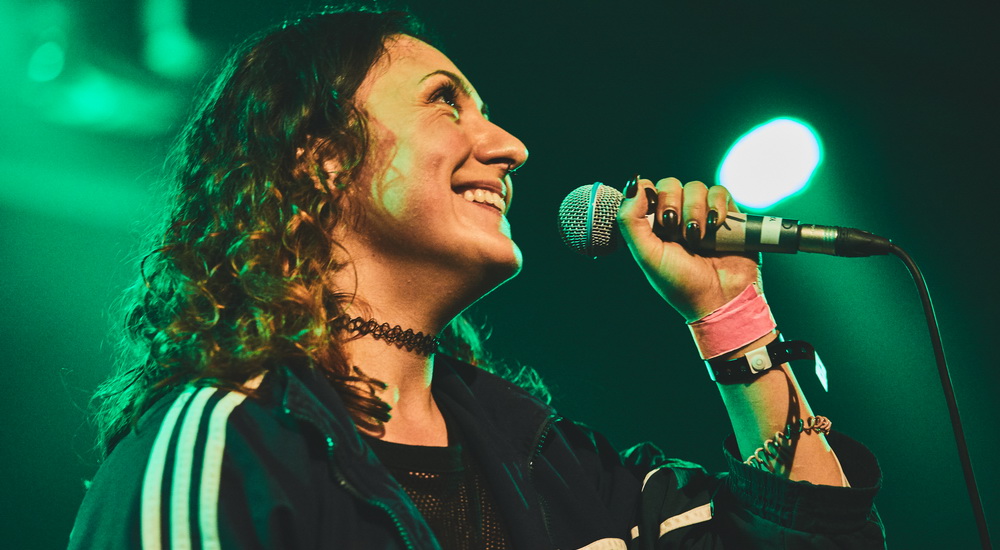
At the “Roter Riese” EP you worked with the AMK team, Tolztoy and Babakunin, and Schmiddunsk to mention a few involved in the process. Did you team up with them when you recorded “Polaris” as well?
No, not at all! I produced it all by myself this time and that’s a huge difference from when we produced “Roter Riese”. It has been really different this time in terms of lyrics and instrumentation, especially the beats just beacuse I did it on my own.
And you continue on your astrophysical theme.
Yes! “Roter Riese” is the astrophysical term for a red giant meaning that the sun is about to explode, and I use it as symbol because in the lyrics I say “I’ve always been you’re sunshine but every sunshine will be a bomb at the end of the day”; in German it rhymes (laugh). And Polaris [also the name of the debut album] is the star you look for when you get lost, something to use for orientation.
I love astrophysics! When I was a child I wanted to be an astronaut and I had universe themed birthday party’s for a few years (laugh), I’ve always loved the idea of being a small part of something bigger. But I really sucked in physics and math, and it wasn’t meant for me to be an astronaut. Maybe someday; I studied gender studies and cultural anthropology, and maybe one day when there’s a star fleet I can join, as a scientist studying different cultures (laugh).
But do you feel that after one EP and soon a debut album that you’ve developed a Haszcara sound, something like a brand, or are you still experimenting to find it?
Yes, there is definitely a sound but it may change; I started producing just 2-3 years ago with Ableton Lite, a really lo-fi easy-to-learn arrangement software (laugh). But it’s a really personal sound and it’s intimate. People tell me all the time “Your music is so sad”; when I jam with people they sometimes say I have this sad, melancholic vibe and I’m just like “I’m sorry, that’s what comes out of me, deal with it” (laugh).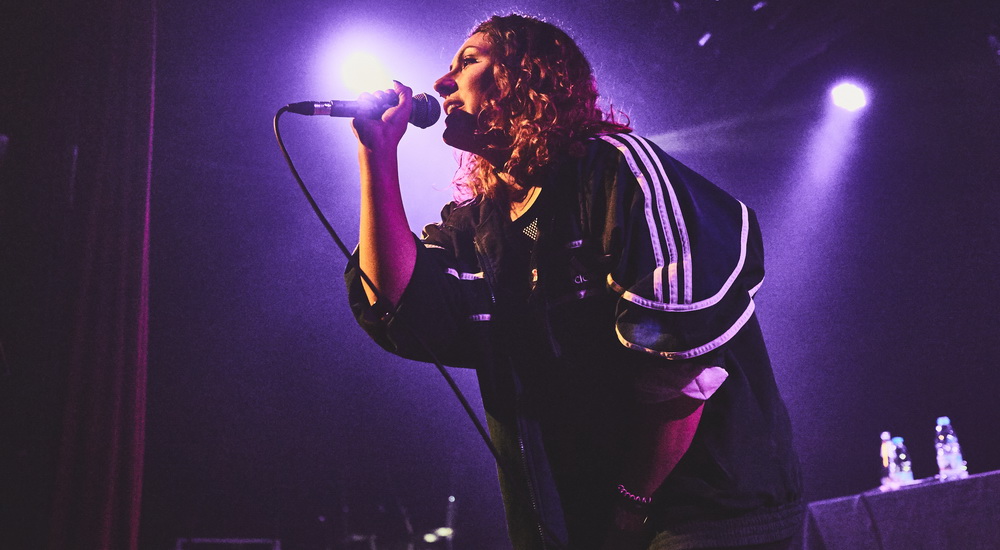
Hip hop must be one of those genres that loves its sub genres, there are literally hundreds of hip hop styles. Deutsch rap, as I consider it, is a concept, just like there is Swedish hip hop, but where do you sonically place yourself in these sub genres of hip hop, like trap, gangsta rap or Zeckenrap?
Really nowhere, not at all. I’m not someone who says “Only trap is good” or “I hate auto-tune”. I mean, everyone do their thing and it’s not my business what others do, I just know that I like rapping on boom bap beats and I like trap beats, I also like to experiment with auto-tune as much as I like to sing without it. To me music is just like a playground where you can explore everything, and in that process there’s no right or wrong.
A story of diaries and life experiences
You’re sitting in your room with the lights off, browsing through Spotify’s suggested playlists when you suddenly pause on one. As the opening chords drift through your speakers, you think to yourself “Hmm, that’s a pretty nice song”. So, you replay it. The lyrics turn over and over in your head when you realise “this is exactly how I’ve been feeling. This is everything that I needed to hear”. And, within approximately three minutes, you don’t feel so alone anymore.
Music is more than something that’s just pleasing to the ears. It’s an art form. It’s a platform for creativity and for the birth of creative expression. It’s a community, somewhere to go when you need to feel safe. It describes your joy and your pain. 
However, lyrics are not poetry and lyricists are not poets (whatever the Nobel Prize committee thinks). I say this not to denigrate lyrics as an art form. Quite the opposite. By insisting that the two are the same thing, we really miss the vital point that high quality lyrics are valuable on their own merit. If an artist has something of significance to say, why would they not want to get that message out to as many listeners as possible?
Haszcara is certainly one of those artists that put much effort into her lyrics and she starts in her own life experiences of growing up in Göttingen, taking inspiration from her diary writings – and there have been lots of diaries passing by through the years.
You’re an up-and-coming artist on the German hip hop scene and I know that you got much attention when you participated in VBT (Das VideoBattleTurnier) but an international audience may not know that much about you yet. Tell us a bit about how you got involved in hip hop for instance and why hip hop became the way for you to express your life experiences.
Music in general has always been part of my life, I grew up in Göttingen with music around me and my parents always supported the presence of music by giving me lots of CD’s with music I should listen to (laugh) but from every genre, also hip hop but not only. But it’s fun to think of it now, my first rap was when I was in primary school (laugh). But it didn’t take off until eight years ago when I hanged with friends that also listen to rap.
I’ve always considered myself political but back then I was really radical which was the major reason why I didn’t like hip hop in the beginning because most of it were sexist or homophobic, but then I realized that there are quite many other artists with cooler lyrics, and by starting listening to them I found other rappers.
But I can’t really tell you a story where I say that rap has always been part of my life, that’s not really true (laugh).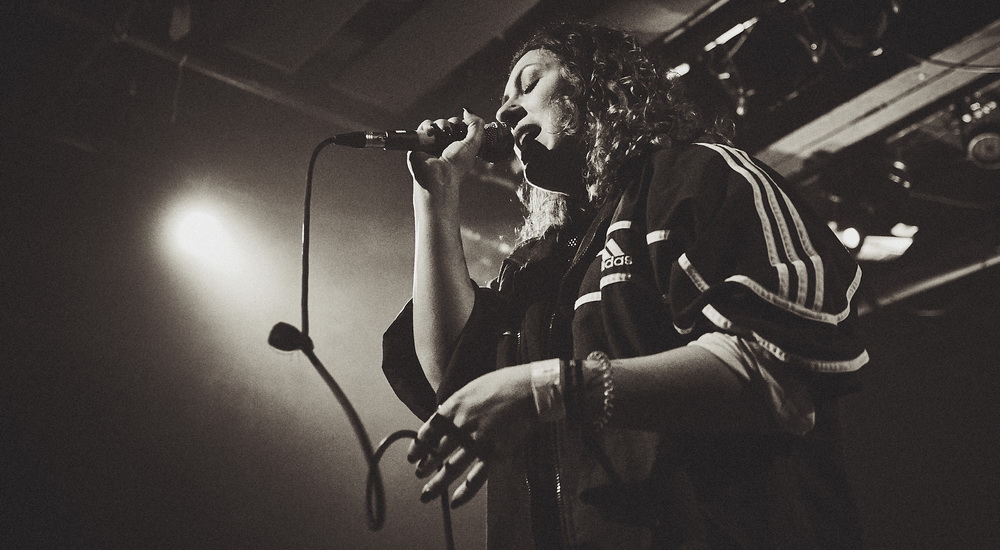
I guess that since you grew up with a wide range of music influences there are other musical influences to draw from. Actually, a rumor also told us you played in a metal band in your teens. Is that something you could consider as a side project in the future as well?
(laugh) Oh yes, I did and I would love to do it again! Where did you hear that!? (laugh)
But not really that kind of metal we did back then because I had a really hoarse voice. I worked with four guys that were younger than me and they were at bit more excited about their instruments and being loud, and I always had to compete with my voice against their loudness (laugh). But I would love to go back to that, maybe not metal but for sure rock music [the label PR manager next to us looks completely surprised at this point].
I actually grew up with lots of rock music and my parents introduced me to classic rock like Queen, The Beatles and krautrock, and I listened much to System of a Down and Rammstein in my youth – and at times today too (laugh).
But if you consider your background, growing up in Göttingen; how has it affected your artistic development?
Quite much actually. I have felt kind of lonely in Göttingen although there are people playing music but it’s not comparable to Berlin; in only a year I got to know so many people I’m in studio with or can talk music to. And there are more opportunities to be yourself and learn from new experiences. For instance, I’m not that afraid to make mistakes anymore like I was in Göttingen. Sure, I did some music while living in Göttingen but most of the time I spent in my room (laugh).
I know some hip hop artists who started out on the poetry slam scene or simply as poets. Others just write diaries and wanted to express their experiences publicly. What’s your take on that? Do you have similar experiences?
I’m definitely a diary-writer and have been writing diaries since I was around thirteen – I have a lot of books at home (laugh). It has always been kind of a therapy for me to write down things, just to get things off my chest or out of my mind. I don’t like poetry slam that much though, it’s more of a posh rap art (laugh), or maybe I’m just stereotypical (laugh) – I have never been that much into poetry slam. But yes, people should write more diaries.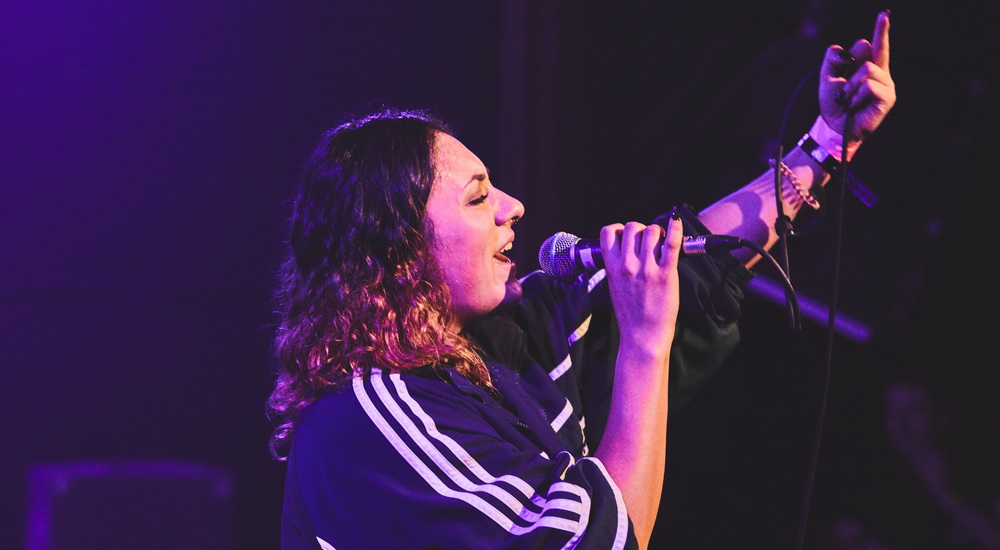
How much of your diaries do you use in your rap?
It sounds like I’m using what I have written in them (laugh) but no! I don’t think I use them intentionally at least but when you write down your thoughts or talk about things you’ve been thinking of, you will write songs about them. I’m often asked “How can you verbalise all your thoughts and get to the point, I can never do it” and I always tell people “You need to talk, you need to write, you need to find the words you have inside of you, and then you can put it together with music”.
That’s the difference between rap and acoustic music. When I did much sing-songwriting – and I did a lot of sing-songwriting – I used feelings and put those feelings into a melody, but rap is feelings put into words, and when the beats fit to it – and this is why I love producing myself because only I know how these lyrics feel – then it’s not only feelings put into a melody and harmonies but they’re also part of the words.
Most rap artists focus on their lyrics but what is important to you when you look for beats?
That’s difficult to say. Mostly I already have the lyrics when I start because most of the time I write to Free Beats online just to avoid being distracted, but it’s more important to have a constant BPM rhythm. But other days I just start building a beat when it suddenly cross my mind that “Oh, I have these lyrics and they’ll fit so good to this beat” and I record it instantly with my mic into the laptop to see how it fits together. I go on how it feels, it’s not planned in any way. For instance, I had this track with a great beat and I thought “I have to write something to it, I really like the beat and need to do something now”.
But I’m also very good at getting lost in the process when doing music because I really not always remember what happened (laugh).
“I represent my feminist view”
Since the beginning, hip-hop has almost exclusively been dominated by men. Often criticized for its traditionally tone deaf and sexist lyrics, the “boys only” club rarely gives women their props, let alone a voice.
However, the scene is going through a minor revolution and in many countries the most shining stars on the scene today are female rappers. In Sweden it started a few years ago when several female hip hop artists brought home the major awards and today everybody know artists like Linda Pira, Silvana Imam and Lilla Namo, to mention a few.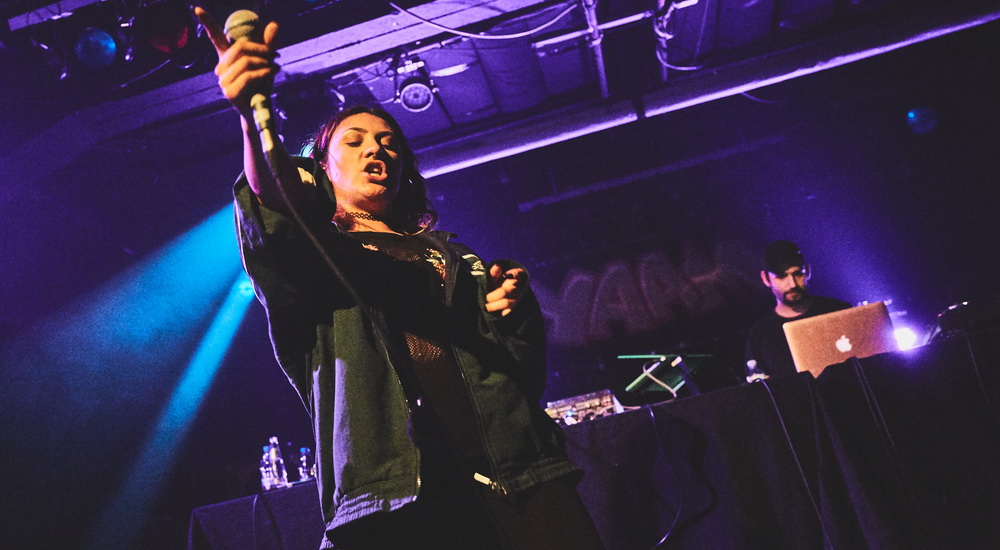
In the US, the major hip hop country, 2017 marked a thrilling year for women in hip-hop. From draw-dropping beefs to historic chart performances, the year’s female rappers proved that even in a “man’s world” it’s the women who most certainly keep the tempo.
Similar “revolutions” are happening in other countries as well – maybe also on the German hip hop scene?
In Sweden, where some of our staff come from including myself, there has been kind of a revolution in hip hop and the most interesting new artists on scene are female rappers. What’s your experiences from the German scene, for instance how it is to be a female rapper?
That’s quite much dependent on if it’s mainstream rap or, like here, if it’s a more political and feminist audience. It’s a very special feeling for me since I often get these very cool messages after a show saying “You were so inspiring”, and that’s just because there isn’t that many female artists on the scene. You still have to prove yourself all the time, and that’s just bullshit since no man have to prove that they can rap.
I know from some previous interviews that you quite often have to explain that you don’t represent feminism in hip hop. Do you feel that as a woman on the hip hop scene that you specifically need to address this topic in your lyrics, like a spokesperson of women in hip hop?
I do feel that I represent a feminist view in hip hop, my feminist view not the feminist view. I wrote this song, “Representa”, where I say something like – and it sounds different in German – “I don’t represent any scene, I only represent myself and I don’t represent female MC’s although I am one of them”, and what I want to say with that is, and I can even generalize it, that everyone is an individual.
It’s much pressure on female rap artists and they have to prove that they’re good. If I’m a great rapper I will hear “Oh, women can rap!” – why don’t they say “She can rap”? If I fail they will of course say “Women cannot rap”. Well, in that case it’s me who cannot rap, not all women. Yes, there is a pressure on women!
But what are important topics for you to address? What type of social topics do you find essential or necessary to thrust yourself into?
That’s a very interesting question because most of the time I don’t think about what I write in my lyrics, at least I try to not think about how anyone would perceive it or what anyone would think about it or, even worse, how it will affect people – it’s an egoistic way of thinking. But if there is an event or something happening that means much to me, I write about.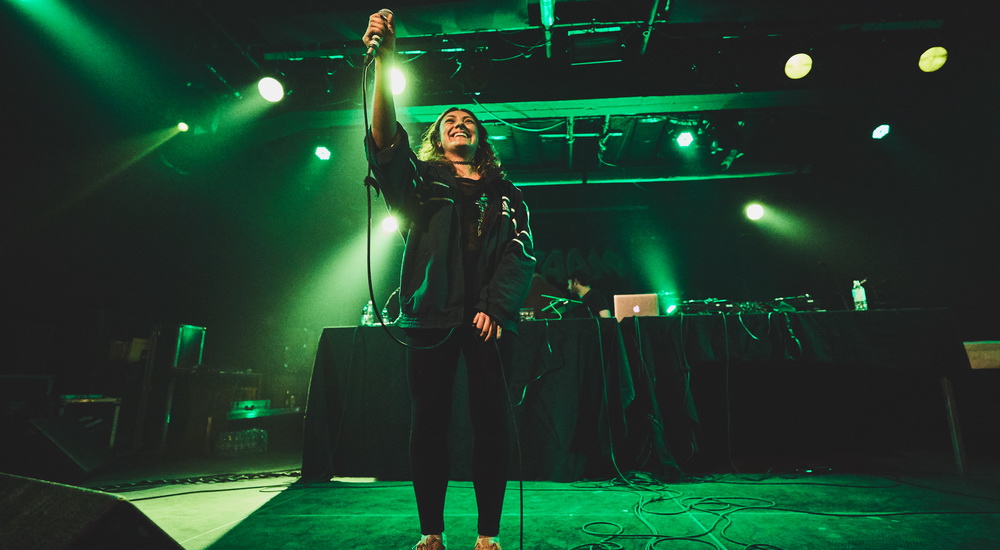
Take for example the “Representa” track, building on a lot of exhausting discussions with people who were commenting a friend, another rapper, in a stupid way. She’s very special and don’t rap in the traditional way, she’s a little bit weird for some people but doesn’t hurt anyone. Some people, especially men, come to me and say “This rapper is so bad and she sucks so much”, and because she has these political and feminist lyrics they think she shouldn’t be supported that much. I’m like “What the fuck dude, it’s none of your business”, and that’s the reason why I wrote the song, it affected me a lot and pissed me off.
You find your topics in everyday life and things that piss you off?
Yes, that’s what I do (laugh). And I want people to listen, especially people like them, and I want to empower people who are the victims of such mindsets. Having an influence on people and inspiring and empowering them – and sometimes piss them off (laugh).
Five years to reach the top?
Debut album out in a few days; does it come with a tour?
Well, kind of, I’m always on tour. I have loads of concerts, nearly every weekend so it’s a kind of tour although only at weekends.
What’s your goals for the next year considering the album release?
I would love to go on holiday and I would also like to have some more time in Berlin to do another album, but first I have to organise what I have written the last months and maybe do new stuff.
How far up on the German hip hop ladder can we expect you to be in five years?
As high as the hip hop God wants me to be (laugh).
*****
On Friday September 14th Haszcara releases her debut album “Polaris” on Audiolith. We were lucky to get a preview and have our own favorite in “Keiner außer mir (Ft. DJ Bulet)”. Meanwhile, watch the video to “Hannah Montana“. More information about the album here.
Photographer, concert: ©Julia Schwendner (live) & ©Teresa Enhiak Nanni (interview)
Photo gallery
Haszcara pages


Messed!Up recommends
