 Messed!Up
Their live shows are known to be awesome, the band is going nuts on stage, and no one is left standing still and those that are get knocked out. We’re talking about Malmö based electropunkers The Guilt and their high energy performances earning them a great reputation across Europe.
Prior to their show in Hamburg, Messed!Up sat down with Emma and Tobias and talked about doing it DIY, their wild live shows, how many gym sessions they attend every week and how sad they are to not have been booked for a pool party yet (anyone?). And then it was time for Messed!Up’s yoga session photo shoot.
I don’t know about most people, but my favorite thing about seeing a band live is the energy. I just can’t get enough of the frenetic intensity that pervades shows and runs back and forth between the manic audience and the performer, even if the actual playing is off because of it, or the singer can’t reach the mic to revel in guttural sounds. When a performer is bored or listless, even if they get all the notes right, it kills me. I guess that’s why I like seeing beat-driven acts more than singer-songwriters.
Swedish electropunk act, or lazer punk as they are promoted by clubs, The Guilt is certainly one of those bands where you get the “full package” of a punk experience. They’re quite acrobatic onstage, and their intensity and passion is almost unrivaled.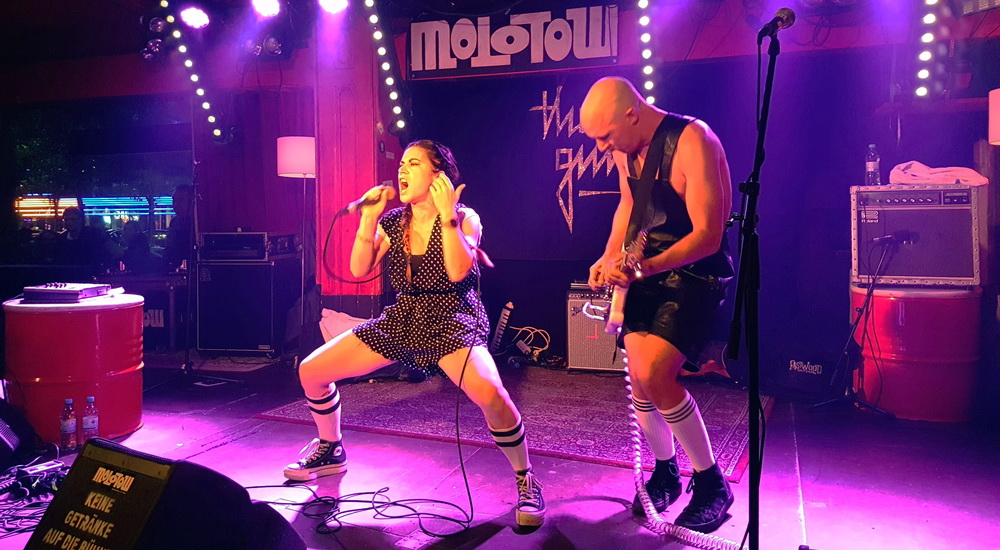
Last year saw the arrival of their self-titled debut album coming across like the demented love child of early Le Tigre and The Faint, combined with some weird hardcore band in love with a drum machine. In fact, The Guilt is nothing but “pure” punk music coated in electronics with Emma’s “vitriolic sounding growl” – and people love it!
In the production process of their debut album they brought in help from Le Prince Harry’s Alain Steffler, a band with a similar sound as The Guilt. And there’s a long story about how they met and became one big happy family.
The sound: Electropunk, lazerpunk or no genre at all
In Germany you’re often considered to be an electropunk act but to me you sound quite much like a “real” punk band. Why did you end up in aggressive guitars combined with fat synth lines and drum machine rhythms and not an “ordinary” punk sound? Molotow even promote you as a “lazerpunk” act.
Tobias: It’s a trick to make people start to wonder what it is, just like ”Haha, I got your attention”.
Emma: No, is it really a trick? If you don’t know how to describe it, just make something up (laugh).
Tobias: But sure, we’re basically a punk band if you consider the song structures and our energy and attitude on stage which is brought in from punk, that’s where we originate. I’ve used many different techniques to create the drum rhythms and the instrumentation, and those time we’ve sampled real drums we end up in a rock sound, but at this point it’s more electronic since we have used drum machines combined with bass lines.
Emma: When we started we were like ”How are we going to work things out and create a pulsating sound that people like? How do we do it with drum machines and samples?”.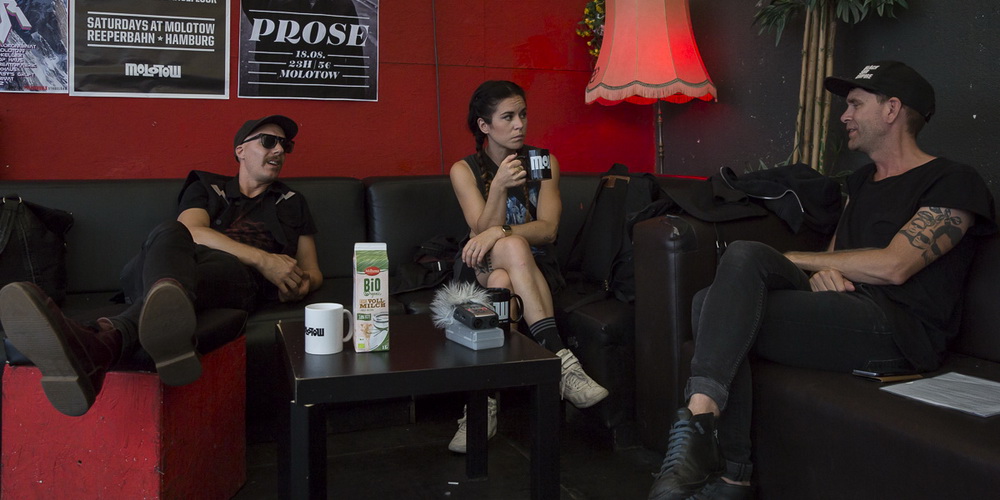
It has been a long and painful process because we didn’t know at all how to make it work out when we started as a two-piece band, but we just tried out a few things, especially stuff that works with how we want to express our music on stage. Personally I feel better with an electronic sound rather than a rock sound; I like to listen to rock but not doing it myself.
The first time I heard you was at Action i Parken in Gothenburg 2015 and I told to my friend ”They sound just like Le Prince Harry!”. What is fun is that you later worked with Alain Steffler of Le Prince Harry on your debut album. How did it happen?
Emma: I think it was at our second tour and I just made contact with Christina in Leipzig who book lots of stuff, and she said “Ok, I have this idea; I really like you and I also help out this band that I think you would fit perfect together with and I can find a few shows for you”. Then we did some shows together with Le Prince Harry at Zoro in Leipzig and Køpi in Berlin, and had great time together, liked each other’s music and decided “We have to do something more together”, picked up that idea last year and said “None of us have played Spain, it’s time to go to Spain together” – and we did!
We ended up in Spain and made some really weird and crazy shows and later we discussed what else we can do together; I’m singing on their latest album as well [”Synthetic Love”].
Tobias: And we paid a visit to them in Belgium and learned to know their friends in Cocaine Piss, also from Belgium, and really sweet guys.
Emma: Me and Alain literally live together. He will come to Malmö in a few weeks with his stuff, and that only confirms how everything has grown into one big family, the family of The Guilt and Le Prince Harry.
Tobias: Alain didn’t just help us record the album, he also did the sound at some of our live shows.
Have you ever thought of using a real drummer again?
Tobias: No, there’s no room for anyone else. Maybe if we play the big stages like the Orange Stage at the Roskilde Festival but I would rather fill it out with eight dancers than having a drummer (laugh).
Emma: Eight dancers off the top of your head?
Tobias: Maybe nine and a half.
But I would be bored. Just look at Depeche Mode, they use a drummer again – for what reason? You can also get a bit stubborn when people say ”It was really good but you need a drummer”. In our case people say it all the time, everybody tells us “Wouldn’t it be better to have a drummer?” and we say “No, it wouldn’t”. I find it a bit narrow-minded to think like that. If someone gets pissed off because we don’t have a drummer, we for sure do something right (laugh).
Although it’s just a year since your debut album you’ve toured the album quite much. Is there any new material on its way already or will you still tour a bit more with the album?
Emma: We really don’t know but we are quite much in Germany at the moment but want to reach out to the rest of Europe as well. What we need is to find a good foundation to use as a starting point when we work with the next album, and we need to plan how and when to release it.
It’s not that we have a full album already but we’ve done a few new songs but also want to have a good plan for the next release.
Blood, sweat and the DIY scene
There are so many reasons to love the DIY scene. For one, shows are relatively cheap, both to organize and to attend because no one involved gets or takes any money for it; you don’t really have to make huge investments to be part of it – except your time. And to run your band DIY certainly “costs” lots of time.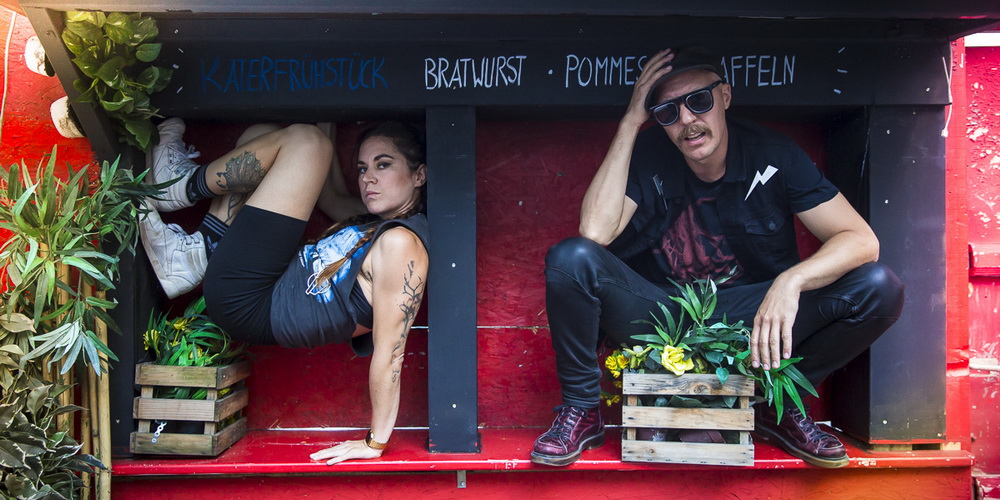
Although The Guilt is a great supporter of the DIY ethos and are in it for their love of doing live shows, communicating and networking with people thus getting new friends across the world, they also take on their band duties with a certain level of professionalism in terms of how to promote the band to reach their ultimate target – to get more gigs (and a pool party gig).
Speaking of having a plan for the next release; it’s just like you started to think in promotion strategies?
Tobias: It would have been great if someone would surprise us and come up with great ideas; we’re not supposed to have the best ideas about these things.
I think you need to be creative and have visions. There are many ways on how to be creative, not only in making music and do interesting shows but also in terms of promotion. For instance, we loved to play this old dude’s 50th birthday (laugh) and we loved to play at an exhibition. So far we haven’t been able to play a pool party though.
Emma: We always try to find it and every time I’ve tried to find gigs in the very last minute I always write something like “…or if there’s a pool party to play” but no one has invited us yet.
Tobias: We discussed the fashion industry earlier, about fashion and music or skate culture and music – it’s all about finding new inspiration. You want to get inspired, not only in terms of music but everything that comes with a music identity. It’s how you go through everyday boredom, there must be lots of ways to do it.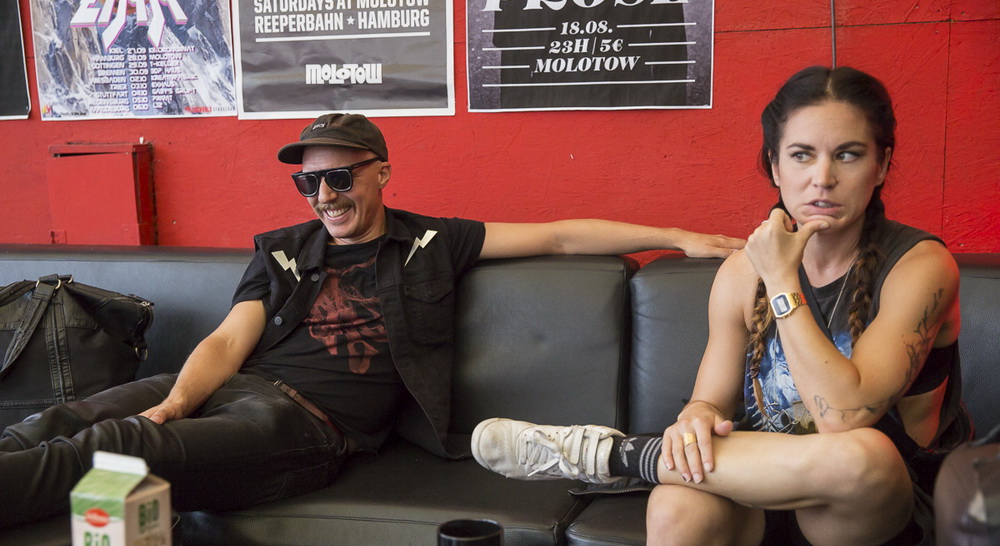
Looking at your tour archives reveals that you’ve done lots of touring around Europe. Does it mean that you earn anything on music and don’t need to work full-time?
Emma: No, but we don’t have anything else either, just a gym card and a band, and I work 60% of full-time and you work [turning to Tobias)…
Tobias: Usually 50% but at the moment 70% because of university funding.
Emma: That means paid work at half-time, using our gym cards and the rest is spent on the band. There’s no time to spend money anyway.
Tobias: If we make any profit from our tours we just save it to make it possible to improve the production on the next album or being able to pay those making our videos next time we do a video. Sure, we get money for shows but we don’t make money to live off (laugh).
Considering your frequent touring, does it feel as your name or the brand The Guilt is established thus making it easier to get gigs?
Emma: Both, but it’s getting easier in general. We haven’t really skyrocketed the last two years but we’re slowly on the rise and it’s getting easier.
Tobias: People ask for us but it’s still some blank spots in the schedule. It’s much easier to play in Germany but we wish it would be as easy in France and Spain as well since we would have been touring much more then. There’s for sure some untapped potential left.
Emma: But there are loads of bands on tour, and many really good bands, and there’s not enough venues to play, not even in Europe if you consider how many bands that tour Europe. For us that means blood, sweats and networking (laugh) to get gigs.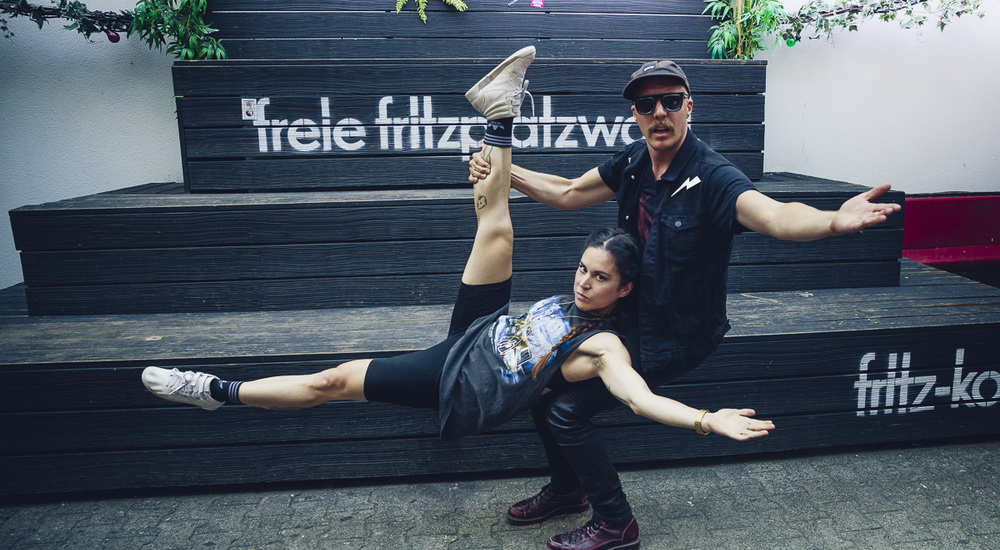
When Jens is not doing it I book the shows, I did it already from the beginning and it’s me people get in touch with anyway. For many organizers on the DIY scene it’s much easier because they want to get in touch with you and not a booking agency, and if you’re good in networking they will know you and it makes it much easier for us to get gigs. Most often it’s like “We’re some friends setting up a show a month in this genre”; that’s the guys you need to stay in touch with and have on your friends list.
Tobias: That’s also one of the reasons to do what we do, just to communicate and network with people, we really enjoy that part of it.
But when you do it DIY there must be these crazy bookings at times, just like the gig in and old crematory?
Emma: You never know (laugh) but that show was one of the extremes. I booked it just a week in advance in panic – we needed a show in the schedule – and usually you know the history of the venue, who organizes events and what bands have played the venue, and just because it’s made in a DIY fashion it doesn’t need to be that horrible, but this place was completely dead (laugh), so to speak. They didn’t promote it at all.
Tobias: It’s not usual but it happens but this was rather an exception. Sometimes you’re just unlucky. But you can compare it to when we did this show close to Brussels a Tuesday night in rain for five people and it was awesome! An amazing experience that has a special place in our hearts; one of those in the crowd is our friend today. I mean, if you do a show you do a show, we go all-in at all shows.
“Fuck Sweden”: Going around Europe
The Guilt is touring as much as they can; wherever there is a gig opportunity, there will be a The Guilt show. The last two years took off in their own ways and have resulted in more shows than ever, being more busy with tour schedules, and there’s a long list of countries they’ve played such as Spain, France, Germany, The Netherlands and, in particular, Belgium where they have their friends in Le Prince Harry and Cocaine Piss.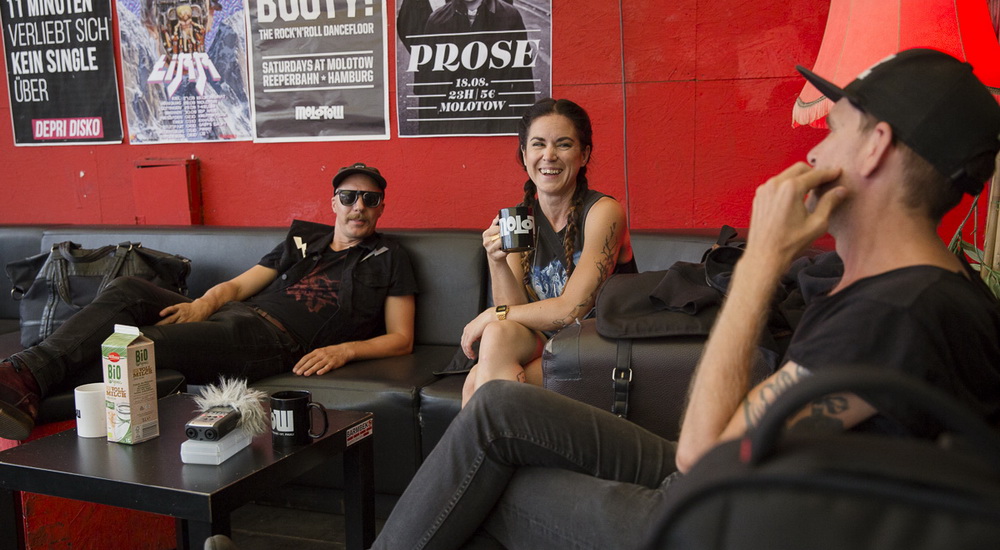
However, on home turf touring is a challenge. As discussed in previous interviews with Pale Honey and Rome Is Not A Town, The Guilt point out the closing down of smaller venues due to gentrification and the lack of niche clubs as the main reasons why touring in Sweden is a challenge.
How easy is it to get gigs in Sweden? Many of the smaller venues have closed down and many clubs just go for sure bets.
Tobias: We had this idea already from the beginning ”Fuck Sweden” and aimed for gigs abroad because we wanted to play often, and it was a wise decision.
Emma: Both because we wanted to play more often but also because when we tried to play in Sweden it wasn’t fun and nobody liked us, maybe someone but it was always so bloody boring. We booked the first tour in Europe ourselves and already at the first show it was like “Holy shit, this is how it should be”.
Me and Tobbe talked about it earlier today and our first gig was at Cafe Glocksee in Hannover supporting Melt Banana and that show set the bar high already from the start.
Tobias: We didn’t know anything about the German audience, nothing!
Emma: And I was like ”Come on, it’s time to dance” and the Germans said “Ok” and danced (laugh)! That’s where our love for the German scene started and ever since then we felt nothing but welcomed, encouraged and embraced.
The last year has worked out well in Sweden and we actually played a few cool venues although we not consider us to be a cool band. We don’t play in a cool genre or any genre at all, a reason why it’s easier to play in Germany where people aren’t that picky about music as in Sweden.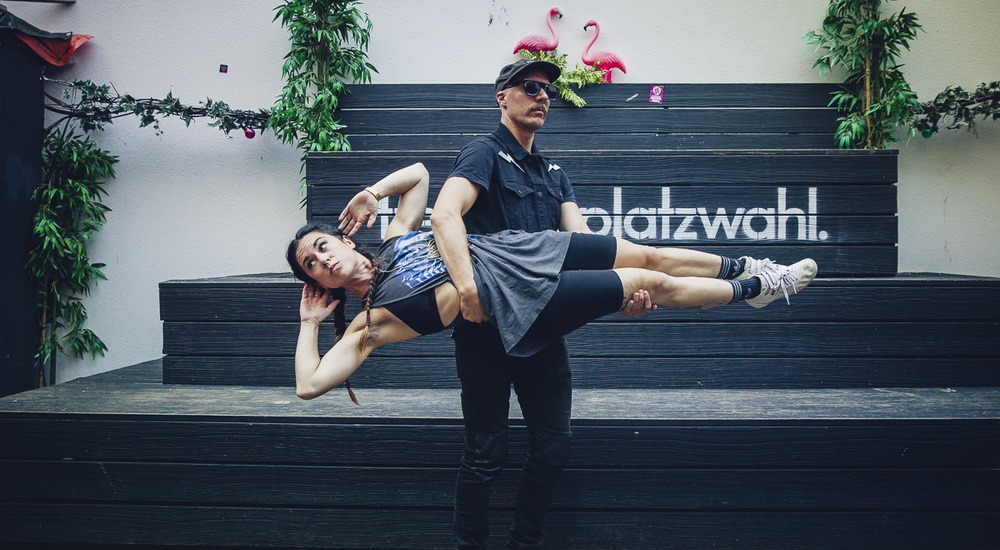
Tobias: But there’s not enough venues and it’s difficult to get shows, but when you get booked in Sweden it works out really great for us today. We played at a synth club at Mässingshornet in Malmö – a synth club! Of course we should play there, it was amazingly fun! And then we played the Rock Stage at the Malmö Festival the week after and that was great too. A palette of genres to play.
It works out just like that; if your flexible enough and can stand with one foot far out to the right and the other far out to the left, then you can play many types of places.
Emma: But it’s similar at the label level and its polarization; either you get absorbed by the massive “money-making business” or you have to start from scratch. Everything disappeared for a while and then the DIY venues returned, and the member clubs, and the small illegal clubs in industrial facilities.
Considering that, it has become much better in Malmö. Just look at Plan B [venue] where most bands visiting Sweden end up playing. Those working at Plan B have invested their lives in that venue and are like “We’re going to run this club straight into the wall if that what it takes” because they want bands they like to play whether they’re from Sweden or anywhere else. It’s not a problem to set up a show on a Tuesday night because it’s a cool thing to do – it’s no “money-making business”.
They have done this the last 2-3 years and still continue but it has also paid off since they’ve become established, people know what Plan B is. Hopefully more of this type of DIY clubs and venues can continue and grow.
It sounds like Malmö has made it better than Gothenburg in creating a good environment for smaller clubs?
Emma: But is has been a similar development in Malmö; Plan B has lived under the threat of moving out many times.
Tobias: It’s some sort of raging debate about gentrification and it happens in Malmö as well and is a reflection of the political climate at the moment.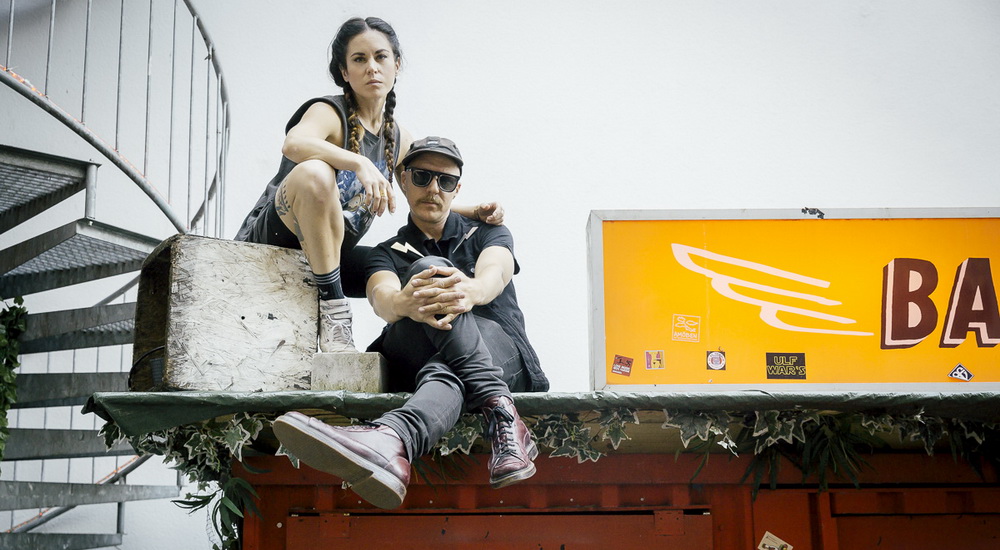
Emma: We started out in Helsingborg, a city that is musically dead since ten years back. Some minor things still happen, some events where few people turn up and at times some techno party’s but it has been the same organisers the last thirty years (laugh).
But is your goal to play as much as possible to spread The Guilt around the world?
Emma: It was like that in the beginning but now I’m just happy you say it because we don’t play that much.
Tobias: But we do, don’t we? We play the next five weekends and for being a band at this level it’s much but not enough to earn money on it.
Emma: Just like that, we break-even and what we earned the last two years was spent on the record last year. Twice we celebrated with dinner at restaurants, but just twice (laugh).
Your rumor as a wild and crazy live act goes around Germany quite much and I know from other interviews that you do lots of gym training. How much and often do The Guilt go to the gym?
Tobias: Let’s talk about which gym classes Emma attend every week. We do a lot of jumps when we exercise, let’s say it like that.
Emma: We just work out a lot! I don’t know what you do [turning to Tobias], you train mostly on your own outdoors. I usually train in a small room together with twenty old ladies, doing stupid stuff while someone’s screaming at you and five times a week, and then I’m running.
Tobias: Only two times for me. I did it five times a week when I was younger.
Emma: What!? Really!? Maybe that’s better. I just do what they tell me to do at the gym since I’m too lazy to go to there and lift weights on my own, that’s why I go to these gym classes.
Tobias: Body combat, body drop, body kick [Tobias does some namedropping]; “The Guilt, we’re gym instructors and we also make music”.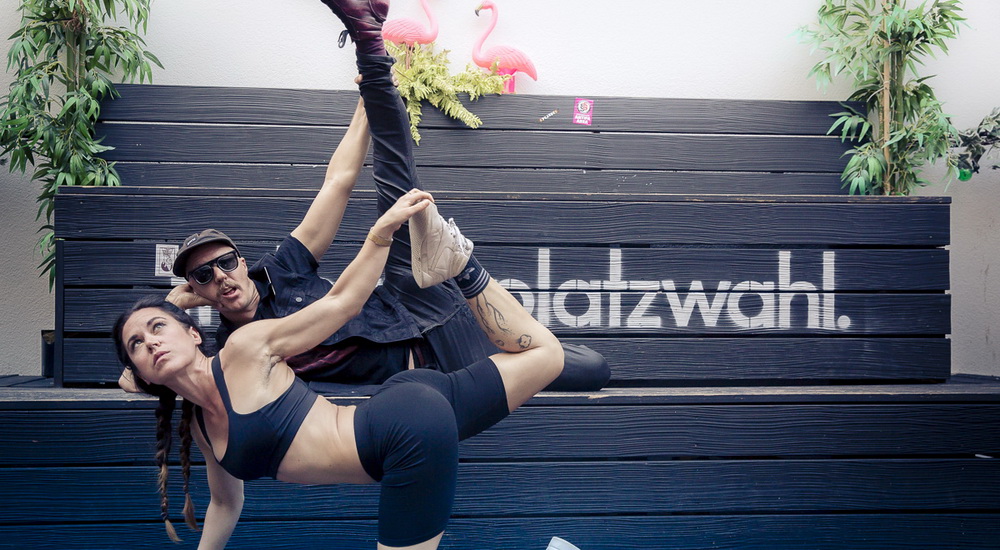
Have you development your performance on stage over the years or is it similar now as when you started?
Emma: (laugh) No! We just play around in the studio and most of the stuff you see on stage happened by accident at rehearsals or on stage but nothing is planned at all. It’s never any cool stuff (laugh), it’s more like “If we do it like this we’ll look like two old dudes of Jethro Tull”, and then we just laugh at it (laugh). We’re really not a cool band.
Tobias: But nothing will stop us! You can’t try to look cool, just give up on that. I really hope that the audience understands that it’s nothing but us on stage, we’re just like that in real life. It’s kind of a high energy music and we really like to go all-in and just have fun.
Yes, it’s quite a high energy show you do. I had a discussion with American noise rock act A Place To Bury Strangers, at times very violent on stage, about injuries and they had to admit there has been some of those. How is it with you and stage injuries?
Emma: But that’s why you need to do lots of work out at the gym (laugh)!
Tobias: But you have fell over on your ass a few times, even broken it.
Emma: Hell no, I never broke my ass but I injured a muscle in my ass. Sure, I’ve had some minor injuries, especially when I hit myself in the head and it start to bleed at times, and once I cracked a tooth. It just happens! Usually it’s nothing but some bruises from the guitar, some scratched knees but nothing serious. The worst that ever happened is when I fell over and injured this muscle in my ass – and not my anal sphincter, my butt! I was able to walk on my own but Tobias had to lift me up once an hour just to stretch my hip. But you can do high kicks with one leg as well (laugh)!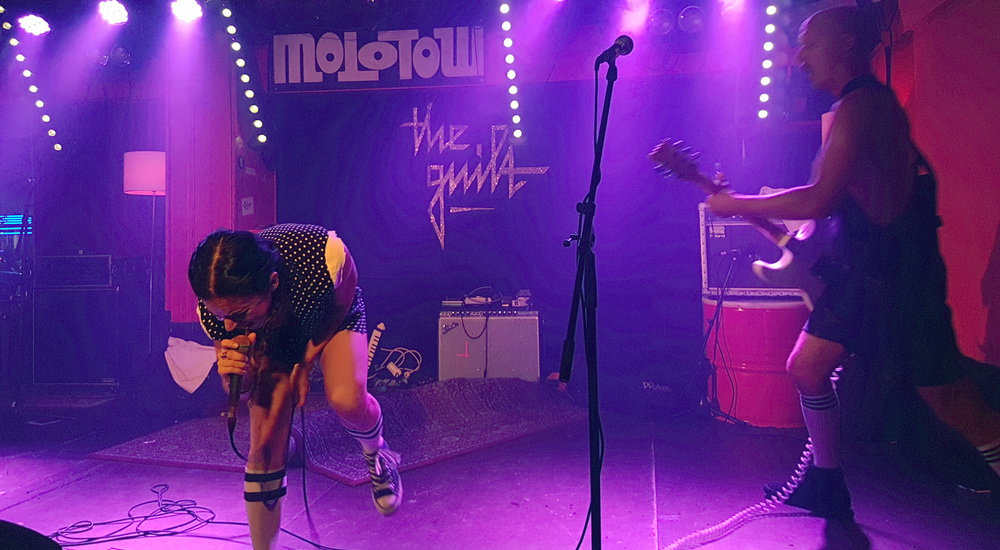
Tobias: I’ve strained my back several times since you don’t really move in an ergonomically correct way but we’ve never done a Thomas Öberg [singer in the Swedish band Bob Hund] and broken any legs or fell on our heads (laugh).
And it means that we can expect the usual crazy live show tonight?
Emma: Now I really feel some pressure! We just said we won’t get hurt on stage and what do you think will happen tonight!? Hopefully there will be many in the crowd to make it a soft landing (laugh).
Photographer interview: ©Mandy Privenau
Photo gallery
The interview is also published in partner magazine Drefvet (in Swedish)
The Guilt pages


Messed!Up recommends
