 Messed!Up
For those of you not being from Germany, you probably don’t know much about the thriving German hip hop scene, pushing toward its own distinguishable style and present a Germany far beyond the Rammsteinification that many outsiders associate the country with. Hip hop and rap music became popular in the early 1990s with bands as Freundeskreis, Advanced Chemistry, Cora E and Absolute Beginner to mention a few great German hip hop artists. And the scene has exploded in the 2000s representing the biggest increase in total sales on the German music market between 2007 and 2017 according to IFPI Germany.
When we turn our attention to German hip hop in the 21st century, the really interesting sound is found in Texas raised, today Berlin based, rapper DiscoCtrl. A few hours before his show at Audiolith’s 15th anniversary party at Schanzenzelt Messed!Up met up with him for a chat about politics in hip hop, spending his teenage years in Austin and the cultural differences between the American and the German hip hop scenes.
For a few years ago I was in Berlin to do a job and a colleague of mine brought me to a club in the evening just to listen to some good tunes. On stage there was this really good German hip hop collective called ImageCtrl that got stuck in my head for a while. Just a few years later I learned that they split up and out of the ashes of what was once a collective DiscoCtrl rises.
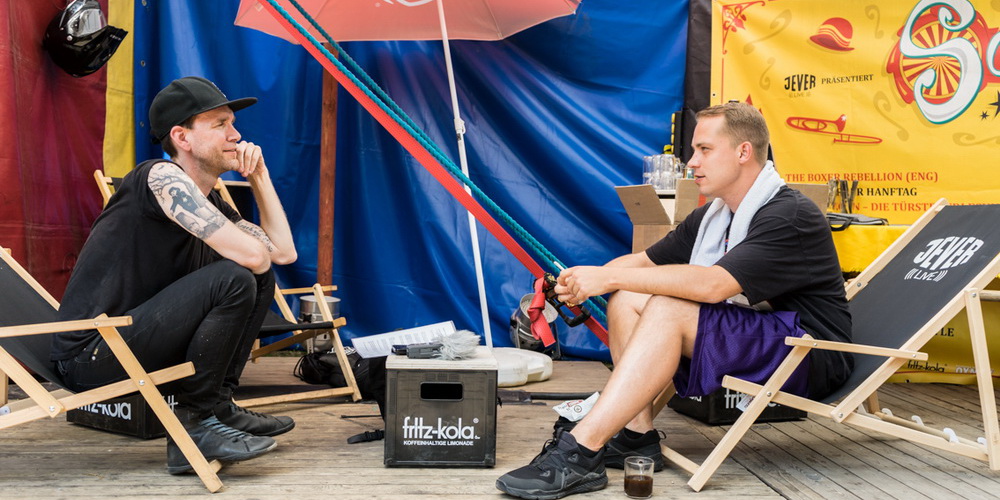
Just to start with, what happened with ImageCtrl?
We started out as a collective of six people and is just got kind of unwieldy I guess. I really loved that project a lot and we were getting really good response; the name applies to that original constellation of people. I don’t think anyone would be really cool with that only fragments of the group taking that name. When we decided to put the project on hold we came away with that agreement that it was it.
Did you put it on hold for good and will you return with it later or is it something you left behind you?
I really highly doubt it honestly. I wish that the connection were a little bit more stable but the magnitude of having that many people with quite different aspirations made it difficult.
Is hip hop a political messenger?
Throughout its history hip hop has never been just a genre of music. The narrative of hip hop began has always been a voice for the powerless and angry, artistically demonstrating the harsh reality of social injustice and discrimination of people/groups who were treated as outsiders. During the 1980s those rap artists appearing on a scene on the rise produced socially conscious narratives, addressing issues of poverty, drugs, violence and oppression by both political and authority figures. In light of such a narrative it’s not difficult to consider hip hop as one of those music genres, alongside punk for instance, that take the role of a politicial messenger. But how important is it for an artist to work with political narratives?
You lived in Austin much of your youth, how much and in what ways have the Texas sound influenced you as an artist?
I would say quite a lot especially as far as the tempo and certain aspects of that kind of vibe I’m trying to mediate because Texas rap is based around driving around in a car and that kind of slow stuff. I mean screw [hip hop style] is really slow all of the time but I want that kind of broader horizon and that trippy, cruising feeling. That’s something that I definitely try to carry over since it inspired me a lot, like Swishahouse and that kind of stuff that I listen to all the time.
But how was it to grow up in Austin, the only major democratic city in an all-republican Texas, the black sheep in Trump-land. Did it have any imprint on how you write songs today?
For sure! The most shocking part of moving to the States was coming into touch with the legal system, what they call the school-to-prison pipeline¹ [see below] which is like getting a really heavy discipline in school, and your teachers or the principals can tell you “You’re not just going to get in trouble, this cop is going to come in here and press charges on you”. That definitely informs a lot of my music, also because I have this feeling that I have family there.
I have an escape route that always was kind of open to me and I moved to Berlin a couple a years ago, and feel that I have some kind of guilt. That’s kind of a big theme in lots of the music I write, especially that pertaining to my time in Texas.
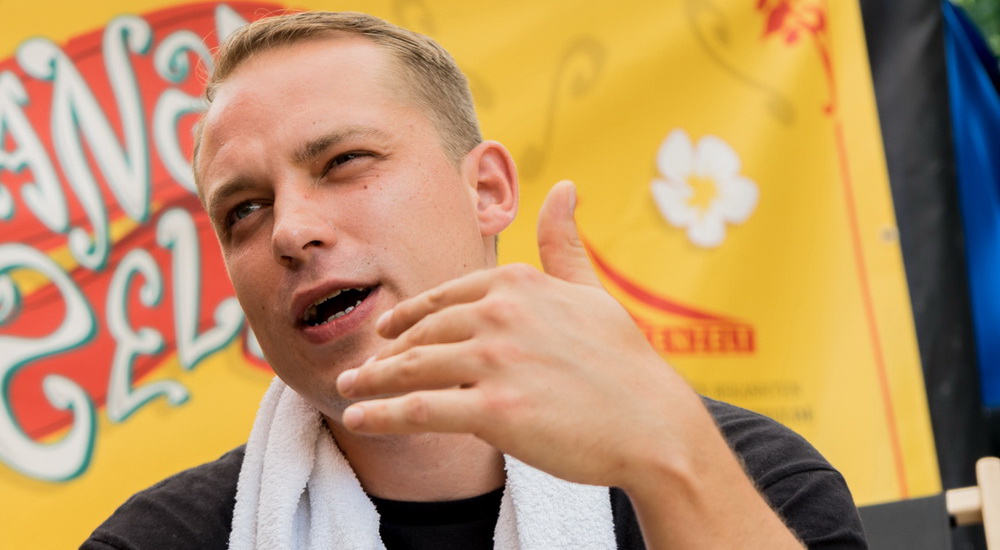
Hip hop has like many other underground movements often a political message, at least a message concerning different inequalities in society in general. Other hip hop artists say that the role of hip hop is to bring forward inequalities and counteract undesired political movements. Does hip hop serve as a political messenger?
I feel that my political attitudes kind of shape what I do in periods, especially if you are a white person involved in what I would still call black music, and it doesn’t have to be rap specifically. We do have a responsibility to make our positions known because there’s a big risk of being a white artist that takes a black art form and makes it more palatable, you know makes it more palatable to people who would say like “I don’t really enjoy to celebrate a person of color on stage” or something like that.
I do feel that it comes with a responsibility because of that risk but at the same time there are so many artists that it’s problematic to get through with a message, and all the artists you listen to are not always these political representatives. There is obviously a lot of red lines that don’t get crossed.
I can understand that it’s much easier to find topics on social inequalities in the US, they’ve had a long history of discrimination, but how do you relate to German politics or what’s happening in Germany?
In some ways I feel like I kind of missed the boat because I came back here in my mid-twenties and I still feel that so much of my political thinking is shaped of what’s going on in the States that I sometimes get so caught up watching Trump and miss something really big happening in Germany.
One of the main things I kind of take issue with here is the fact that Germany is positioning itself like some kind of better alternative to the US, like “We are freedom loving too but we don’t kill as many”, and I think it comes from this position they kind of navigated themselves into. For example, Germany export tons of weapon into the world but we have really strict gun laws here.
That kind of dual standard really illustrates something I think is really wrong and twisted about German politics. Just like participating and profiting from terrible things that happen in other countries, but then saying things like “But look, here in Germany we have all these freedoms”. And it’s not incorrect, it’s not incorrect to say it at all, you have a better chance here as a poor person for example, the poverty is not as abject, the health care system is better; those things are true but they come at a different cost for different people.
Back to Austin or stay in Berlin?
Growing up in Austin have certainly influenced the sound of DiscoCtrl and makes him stand out in the crowd of hip hop artists in Germany, even more when you consider his decision to stick with English rap lyrics. Having the opportunity to pick bits and pieces of two hip hop cultures, mixing together the “Dirty South” with German electronic inlfuences, has created the signature sound of his music but may also come with the risk to fall through the cracks. 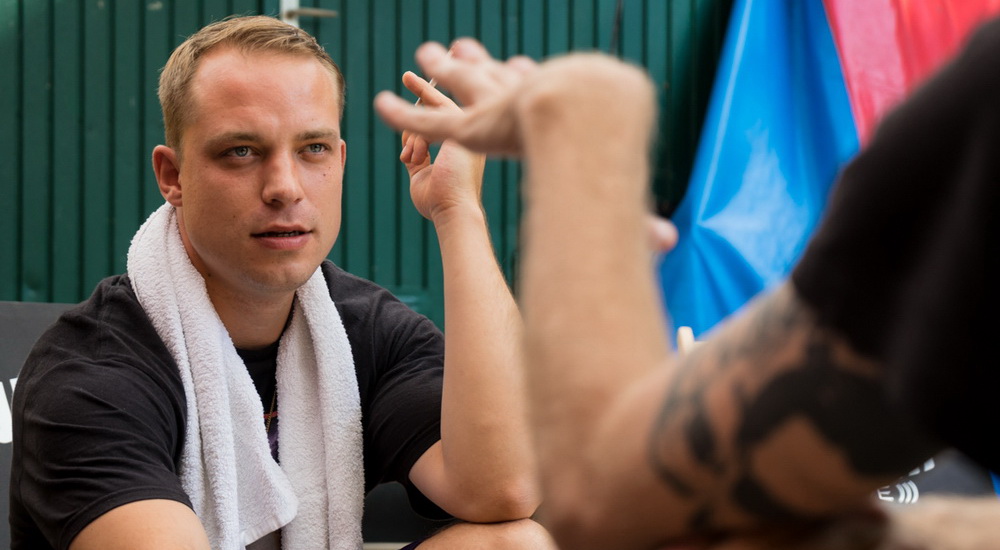
Also, the American imprint on DiscoCtrl’s music and his ties to Austin raise many questions about the future. With family in Texas and good connections to the local scene, the German hip hop scene may not be the primary target in the future.
What’s your take on the hip hop scene in Austin compared to what you experience on a quite vibrant German scene, especially in Berlin?
One thing I can definitely say about being based in Berlin is that there are a lot of opportunities for people at my level, like slightly stepped-up underground. It’s [the scene] still real indie, it’s not majorly financed or anything like that and I’ve got a lot of opportunities to play cool events and tour around a little bit. That kind of infrastructure doesn’t really exist in the States as much. That’s one comparison I can draw between the scenes.
I was pretty lucky to be able to go back here and develop my music because I actually was given the chance to play shows, get paid a little bit money for what I was doing, kind of like stepping from one opportunity to the next. In the States, especially if you live somewhere in Texas for example, you’re far away from the next city and it’s really easy to get lost on the radar.
But I guess that even if the hip hop scene is massive in the States it’s more difficult to get stage time than at home?
I think rap is the highest selling or most streamed genre in Germany at this point so wherever you go right now you going to look at a lot of competition.
Will you return to Austin or do you feel more home in Berlin now?
I feel that I’m totally split. Austin and Berlin have a lot of the same issues right now, like they grow a little bit too quickly, a lot of the older residents are being forced out because of higher rents and that kind of thing, so I see a lot of same problems going on in both places and feel like both Berlin and Austin are getting more foreign to me actually.
I’ll be there [Austin] most of the fall and I try to keep my connections there as good as I can. I would really like to integrate artists from Texas, and Austin specifically, into my music so I’m hoping that I’ll be able to touch base there a little bit because I’ve been so Berlin based.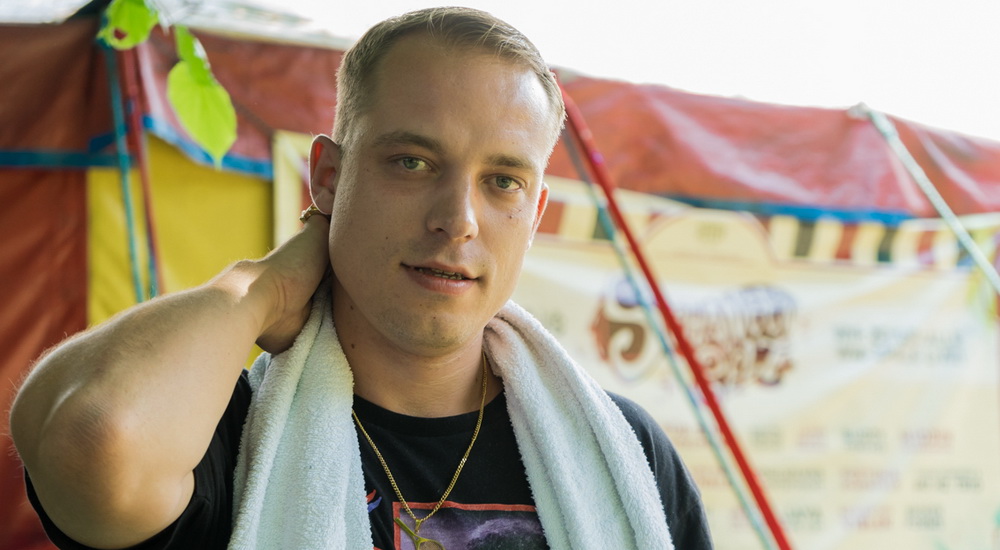
And that’s interesting; although Texas is included in the “Dirty South” hip hop culture Austin is somewhat of a black hole in American hip hop. You hear quite much about Houston, Atlanta and New Orleans but rarely Austin, but there must be a hip hop scene with artists for you to collaborate with.
Austin has a reputation of being an incubator for a lot of music if you think of South by South West [SXSW, the biggest showcase festival in the world] and that was kind of crazy to experience as a local artist because all of a sudden all these venues that you try to play at for the rest of the year put on these huge events and huge artists. I can’t really say that this is my critique on the way that the scene works in Austin but I feel like, especially, the rap stuff kind of gets swallowed up.
My theory is that Austin is a very segregated place, it’s a majority/minority city with more latinos and black people than the white people, but the politics and the way that Austin is representing itself to the outside world are very white friendly. So, when Austin kind of sells itself as a music capital it never talks about rap or rap music, it talks about school rock bands and that kind of stuff. There is a lot of talent there that doesn’t get noticed enough but they don’t give them confidence enough in the way that Houston really represents, that has a rich history and a legacy of putting out music that got out to the rest of the world.
Speaking of your experiences of the American hip hop scene; you must have been influenced just by living in Austin and musically you differ quite much from most German hip hop – you have quite an American imprint all over your music. How do you connect to the German hip hop scene?
I would agree with you and feel I’m definitely on a little island by myself (laugh). I’m not necessarily trying to self-marginalize, I’m always open to connect and work with a lot of people on the German rap scene, different producers and stuff like that. So I definitely don’t have the position that I don’t want to be part of all that, but when I moved back it kind of came down to this question “Maybe I should start to rap in German”, but at the same time I really wanted to do something that was uncompromising.
I felt that if I have a shot to do this right now then I kind of want to continue on the train I was on before. If you play on the Austin scene I’m not necessarily going to blend one hundred percent with the stuff that’s going on there, because moving back and forth and taking a lot of electronic influences from Germany and combining that with the Texas sound, that makes some kind of a melting pot that is probably a lot more difficult to sell too.
I think that’s kind of a fun question that you get into after a while. Like when you started out just making your niche music for yourself and for some reason it catches on enough that you will get more opportunities, and then all of a sudden you’re looking at the next level or something like that, and it is like “How do I integrate myself into this market”, but those aren’t really that kind of questions I want to be asking myself.
Is the German scene even the scene to end up on for you considering that your rap in English and have connections out of Germany?
I’ve been able to play outside Germany and have played around Europe a little bit in the last two years and it has been really fun. I would love to play more globally, I’m definitely open for it, and I think that’s definitely more interesting, what you’re saying, about sticking with English because it’s more accessible, it’s more people that definitely can tap into it. At the same time I really want to be careful to not ignore the opportunities that I have and not setting up the idea where people get the sense that I’m just biding my time here.
The market here is huge, people love music here and they go out to a ton of shows, they really support your stuff if they like it.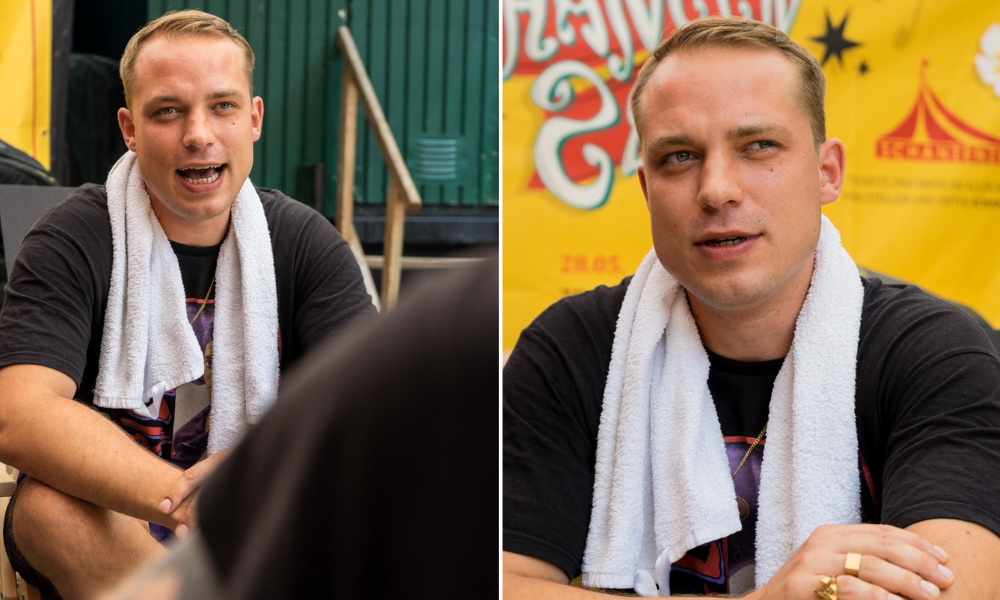
Debut album on Audiolith Records
After releasing the mixtapes “Dusk 1” and “Dusk 2” and a few singles of which Frida Kahlo won really good reviews, the debut album “Midnight” has just been released on Hamburg based Audiolith Records, a 26 track album with bonus tracks included. And it comes with a sound that “combines influences of NYC in the 80s, East Coast HipHop in the 90s, Austin in the 2000s and today’s Berlin”.
After the album release the immediate future is focused to festival shows and one-off gigs. But what is the future plan considering the many opportunities comning from the American connection that opens the door to the world scene of hip hop?
Speaking of music; you released your debut album,“Midnight”. What is different compared to your previous releases, musically speaking I mean?
I was really fixated on making a whole album and was really stuck on these releases that came out in the 1990s and early 2000s with a broad concept that kind of carried you along a vibe. I tried to do that with the mixtapes [the “Dusk” records] as well but I was a little bit more casual about it, but on “Midnight” I really tried to throw out everything that didn’t fit that vision, and I just spent a shitload of time on it. With all the bonus material it’s huge for sure.
I really like the artwork of your upcoming album “Midnight”. It gives you a dystopic feeling. Did you have any ideas behind the artwork?
I really appreciate that my friend TheOlifants, he is a graphic artist and a graffiti writer, created the artwork based on the kind of concept I had. I was really happy with how it came out and it kind of trying to transport this vibe of feeling a little bit apart from the world. Something like being in the middle of the night between two worlds and having more of an observer position than necessarily participating in everything.
It’s not supposed to be negative. I know it’s dystopic but I don’t want it to be necessarily pessimistic, I want it to be pretty, and he did an amazing job translating that.
If you consider the next few months for you, what’s the plan after you released the album? German tour?
I’m spending the summer playing festivals and one-off shows and then I have another EP that comes out towards the end of the summer, entirely produced by Yunis who features on “Midnight” too on one track. He’s more from the bass scene, post-trap or beyond d‘n b and that kind of stuff. We sat down and made an album which is like updated boom bap [hip hop style] and sounds really different from “Midnight”, and carries a kind of very different vibe.
Since I stepped back from production completely I feel that I kind of got to do some other stuff with my rap too. We have a lot of videos coming out for “Midnight” as well, the EP and some other featured tracks, and then I’m going to take it to the States for a couple of months and get my head straight (laugh).
Where can you see yourself in a year?
Shit, I can’t really say (laugh). I think that an ideal situation for me would be to keep doing what I’m doing. I always kind of walk at the razor’s edge and that gets to me and makes it difficult sometimes so I would love to step-off of the razor a little bit, just getting in a position where I can do what I’m doing with as little interference as possible, that would be ideal. But I’m really not trippin, I’m really excited to put out an album and to have a label to support it, to actually have my own vinyl release, to play festivals – all that shit is gold to me.
¹The school-to-prison pipeline (SPP), also known as the “school-to-prison link” or the “schoolhouse-to-jailhouse track”, is the disproportionate tendency of minors and young adults from disadvantaged backgrounds to become incarcerated, because of increasingly harsh school and municipal policies. Many experts have credited factors such as school disturbance laws, zero tolerance policies and practices, and an increase in police in schools in creating the pipeline (Heitzeg, 2009)
Photographer: ©Jule Rog
Photo gallery
DiscoCtrl pages


Messed!Up recommends
