 Messed!Up
Every decade or so, a wave of young bands comes charging out of the soggy, overcast United Kingdom and ricochets around the globe, recalibrating how we listen to rock music and charting a course for the next ten years. Established music media such as Pitchfork, NME and Rolling Stone create endless lists of new and upcoming bands from the UK and almost everyone of them ends up on the major festival stages and then celebrate ten to fifteen years in the spotlight – there’s really no end of it. With the second decade of the 21st century nearing a close, we’re smack in the middle of the next wave.
One of these new exciting young bands originating from Scotland’s music capital Glasgow is The Ninth Wave. Messed!Up was lucky to sit down with Haydn, Louise, Millie and Lewis before their show at Molotow in Hamburg, only their third show out the UK but certainly not the last – we promise you!
Everything started out in the summer of 2017 when a friend emailed the single “Reformation” after being at their concert at “Where’s the Music”, a Swedish showcase festival for new talents to show off in front of the music industry – and “Reformation” is a storming indie ripper which quite soon caught the attention of BBC’s Radio 1. After a few months in the waiting line singles “Swallow Me” and “New Kind of Ego” were released in the beginning of 2018 before both ended up on their second EP “Never Crave Attention”.
The Glasgow four-piece create an outburst of post-punk fueled indie rock with classic goth synth lines to cover any possible gap in the layer of sounds on their two EP releases. Though the band hasn’t released their debut album yet they will play some of the major festivals this summer. With their latest EP “Never Crave Attention” they went for two dates in Germany to show up their talent to the German crowds.
Glasgow isn’t enough
Welcome to Hamburg and Germany! You played Berlin yesterday. How was it?
Hot! It was very hot. I [Millie] was at the venue we were playing at yesterday last year and thought “That would be such a cool venue to play, I wonder what that looks like inside”, and we just played it! I still can’t get it into my head (laugh). We got more people there than we would at some places in Scotland where we come from.
The Ninth Wave is yet quite unknown for music fans in Germany. Tell us something about your background and your musical influences in particular.
Haydn: It’s my guilty pleasure (laugh).
Louise: I was made to take piano lessons when I was younger so I think that’s why I started to listen to Nirvana and Pixies, as a contrast, and then I found the 80s, but also modern artists as Homeshake with a lot of synths and drum machines.
Millie: My mom was supermusical and was in many bands and as soon as I was old enough to go to festivals, when I was twelve, she would take me to this festival, RockNess, and take me around and say “Do you see this band, they’re from the 80s and have synths and is really good” (laugh). So I grew up thinking “Ok, that’s what great music is”, and from that point I listened to bands having the same influences.
You just released your second EP, “Never Crave Attention” just two days ago and when listening to it you seem to have progressed quite much the last year. What’s your take on that?
We’re experimenting a bit more with synths and stuff on the new EP, a lot of it [before] used to be really guitar-based, and we’re just trying out a lot of things at the moment. We could have just done what we did with the first EP and do a second “Reformation”, try that again, but it’s no fun in that so we tried to make it a bit different, more interesting.
To some part you have a unique sound in that you combine indie rock with 80s goth synth lines and some lovely postpunk guitars – you, Haydn, even have a distinct 80s song style. Do you have common grounds in terms of music taste or do you combine completely different worlds in the production process? All these different influences certainly give you the impression that you have different entry points to what you do.
We have some overlaps but it’s a bit chaotic (laugh) like Haydn’s 80s stuff, Louise and Millie bring in the rock stuff and I [Lewis] played in a black metal band – Millie actually likes everything (laugh).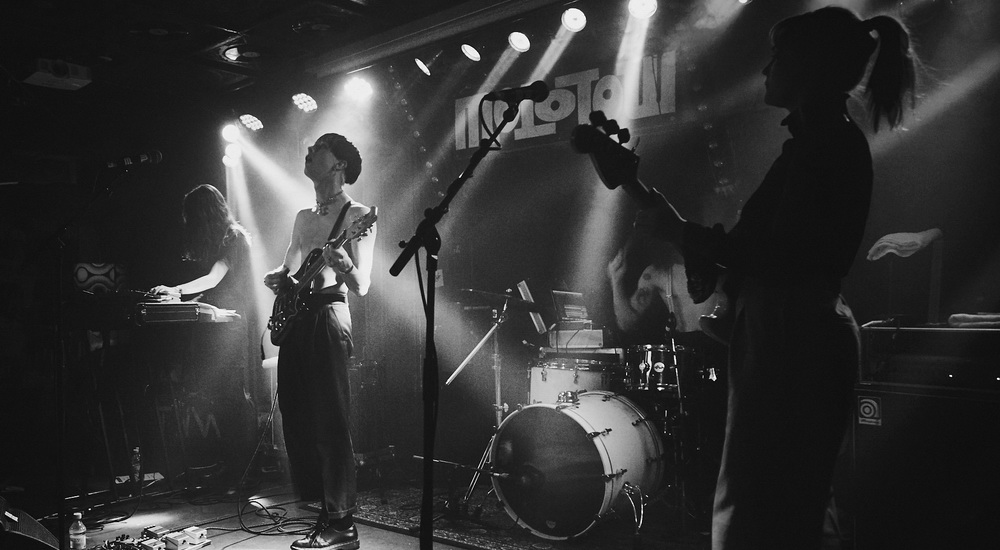
There is quite a music tradition with both older bands as Mogwai and Primal Scream, and more recent bands as Glasvegas, PAWS and Baby Strange to get inspiration from. To what extent has the Glasgow scene influenced you? Is there any local music community that push new bands into the spotlight?
When we first started there were local DIY labels helping us with our vinyls. There are also different groups of different genres in Glasgow and we ended up with the guitar rock bands connected to several venues and it gave us possibility to go on stage. But more recently we started to play out of Glasgow. But it’s easy to get stuck; there are bands just being Glasgow bands, and then they play Manchester and no one knows who they are which is what we tried not to do from the start even though Glasgow helped us much.
Since we’re on small stages people who are interested in the band is coming, press people and stuff. We only just started to build fans and now people sing along in the songs a bit. For six months ago there were only people working in the music industry coming to the gigs (laugh).
But you are doing this full-time, seven days a week in the studio?
Haydn does since he lives very far away from the studio, so it’s easier since he can’t leave (laugh).
You played some classic venues, in London for instance?
Yes, but it was strange. I feel that people coming to the gigs are quite different, like in the energy from the crowd – I think they’re a bit more serious than that in Glasgow. It feels like everyone watch you a lot more when playing London for instance, more critically but in a good way because it makes you work harder (laugh).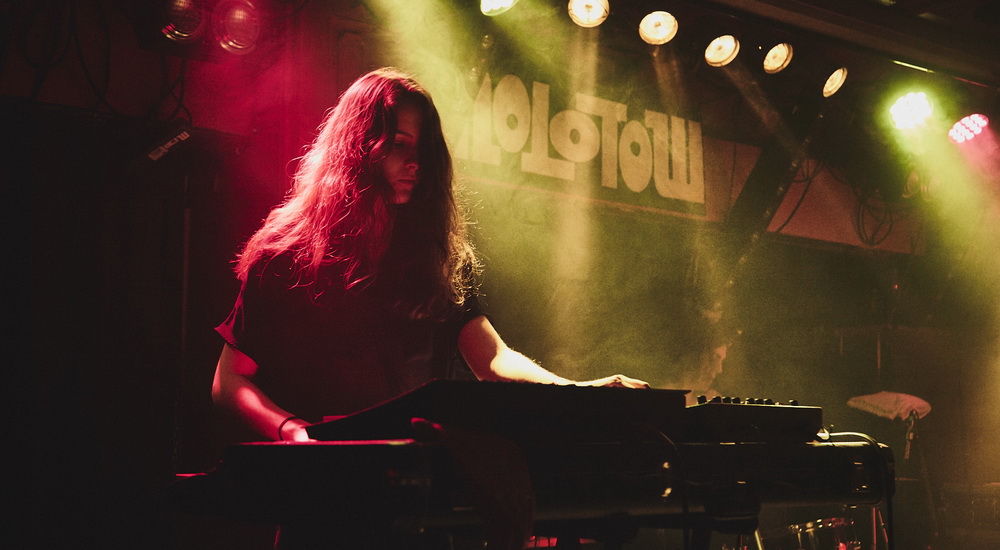
You also bring lots of goth elements on stage when considering your aesthetic. Your attitude and clothes reminds me more of going to Wave Gotik Treffen – the biggest goth festival in the world – than going to an indie rock show. What’s your thoughts on your aesthetic? How important is it?
It’s never really been that I’ve [Haydn] thought about it, if you find something you like you dress up in it. It goes hand in hand with music. If we were playing in jeans and a white t-shirt and singing songs like “Swallow Me” people wouldn’t really get the picture and understand what we’re doing.
Speaking of on stage aesthetic; the reason why my friend in Sweden recommended you was because of your on stage attitude, just like any band being around for ten years, he said. Do you work specifically with your stage appearance or is it just natural?
No, not really, it just happens and it’s all from our rehearsals. Coming from Scotland, and I [Millie] definitely feel it myself, I don’t really like moving that much, but it just comes over you naturally and in the end I can think “Oh, where did that come from, who am I playing”, and I can actually enjoy it (laugh).
Doing the festival tour
Getting booked to play a music festival is extremely competitive. For an artist the difference between a festival slot and a normal gig cannot be underestimated and it gives new artists the opportunity to play to a new audience and potentially gain new fans. The editor’s own research show that festival audiences differ as they tend to be more willing to give artists a chance simply because they’ve paid their money and are at the festival for a day or a weekend, unnlike at “normal” gigs where the majority of the audience have bought tickets to see a certain artist. Therefore, landing festival gigs is big and landing major festival gigs is massive.
After their mini-tour in the UK in May, The Ninth Wave embark the festival circuit and will play not only one major festival but a range of well-reputed festivals such as TRNMT and The Great Escape before they return to Hamburg and the Reeperbahn Festival. The future looks very bright for the four-piece from Glasgow.
You have some major festivals coming up, The Great Escape and TRNSMT, to mention some of them. Will this year be a breakthrough year for The Ninth Wave?
It’s built up to the point where we reached the tipping point but if nothing happens, if it doesn’t work now, it doesn’t matter. We just keep on doing shows – that’s what’s important if you’re a band. We also have our own studio back in Glasgow and we’re in there seven days a week, just practicing all the time. People easily get lazy when they get airtime and end up on Spotify playlists but we are constantly making new songs and practicing to become better. Never want to become comfortable, always want to improve.
The show in Sweden was the first out of the UK if I understand it right, and you’re doing these German shows which are headliner shows, and you will do a mini-tour in the UK starting in May as well. How is it different to headline shows than just being a support band?
I [Haydn] reckon that when we were headlining last night what has happened in one year. We played really small venues in Scotland last year, like when we played Inverness at the top of Scotland and it was something like six people there (laugh). The next day there were a lot of more but you never know how many is going to be there when you’re not playing Glasgow.
As a headliner you also get more time to soundcheck and can relax a bit. If you’re supporting a band you don’t need to be there until six o’clock and then you get a ten minute changeover and then you have to leave, but now we can show up at midday, get fed, hang about and have it much more relaxed. And being a headliner is cool! It’s so cool when people turn up on our shows, and I [Millie] think “Oh my God, there are people in other countries listening to us”.
How is it different to be on stage abroad than playing in Glasgow or in the UK in general?
Maybe it’s more exciting in a way, you don’t know how the gig is going to be. It’s like an unknown territory. In the UK we can estimate how many people will show up but playing in Europe where we have no idea of people turning up or not is different.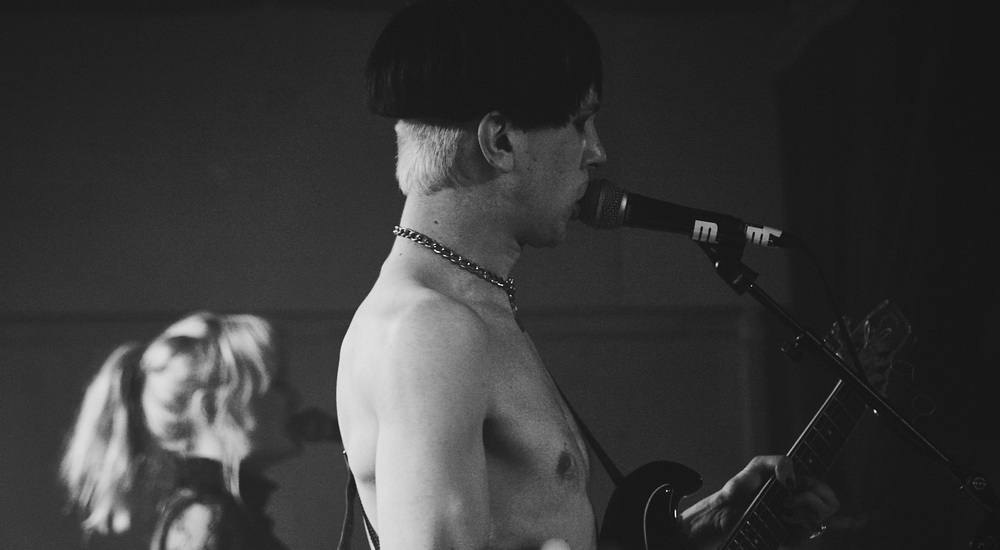
But how has your position on the Glasgow scene changed after one rather successful EP and a second that would probably enhance your first impression, and airtime on radio?
Every gig since last July we have sold out and the venues have slowly become bigger. On the next tour we’re not playing Glasgow because we thought it would be fun to end the year in Glasgow and show what we have done during the year.
Does it come with a pressure to finish your debut album to have something to go on tour with, just to reap the benefits of the publicity that follows with this summer’s festival shows?
All that sort of pressure is a little bit shit and we don’t want to rush anything.
To wrap things up, what’s the next step, in the near future, for The Ninth Wave? What’s the ambition for 2018?
We’re going to record more stuff, new songs, over the summer and between all the festivals, and then you have to wait and see (laugh).
And of course I have to ask if there will be a debut album this year? Or will there be another new EP first?
Not another EP and not a single – let’s wait and see!
Will there be any songs newer than your latest EP tonight then?
Well, one but the EP is new and we’ll play those songs but something else is coming up as well.
Last but not least, what do you expect from Hamburg tonight?
Hopefully lively crowds. Compared to Berlin the street [Reeperbahn] is fucking chaotic so hopefully that comes into the club and people go mad. Hopefully people dance because we don’t get it that much in Scotland, that would be nice to see (laugh). We’re playing at midnight after people had a couple of drinks and then they will dance (laugh).
Photographer: ©Alex Schmitz
Photo gallery
The Ninth Wave pages


Messed!Up recommends
