 Messed!Up
The third weekender of September, Hamburg’s St. Pauli neighbourhood turns into one ginormous, gloriously chaotic stage. For four days, Reeperbahn Festival takes over clubs, bars, churches, theatres, fan shops, and even bank foyers, transforming the streets around the Kiez into a constant soundtrack of discovery. In 2026, that familiar sense of musical adventure was very much alive.
With hundreds of artists descending on Hamburg, Reeperbahn Festival once again proved that its greatest strength lies not necessarily in the names at the top of the bill, but in the thrill of stumbling across something unexpected, just like it should be at showcase festivals. One minute you’re squeezing into Molotow for a sweaty indie set; the next, you’re standing beneath the vaulted ceiling of St. Pauli Kirche as Better Joy strips everything back to something intimate and mesmerising.
Outside the venues, Reeperbahn itself is part of the experience. One of Europe’s most famous entertainment streets has a reputation that precedes it: the strip, synonymous with nightlife, neon lights, bars, rock’n’roll, and the anything-goes spirit of St. Pauli. Long associated with sailors, night owls and the city’s red-light district, it has also played a central role in Hamburg’s music history, most famously as the place where The Beatles sharpened their live act in the early 1960s, which put the city on the music map and created a reputation in the UK that’s still solid in this day and age. Today, its mixture of grit, glamour, tourist spectacle and genuine local nightlife makes it an unlikely but perfect home for a festival built around musical discovery. Between shows, artists, industry insiders, photographers and festival-goers collide in bars and on street corners, while the neon glow of the Kiez provides the backdrop to a seemingly endless soundtrack of the nightlife.
There was, however, a more reflective mood surrounding this year’s edition. With questions about funding and the festival’s future hanging in the air, 2026 felt like a reminder of what is at stake. A visibly scaled-back opening ceremony and a mood of concern about the event’s future. The festival is facing reduced federal funding, with support reportedly set to fall from €6.2 million to €3 million for 2027. However, that’s next year’s headache – don’t let it cloud the 2026 edition of the festival. Against this backdrop, we set off to Heiligengeistfeld next to FC St. Pauli’s home arena, Millerntor Stadium, on Wednesday afternoon to pick up our accreditation passes.
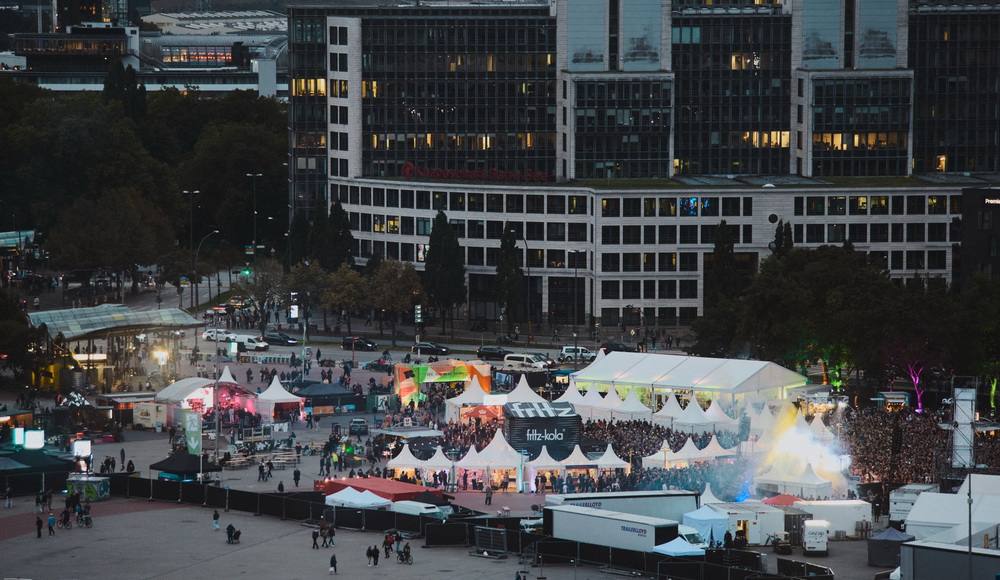
The first day of Reeperbahn Festival is a pre-festival day with fewer gigs, opening ceremonies, but a great chance to get into the festival vibe. Our tradition since we started covering the festival in 2018 has been to get acquainted with the Festival Village. If the clubs and concert halls are the beating heart of Reeperbahn Festival, the Festival Village is its open-air living room. Set against the frenetic backdrop of Millerntor Stadium, it offers a welcome change of pace from the frantic dash between venues, and especially a change to watch artists on the rise play smaller stages in front of large masses of people (the Festival Village is free for everyone), thus growing their fan bases. However, this year was different, with lots on the schedule, above all an exclusive acoustic set by Nothing But Thieves later in the evening that I didn’t want to miss.
After some orientation in the Festival Village, exchanging quite many hugs with people we only meet at the festival, and a few shorter gigs (15min-shows) at Spielbudenplatz (also free for everyone), I ended up at the first MoreCore Awards ever, at Uebel & Gefährlich in the old Feldstrasse bunker with a hotel on the top of the building. 72 nominees across nine categories and some of the heavyweights of metal music onsite, like Wacken, paved the way for an epic night with some good fun. The live programme also had plenty of musical muscle: Nothing But Thieves was set to play an exclusive acoustic set. Nothing could do wrong, right? It was probably the most boring hours ever spent at Reeperbahn Festival, with poor production (working in the media production area makes you more critical) and too many ‘homemade’ solutions for the awards. When even Nothing But Thieves – misplaced as they were on a metal music night – failed to deliver, I cut the evening short and left to meet up with friends at a drink bar nearby. Well, most people left after Nothing But Thieves. They were obviously the main attraction of the evening. First day verdict? Good to meet up with some old festival friends again, but not amazing music-wise. On the other hand, the pre-festival day is rarely amazing. But I learned that Möwe Sturzflug has great cocktails, a big plus for future adventures.

The second festival day, and the first ‘real’ festival day, was completely the opposite of yesterday. It was full steam ahead until after midnight, with some great performances, especially by GANS and Venus Grrrls, and new discoveries like Tom A. Smith and Nastyjoe.
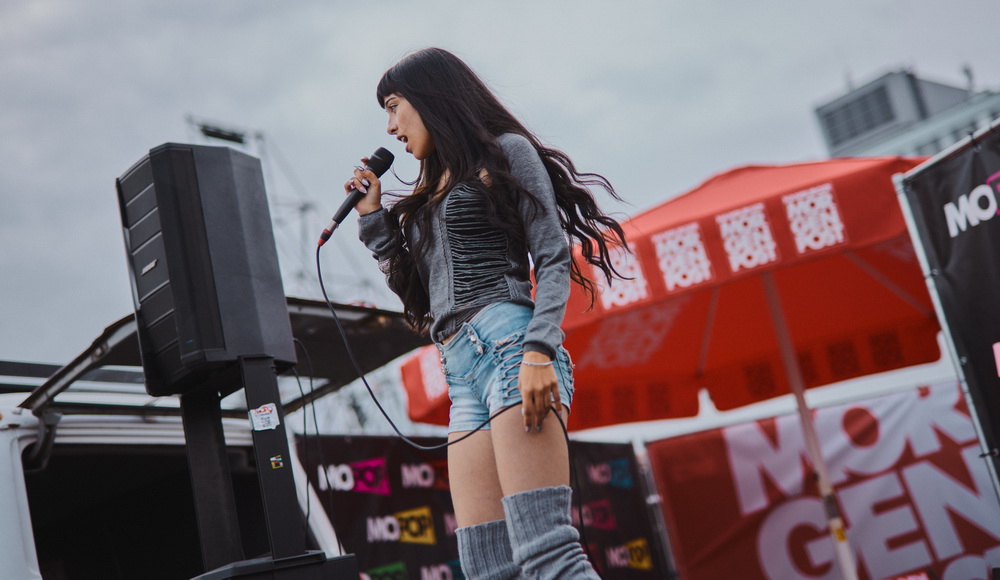
As with most festival days at Reeperbahn Festival, this one also started at Spielbudenplatz, watching bands play 15-minute-long shows (3-4 songs). It’s a good way to discover new bands you can’t fit into a hectic night schedule. And then it struck me. In this day and age, when AI infiltrates all parts of the music industry, especially music production, it’s liberating to watch live music because it’s one area of the industry that AI can’t take over. Yes, I’m well aware that much electronic music can be entirely AI-produced, and the only thing added is the performance. But since I’m mostly into guitar-driven music, AI isn’t really a problem (yet).
Human instrumental skills combined with human performances and human interaction is an area where AI has its limits, and for an old percussionist-educated bloke like me, it’s liberating to have something left for humans only. Reeperbahn Festival even hosted panel debates on the topic during the conference part of the festival, both from a wider perspective on human creativity and new opportunities with AI. I’ve made up my mind; there won’t be any AI music coming near my home. If I find out that bands and artists are using it on records, I will leave them out of my collection. It’s a matter of protecting human creativity. On the plus side: I’m glad to see that the industry takes it seriously and that the festival hosted several debates on the topic (just like all showcase festivals, Reeperbahn Festival also hosts a conference parallel to the music festival). Enough whining; it was time to start the first ‘real’ festival with some really interesting acts on the schedule.
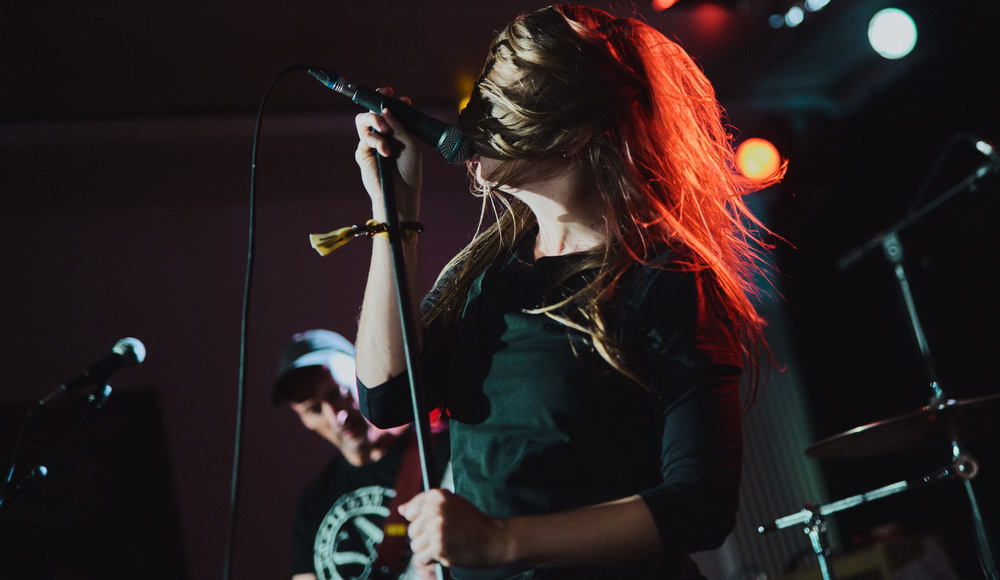
First on my schedule was Sunderland chap Tom A. Smith, who has released some great singles and EPs over the last two years. Last week, his debut album Put On A Record Tommy was released, and he’s booked for touring most of the fall (mostly in the UK). Finally, a chance for Germany to find out more about the 22-year-old! What we learned from the first song is that Smith doesn’t really do standing still. He spent 45 minutes throwing himself around the stage with the kind of restless energy that makes watching him feel almost more exhausting than being on stage – what an energy! Opening with the brilliant song ‘Let’s Go Dancing’ – on the flipside of ‘SFX’ (if you buy vinyls, you understand the concept of ‘flipside’) – was almost too perfect. Smith immediately put the room into motion, strutting, jumping, and pulling shapes while delivering his songs with a voice that has considerably more authority than his 22 years might suggest. He’s running across the stage with great confidence, charisma, and unhinged enthusiasm. This is what you want at a festival – full steam ahead from the start and not stopping until your time is up. He also brings a brilliant band. There is an obvious chemistry between the musicians, built through years of playing together, and with different stage personalities that makes it interesting to watch a full show (and you rarely have time for that during a showcase festival with 600+ gigs). I stay for the full show, although I wanted to arrive well in time for Nastyjoe’s gig at Stage 15, but it was just across the street.

A quick run, and I entered Stage 15 just a few minutes before the French boys walked onto the stage. Nastyjoe has been on my radar the whole year after their release of the brilliant debut album The House. Lucky for me, the French music organisation Centre National de la Musique (CNM) shares my taste in music and brought the band to the festival. Nastyjoe deal in the darker end of indie rock and post-punk, with the tension of Fontaines D.C., Shame, and The Cure running through their sound, and it’s reflected on their debut album with several great songs. It’s a good show, and they also play some new and unreleased songs that build on the album’s sound – very promising. The setting isn’t the best; Stage 15 isn’t a club normally used for gigs, and the lighting isn’t amazing, but when I like bands for their music, I really don’t care that much. And they show some great confidence for being a new band in the scene – maybe not the Tom A. Smith confidence (Brits are on another level) – but their show makes you want to have more. I can just hope they will swing by Hamburg on a tour later this year; it would be a perfect match for Molotow.
It was time for a break. I’ve learned to understand my limits this summer, the most intense festival summer for me since 2009. Seven festivals took their toll, and I’ve got some problems with my left foot after standing at shows for full festivals during the whole summer – I counted it to 38 festival days since the beginning of June. At the Way Out West Festival last month, I ended the last night lying on my back with cramps in both my legs. Who said festivals don’t require a spring boot camp to get in shape for the season? Next year I’ll do this differently. Taking a break doesn’t mean skipping out on shows. Instead, we went to the Festival Village to grab something to eat and watch bands on small stages from Sacco Sacks – perfect! After a 90-min-long break I was off to Betty to watch Venus Grrls, a UK band on the heavier side of rock music.

Although I was in a food coma after too much snacking, I really enjoyed the show with classic rock and goth elements in their performance. The band has released a series of great singles since I discovered them in early 2025, but Betty didn’t really help them to exhibit the spirit of their music. Please come back, but book Hafenklang or Molotow. That will work better with the music. With my energy restored through two Club Mate, I dragged our photographer with me to Molotow with a promise that she would get a punch-in-the-face gig by GANS.
It’s hard ot explain their music, but imagine post punk mixed with noise rock and ‘good ol’ rave (the TB303 basslines bubbled in the background the whole set). Just listen to their 2025 debut album Good For The Soul, and you will get it. GANS are not particularly interested in behaving like a normal band. At Reeperbahn Festival, the Birmingham trio turn their set into something somewhere between a punk gig, a sweaty rave club and a minor nervous breakdown, and it is gloriously weird. I don’t know if their music is good or just complete crap; it’s too hard to answer that question, but their live show doesn’t leave any room for calming down – it’s a nonstop, completely bizarre performance that hauls in the crowd and never loses its grip. Even weirder, in this madness of events, they add saxophone and flute. Adding sax and flute to the band’s original two-piece setup could have been a gimmick. Sax and flute man Tommy Lawther thrusts himself into the performance, adding bursts of free-jazz chaos and abrasive brass that collide spectacularly with the electronic beats. No words can fully describe a GANS gig; you have to come out for a gig yourself. I just know I’d just watched the best gig at the festival (so far) when I left Molotow after midnight.
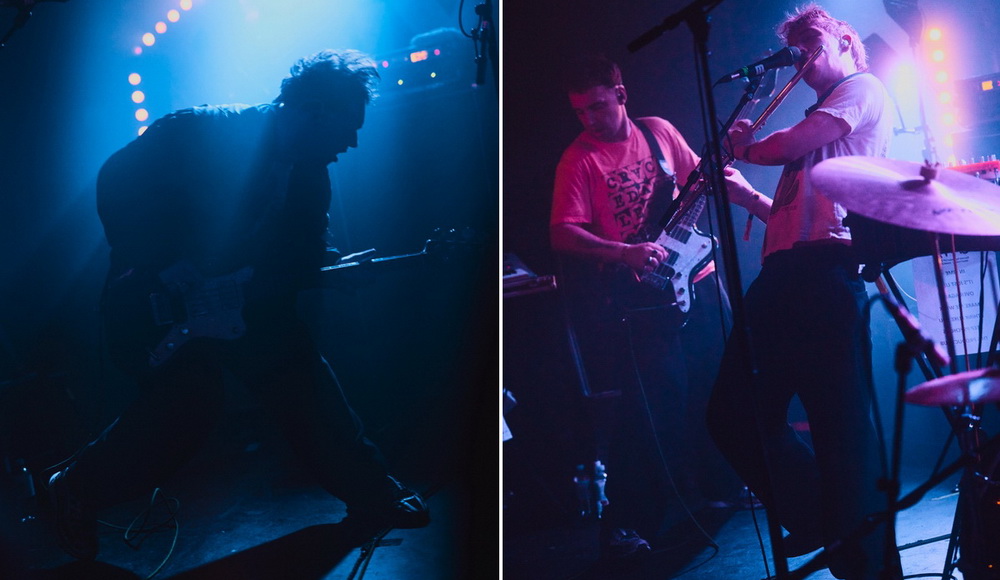
That was the end of the second day, and what a hell of a day it was. Bands I’ve never watched live before surprised me way beyond what I could ever have imagined. When I was home at 2 am I had to ‘desalt’ my body. 60 min of sweat had crystallized on my body. But I slept like I’ve just run a marathon.
**********
The third day arrived, and the brutality of the sleep deprivation came with it. Reeperbahn Festival for Messed!Up is synonymous with a massive lack of sleep because of the combination of networking, gigs to watch, and bands to interview. It doesn’t matter how much you prepare; it strikes you like a sledgehammer every year. This year, I decided to cut down on networking and only meet up with already established contacts to talk about future joint projects. Sure, we’re ‘only’ a music magazine, but we also work together with selected PR agencies, booking agencies, record labels, and music festivals across the world, and this whole music machinery requires a lot of work. That is, on top of our ordinary nine-to-five jobs (well, we may have flexible work hours). However, ‘only’ meeting up with already existing contacts meant going to two receptions a day in between shows and at the late-night afterparties, and I wasn’t home before 3 am at the earliest any night. Then it was day job time from 8 am. It worked for a while, but when the clock struck eight on the third day, I started to feel the first effects of sleep deprivation. The feeling is the same as having a hangover but without the headache. Well, there was a huge headache before the first cup of coffee was done. That’s the Reeperbahn Festival for us, every year. I’m happy I decided to skip alcohol completely until the last band of the festival had left the stage and the big afterparty could start. Too little sleep is tough enough.
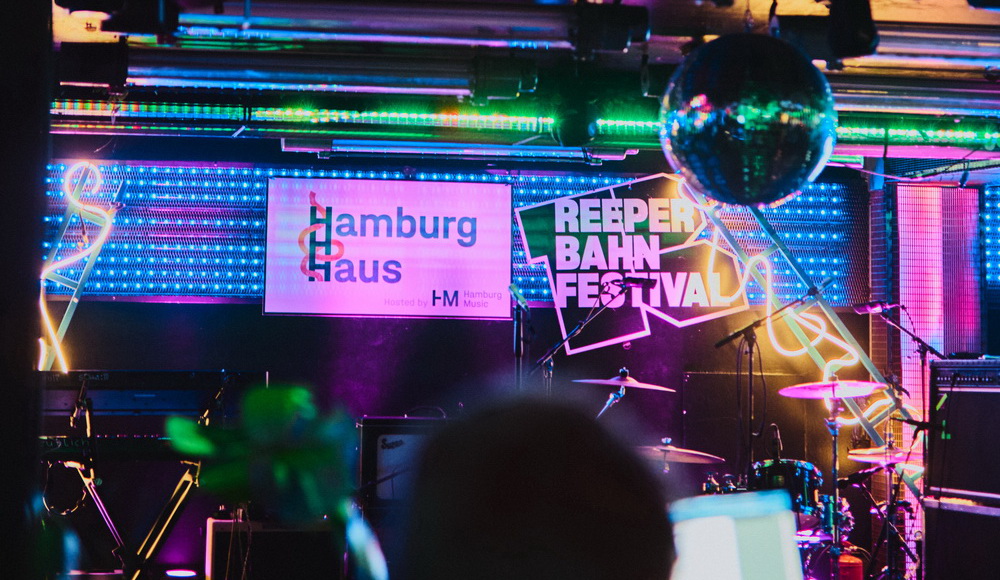
The schedule wasn’t as intense as yesterday, but I had to skip the first reception of the day, with the Belgian music export organisation, because I needed an extra nap before I could leave my flat. Just like the first two days, this day also started at Spielbudenplatz to watch some new bands, but nothing super exciting. Daytime gigs outdoors are rarely something bands love. No stage lights, no special effects, and nowhere to hide make bands look kind of ‘naked’ on stage, like they have been exposed as frauds. Most bands do better work in dark clubs with lights that enhance their live shows. Performance is an art, and without the visual artefacts, the art gets lost. However, what’s great with the 15-minute format of the shows in the Festival Village and at Spielbudenplatz is that you get a feeling if it would work out at an indoor venue, and then you can watch the band later the same day at that specific club (most bands play several times during the day). Just before the clock struck four, I left for the Belgian day at Indra Musikclub, the venue where The Beatles worked up their live performances to a level that they became the biggest band in the world.
As I arrived, Eosine was about to go on stage, and little did I know, at this point, that I was about to see the best show of the festival. The Belgian quartet has the kind of sound that can be difficult to pin down on paper, but try to imagine somewhere between shoegaze, post-punk, indie rock, emo, and psychedelic rock – their songs constantly shift between dreamlike sonic atmospheres and outright noise. On stage, that contrast becomes the whole point. Frontwoman Elena Lacroix stands at the centre of the storm – and what a performance she pulls off! There is theatre in the performance; Lacroix throws herself into the songs with sudden bursts of energy, and there is an unpredictability to her stage presence that makes it intense – you don’t know what will happen next. Even when the arrangements become dense and chaotic, her presence provides the emotional anchor. I haven’t seen anything like it in years. It’s like watching Einstürzende Neubauten’s Blixa Bargeld at his best in his youth. Please return to Hamburg soon again! It was an epic experience.
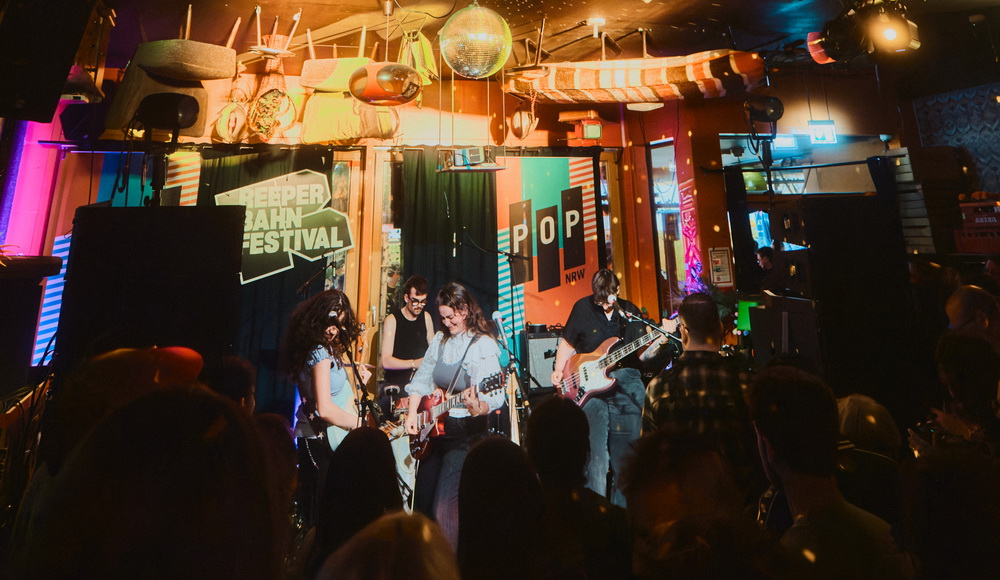
From this point, the day picked up speed. We headed off to Molotow for the annual Aussie BBQ Day where Sounds Australia brings the up-and-coming bands from the other side of the world to Hamburg. It’s the best day of the festival every year because of the vibe the Aussies bring with them, and some of my best discoveries turn up here – Mid City, Battlesnake, The Buoys, DZ Deathrays, to mention a few.
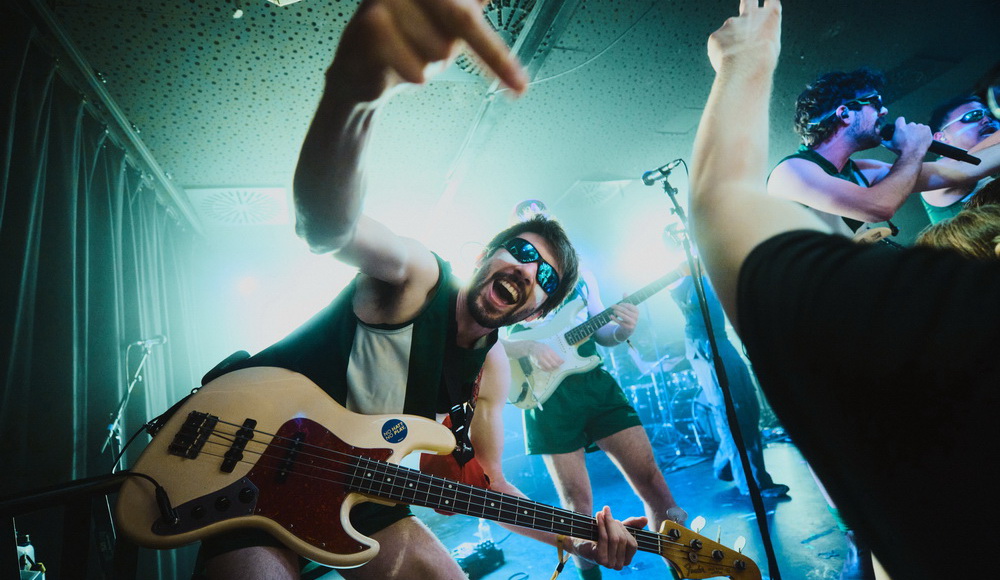
First epic Aussie gig of the day, the Melbourne seven-piece Playlunch, has built their reputation around funk, soul, rock and hip-hop grooves, wrapped in a distinctly Australian sense of humour and an even stronger commitment to having a bloody good time. Their song “Keith” – the gloriously profane tale of neighbourhood parking disputes – turned the band from a cult Melbourne outfit into one of Australia’s most talked-about new acts when it was released last year. On stage, they turn that musical cocktail into something chaotic and, especially, plenty of movement/dancing. It is wild, and the audience is on fire from the start. The absurdity of the lyrics, the funk workout (they’re all dressed in Aussie football dresses), and part comedy routine make it a hilarious experience. Great musicians and apparently a bunch of friends having lots of fun on stage. It told my photographer I would probably never listen to any of their songs at home – funk isn’t my thing – but I would come out again for any Playlunch gig I come across. It’s just so much fun!
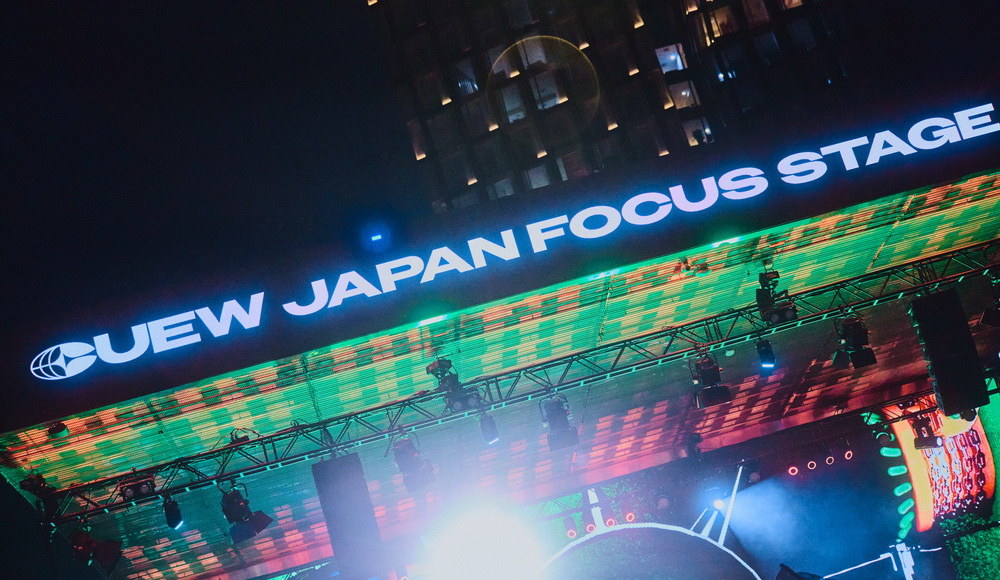
After Playlunch, it was networking day with our friends from Westside Music Sweden and Popup Records at 25 Club. Westside Music is one of the umbrella organisations we keep close to our heart after working closely with them on livestreaming music during the pandemic, and since we only get the chance to catch them twice a year (save for Reeperbahn Festival, we meet them at their own showcase festival, Viva Sounds), it’s something we look forward to. A few hours of catching up while getting glimpses of Boy With Apple and Die Sauna, and eating loads of Swedish candy (I’ve missed it!), we were ready to wrap up the night. Our photographer left for the Deichbrand Festival party while I had one major band left on my list: Donny ‘The Don’ Benét at Knust.
I have a special relationship with Donny Benét. Remember I wrote ‘funk isn’t my thing’ above? Well, here’s a funk man who is accepted! Putting funk in the context of 80s pop music creates a sound I very much grew up with, and it brings back nostalgia when I listen to this kind of music. However, few bands play 80s funk music – I have to listen to my 80s band if I want to listen to that type of music. But that was until Donny Benét arrived with swagger and an Australian sense of humor. Very few artists can walk onto a stage in a mullet, moustache, and immaculate retro tailoring and make it look less like fancy dress, but The Don has apparently decided to live there. For those who don’t know, Benét’s music is rooted in the bass-heavy funk, synth-pop, and post-disco of the 80s era, and played by extraordinarily skilled musicians, it’s nothing short of epic. Benét’s bass playing is the real star of the evening, educated at the Sydney Conservatorium of Music, as he is. He handles the instrument like a lead guitarist, throwing out fat slap lines and muscular grooves while his band locks into the rhythm behind him.
And then there is the banter. Already one break into the set, Benét – or Ben Waples as his real name is – explains what the next song, “Second Dinner”, really is about. It has nothing to do with food; it’s about having sex twice in one evening, which allows you to eat a second time, preferably late at night, to endure the test. Just keep it in mind when you hear the song, right?
The new Il Basso material makes that musical obsession even more obvious. Released earlier this year, the instrumental album is Benét’s second major excursion into wordless music following Le Piano, with the bass taking centre stage. Above all, it’s a contribution to his bass-playing role models. And the crowd joins in. Who doesn’t want to wrap up the night with funk music and Australian banter?
For us, this was it. We really had to catch up on sleep and headed home to prepare for the last day.
**********
Waking up and still being smashed is a horrible feeling, but I’ve been through this since the first time Messed!Up covered the Reeperbahn Festival in 2018. There’s just no time for sleep. But I’ve already prepped for a whole Sunday on the couch and put a fresh pizza in the refrigerator (I love cold pizza) – just one day left to get through.
Saturday, the last day of the festival, was here and with that comes a bit of reflection. Two things have struck me this year. First, 95% of the bands I’ve caught up with this year have been new discoveries, and very often it was bands I hadn’t heard anything about before I ended up at their shows. I whined about it before the festival started: Reeperbahn Festival 2026 wasn’t an indie rock year, and very little guitar-driven music was on the schedule. Thus, I didn’t have many bands that I really had to go see on my schedule. However, what I actually found out was that it was the best strategy ever, even if it was unintentional. I would never have watched bands like Eosine (the best performance this year), Playlunch, Tom A. Smith, Nastyjoe, and many other bands that added some real musical value to this year’s festival. Normally, I have a packed schedule based on bands I’ve listened to intensely the year before the festival, but maybe that has been a bad strategy because I never discovered much new music at previous Reeperbahn Festivals – but this year was completely different. As a matter of fact, I will keep this strategy for the years to come. It’s a lot more rewarding coming out of the festival and having eight new bands to listen to.
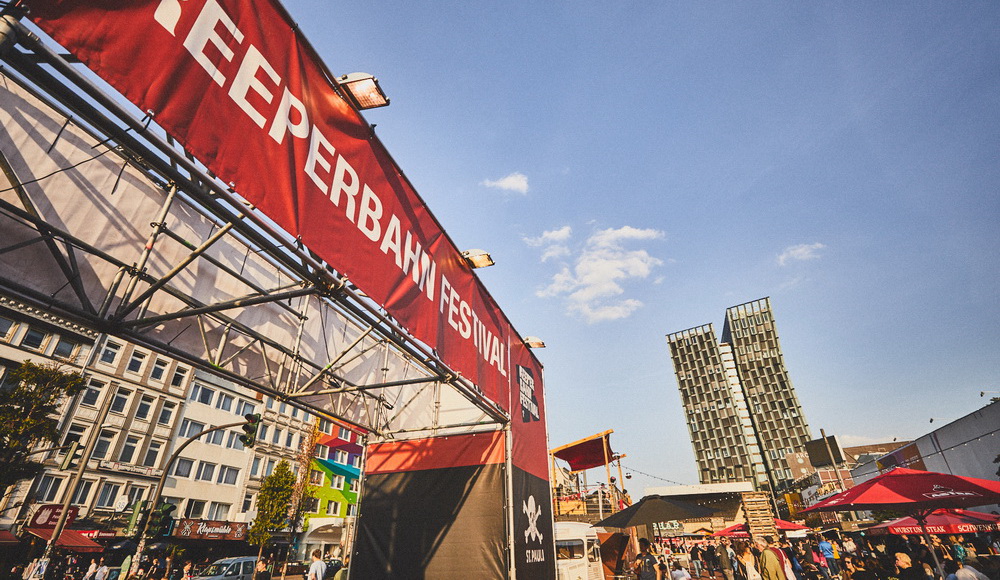
Secondly, and related to what I just pointed out above. Reeperbahn Festival 2026 felt slightly ‘cheap’. There were fewer big headliners (no problem for me, but it’s a sign) and very few bands I’ve heard of – and I subscribe to nine playlists full of new music that I scan through daily. However, at one of the networking sessions I attended, I learned that the festival had to operate with €500,000 less in 2026, and in order to cope with such a massive cut in funding, the number of venues was reduced by around 10% compared with 2025 in order to lower production costs. Above all, smaller venues – or rather pubs temporarily rebuilt as venues – were used. That has an impact on the overall vibe. Even worse, the federal government has envisaged yet another cut next year of another €1 500,000. €1.5 million in cuts! I am sincerely worried about the future of Reeperbahn Festival. If a cut of €500 000 clearly makes an impact, how would it be if the cut were tripled? So, that was the thought that ran through my head while I was sipping on my morning coffee, trying to find enough energy to put my pants on and bike down to Spielbudenplatz and restart the same procedure again.
Today, I had only one band on my schedule, and I ended up not getting into the venue because it was full 30 minutes before the show started. As usual, I started with a slow starter at Spielbudenplatz, the heart of Reeperbahn, and watched five bands in just over an hour – and discovered a great singer-songwriter called Heidi Curtis. She was also booked for a show at a venue later in the evening, but it clashed with the band I never got the chance to watch, and then it was too late to run to Curtis’ venue. Shite! But I will keep my eyes open for – hopefully – future shows in Hamburg.
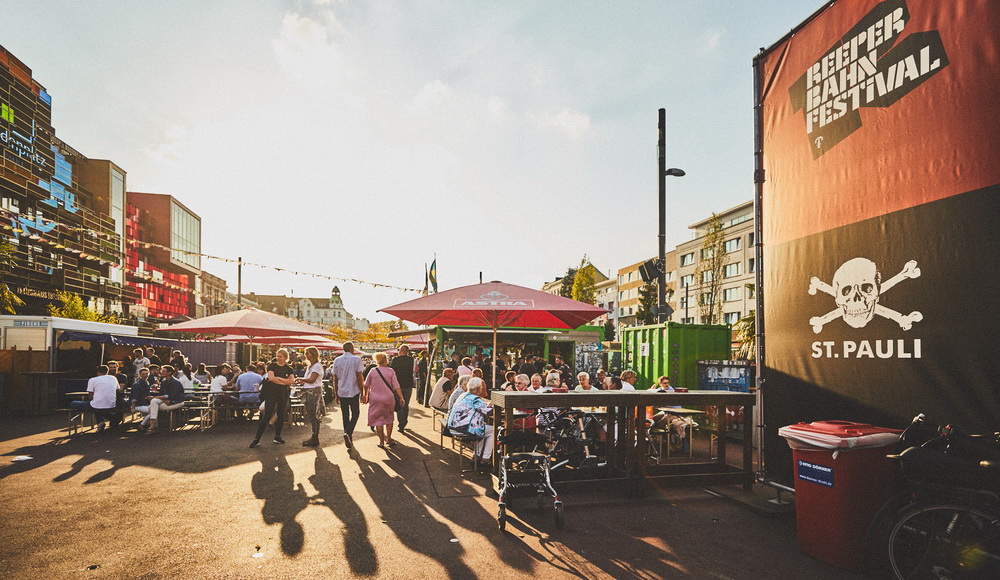
Instead, we kicked off our day for real with a hardcore show at the FC St. Pauli Fanshop. Skirt popped by, and as with all hardcore shows at the Fanshop, it went ballistic. Imagine a gig at a place where shirts, scarves, and football memorabilia suddenly have to share the floor with amplifiers, cables, and a band called Skirt. There is nowhere to hide and barely anywhere to stand, but for hardcore, that is less a problem than a challenge. There is no safety barrier, no distance between stage and crowd, no elevated platform to separate performer from audience, and if you fall and grab something, you’ll probably overthrow a rack of hoodies and caps for zillions of Euros. However, the number of people made it hard to see anything other than glimpses, but I stayed for the full show for the vibe. Seeing people crowdsurf in space with such a low ceiling was an experience in itself and quite amusing. And then it was time to end the day at Molotow. What we didn’t know was that the night, and the whole festival, would get an awesome end.
Molotow hosted quite a few interesting bands tonight, and first out was Sydney indiepop duo Pamela that I’ve had on my radar since we covered them as a support for Finneas in Auckland last year. However, they played on the basement floor of Molotow, aka Top Ten Bar, and everyone seems to have turned up for their show. Top Ten Bar is tiny, and the space is weirdly organized, with the stage located at a very narrow corridor with little room for the audience. I may have caught four glimpses from my position at one of the sides in the back, but I got tired of stretching my neck for five songs and left for the Molotow club upstairs.
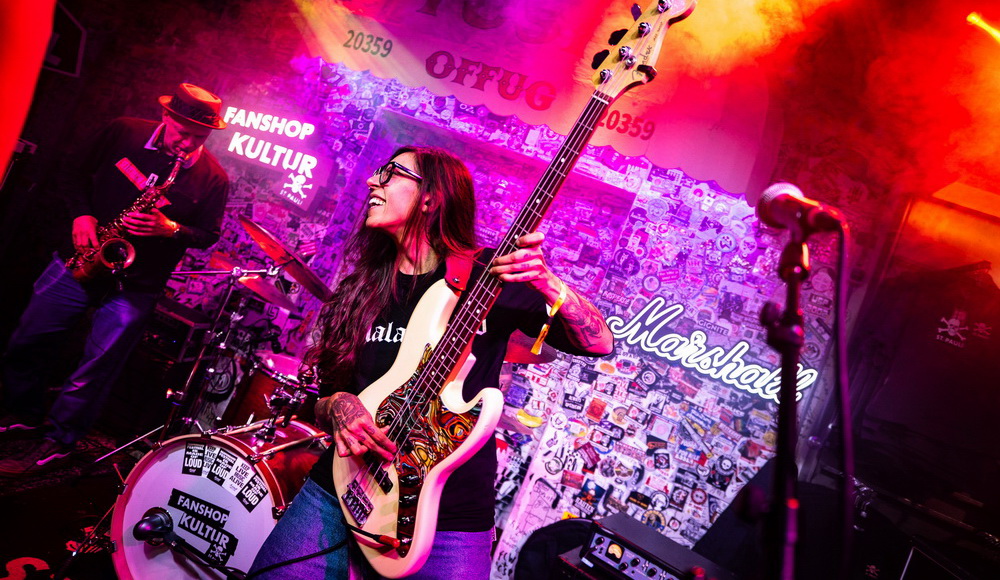
At this point, it didn’t seem to be a great night. UK band Green Star and Gretel didn’t impress much, and we started to plan for the afterparty – and then Dream Wife entered the stage to wrap up night. Bam! What a show! By the time Dream Wife hit the Molotow stage, Reeperbahn Festival was already deep into its final night, but it didn’t matter. People had restored their energy with loads of beer.
Dream Wife have never been a band built for standing still; they have always carried a certain rebellious punk swagger that turns crowds into furious mosh pits. With the amount of beer consumed, Molotow quickly transformed into a sweaty, chaotic mass of bodies, following whatever frontwoman Rakel Mjöll told them to. The band seemed to have equal fun on (and off) stage and threw themselves into the songs with a rarely seen punk attitude. At one point, I told myself to ask bassist Bella Podpadec about her workout schedule because I got sweaty just from watching her move on stage – completely wild. This was the wrapping up of the festival we needed.
At 1 am, the festival may have been winding down elsewhere, but the Dream Wife gig made us hungry for more. Luckily, the afterparty started as soon as the band had left the stage, blasting out indie rock classics.
We came to dance and stayed for a few hours before wrapping up Reeperbahn Festival 2026 at Burger Heroes, and then went straight back home at 4 am, sleeping for about 20 hours. See you next year, Reeperbahn Festival!
