 Messed!Up
Some bands evolve. Others deconstruct, modify, and rebuild themselves entirely, again and again. For A Place To Bury Strangers, the line between past and present, structure and chaos, or even band and audience has never been fixed. With the release of Rare and Deadly, a collection of raw demos and unearthed material, the New York noise rock trio opens a window into their own history, one filled with spontaneity, imperfections, and moments never meant to be polished.
But looking back has never meant standing still. As Oliver Ackermann, John Fedowitz, and Sandra Fedowitz reflect on their DIY roots, their ever-mutating lineup, and the unpredictable nature of their live shows, a clearer picture emerges: APTBS is a band driven less by control than by curiosity. Whether it’s rebuilding broken gear mid-tour, rejecting outside interference, or turning concerts into immersive, boundaryless experiences, A Place To Bury Strangers continue to embrace uncertainty as a creative force.
What remains constant, however, is their commitment to intensity, on record, on stage, and in the spaces in between. Because for this band, the real magic doesn’t happen in rehearsal rooms or carefully planned sets. It happens in the moment things fall apart and somehow come together even stronger.
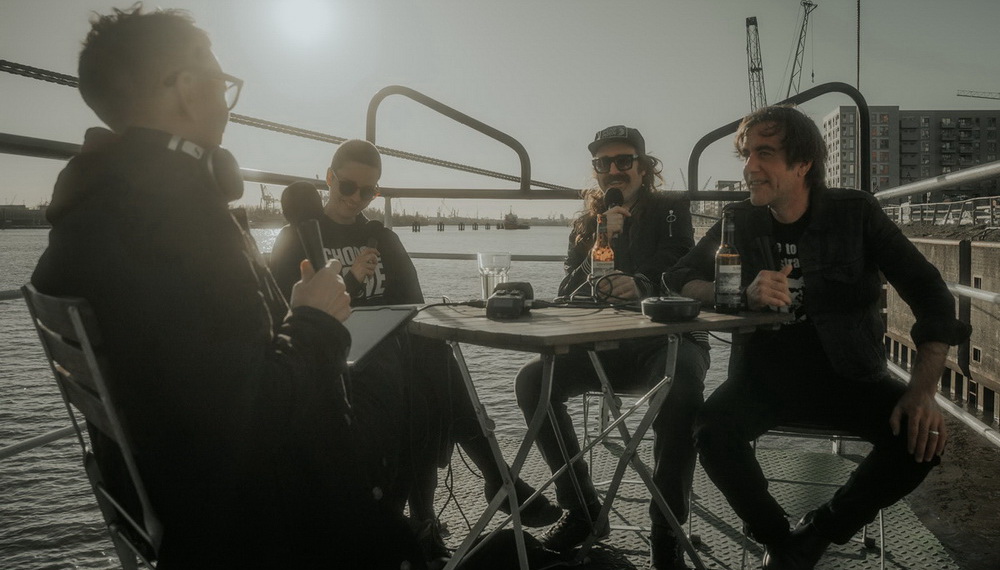
When they popped by Hamburg for a gig at MS Stubnitz as the start of their European tour, we sat down with Oliver, Sandra, and John for a chat about their DIY roots, embracing chaos and failure, and the art of performance.
The Art of Doing It Yourself in Music
Happy to have you back in Hamburg again. What was it? Two years ago, since last time you were here, right?
Oliver: “Yeah, I think we played at a place called Hafenklang or something like that. And we played there with this version of the band in 2022 as well. We’ve been in Hamburg quite many times, and it’s a great place to be, a good vibe in the city”.
What I find to be most impressive about you is your DIY ethos. You have stayed true to that ethos for more than two decades by now, not only for the band but as I understand also for Death By Audio, right?
Has it ever been tough to run it DIY, especially when the band and the label started to grow? I guess when you start to create some buzz in the scene and get attention, labels wait around the corner to offer you a deal and want a piece of the cake.
Oliver: “We’ve been on some labels, and we’ve done some stuff with labels and there’s good and bad with all of that. It’s really nice having someone do some of that work and some of that lifting, but then your kind of limited to also working with people in their opinions. So, it’s cool and much better to be DIY, even if it also means more work”.
John: “Didn’t you said that labels were trying to limit you, like telling you not to put songs on albums and not to have art the way you like”?
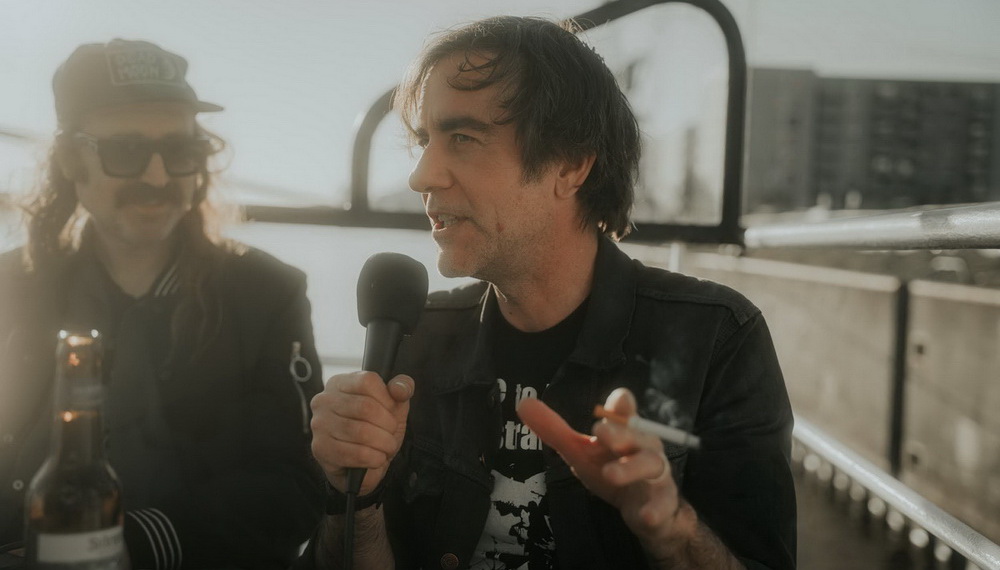
Oliver: “Yeah, it was kind of that they’d suggest it, and then you don’t know. You get confused because you’ll start thinking like, ‘Well, maybe they’re right, maybe it should be like this’, and then you’re left second guessing yourself. In the end, you wish you had done what you originally did. I’ll go look at some of those old album covers and I’m like, ‘Oh, that was so cool’, and then they made it look like a blob”. (laugh)
“But that’s just the way things are sometimes. A lot of the administrative side of DIY really isn’t that fun, and I do understand why people love having someone else do that aspect of it all”.
I guess it means a lot of administrative work on this level while you also tour a lot. But you also take DIY to its extreme, right, by building, modifying and repairing all the gear yourself?
John: “If we need to, we do it. And he’s (Oliver) definitely the master at rebuilding his guitars after dropping them too many times, accidentally of course”. (laugh)
Sandra: “We’re still looking for a sponsor for wood glue, so if anybody knows anyone, we’re definitely up for a wood glue sponsors”.
Oliver: “Yeah, if there’s a good German wood glue place, send us in that direction”. (laugh)
But isn’t all that work something to outsource, to make band life a lot easier?
Sandra: “But what’s the really good alternative to that? At least for us, as with everything in life, good things come with it even if we do stuff that might be a bit more on the annoying side. But at the same time, I think we love what we’re doing. You also have to be very lucky to find people to work with who know what we need, no matter if it’s in the band or when we’re not on tour. A match that fits like any relationship, and someone who has the same vision. Otherwise, you also run against someone else’s ideas, and then you’re constantly stuck in that thread of explaining and trying to find the right way”.
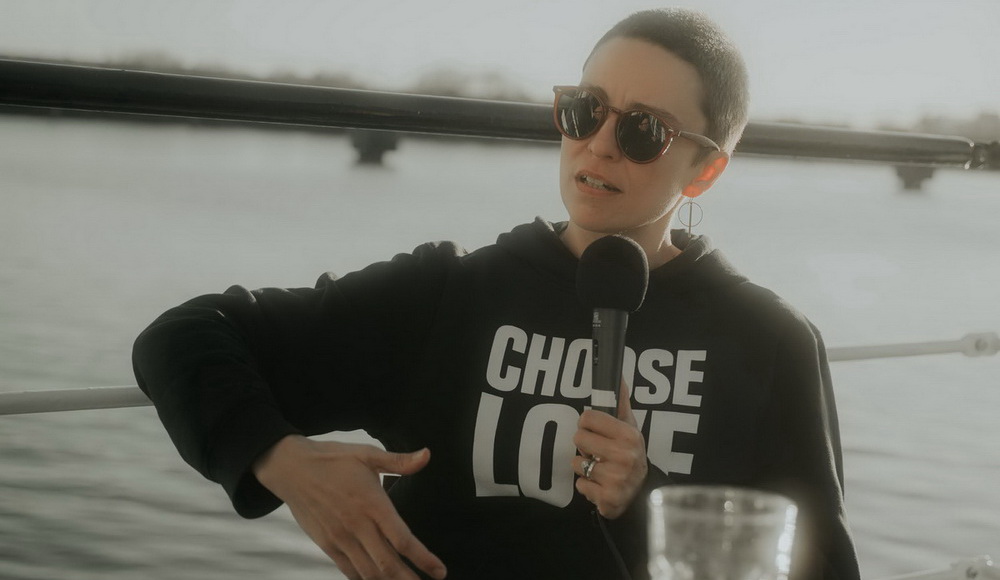
Oliver: “I think it’s something nice about having done it yourself, that you sort of see all the elements fit together yourself. It keeps you sort of humbled for everybody who works in this industry and everyone who does these things. Or even connect with bands that are starting out and don’t have these resources, and you’re kind of working with them, maybe help them out and point them in the right direction”.
“I just remember a long time ago, I was just being completely clueless about how this stuff works, and today I think I know how it works out. So, it’s kind of cool to be on the other side and realize that you shouldn’t be waiting around for someone to come to save you from your misery in some small town somewhere, but that you can do whatever you want. You just got to put your mind to it and make something happen”.
“If you want your artwork to be good, start cutting some stuff up, put it together and make cool artwork. Sometimes you wait, you don’t do things because you’re thinking someone else will do it. It’s like renting an apartment and thinking like, ‘Should I modify this apartment? I’m only renting it’? You should not be afraid to craft the world in the way that you want it to be”.
Sandra: “We all have this background of working on stuff ourselves. John and I did it in other bands as well, but he’s (Oliver) is taking to another level”. (laugh)
John: “Yeah, he has mastered it”.
Sandra: “But the two of you (Oliver and John) did that already way back when you first met, like booking shows or getting shows before the internet and mobile phones and all that. You two did that together, and sort of know how to handle the craft”.

Oliver: “It’s about breaking rules. There’s an error with so many of those things, like making cassettes, dubbing them on boomboxes and mailing them to people or writing letters and calling people. I kind of like that, it’s fun too. There have always been these rules you have to follow. I just remember, John, there was this place that you could book for shows, and the guy running it was like, ‘Whatever you do, don’t call on Tuesdays’. John was like, ‘Fuck it’, and called the guy on a Tuesday. He picked up and was like, ‘Dude, I said no calls on Tuesday. But if you want a gig, I can give you one on Saturday’. And we finally got the gig because he broke the rules”.
That also reminds me about a review and someone who wrote ‘a band that embrace failure as a method’ because DIY is about chaos and how you react to it, DIY is not about control. Can you see it like that, the band as a testing ground for DIY methods, like finding new sounds and live expressions, and failure leads to improvements, at least new knowledge?
Sandra: “I would say yes. But I would call it curiosity more. I really do believe that Oliver and John know exactly what they do on stage. They’re just not afraid of trying something in the moment, knowing that whatever sound comes out of it they work with it and kind of build it from there. What makes it all happen is the curiosity of like, ‘Where can we bring it tonight? What does it mean to play a certain song in this particular venue, or in this space? How is the crowd”?
John: “If everything breaks one night we’ll never complain. We’ll just try to keep going and try to make it work without anyone knowing. You know, I’m not going to complain to the sound man if I can’t hear the vocals”.
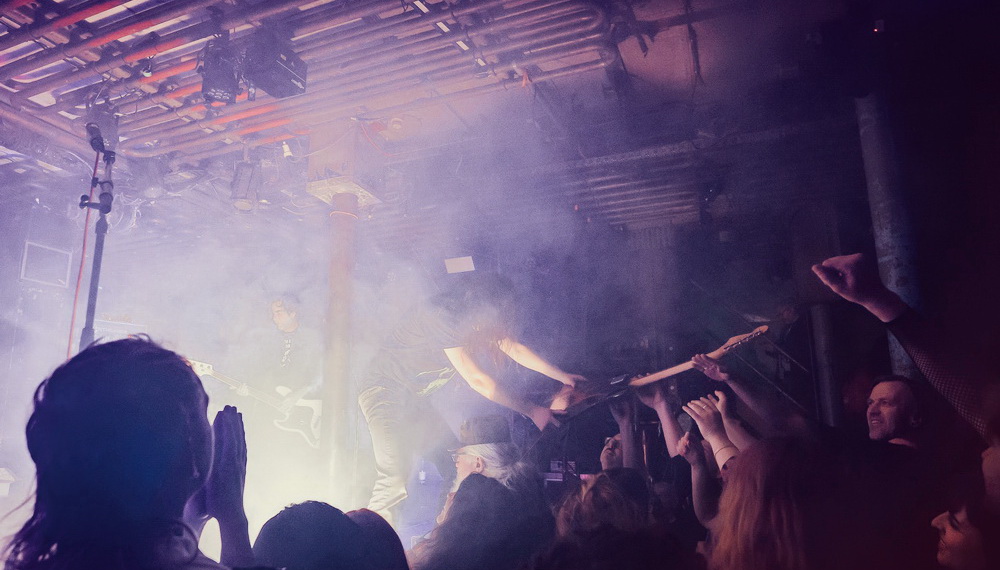
Oliver: “I mean, honestly. When things are broken, it is usually for the good thing”.
John: “People always say ‘That was the best show I ever saw’, and they never realized nothing worked”. (laugh)
Oliver: “I think it’s that struggle of kind of fighting between having lost everything and having it not working and somehow bringing it back to the song, which really makes something more beautiful than what we would have planned if we practiced or something”.
But there must have been many mishaps, like when you pull out the mobile unit on the floor and play in the crowd. I mean there are lots of drunk people with beer in their hands.
Oliver: (laugh) “Of course. And that stuff doesn’t always work. It’s the same thing with shows; there’s been plenty of shows where like one amp blows up and then you’ve got only two amps, and then another one blows up. And then the last blows up. Or when the vocal mics don’t work, or whatever is the problem when the power keeps on shutting out. What do you do in that moment”?
“Having experienced those things make you figure out ways to make a show work with whatever is left. And that’s interesting”.
John: “There has been so many generations of the mobile cart. I think the whole idea is really cool, like, the way that it went. It used to have drum machine and now it’s real drums down on the floor. Who knows what we’ll come up with next year”.

Well, a lot has changed since I saw you the first time at the Reading Festival in 2009. That was a completely different band and performance back then with Jono and Jay in the band.
Oliver: “And those weren’t even the original drummer and bass player; there were other people in the band before that. So, it’s changed every year”.
“What you need to do or what’s the best thing for the band is to let everybody kind of bring their own element to it. And that’s what happened every time we’ve changed the lineup. I think that even shapes the band”.
Sandra: “And that’s another proof for the point that I made earlier, about your curiosity. ‘Let’s see where the sound goes in a way and what we have to work with.’ Every human brings something different to the table”.
Noise Rock or Sonic Art?
Few bands blur the boundary between music and art as completely as A Place To Bury Strangers. Often described as the loudest band in New York, their sound is less about conventional songwriting and more about total sensory immersion – walls of distortion, pulsing feedback, and hypnotic repetition collapsing into something that feels as physical as it is sonic.
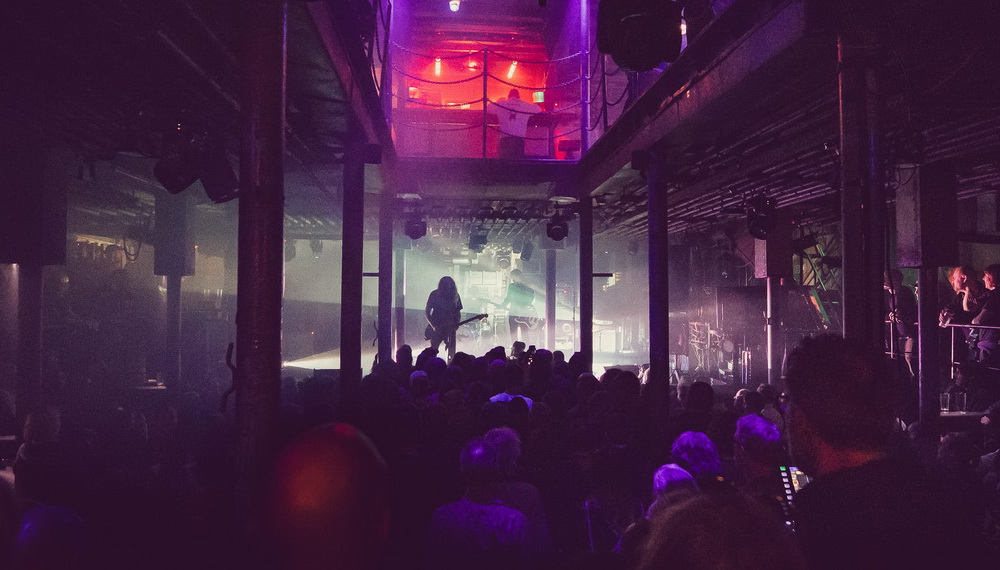
Their recordings, whether polished albums or raw collections like Rare and Deadly, capture fragments of this intensity, but never fully contain it. Critics and audiences alike frequently frame the band not just as musicians, but as an evolving art project: A “sonic art installation” where light, space, volume, and human interaction all become part of the composition. Central to this perception is their deliberate deconstruction of space, the dissolving of the traditional divide between stage and audience, pulling listeners into the performance, and reshaping the venue itself into part of the artwork. In this context, their music is only one layer of a broader experience; one that embraces imperfection, spontaneity, and chaos as essential elements, and transforms each performance into something closer to a living, unrepeatable piece of experimental art than a traditional rock show.
Rare and Deadly was released last week and kind of tap into where Rare Meat ended, which also collected rarities, b-sides, and demos. Many of the songs on Rare and Deadly are from a period when the lineup was different and represented another kind of sound.
How important is it for you to release these old demos and b-sides years later, after your sound has developed into another direction? Was it for nostalgic reasons or some sort of regret that they never made it onto any of the previous albums?
Oliver: “It’s just that’s different things. I mean, I’m super excited about the stuff we’re working on now, but it’s kind of funny to listen to that stuff from Rare and Deadly. I really like what we’re working on now, because I feel it’s so intense and crazy to that older stuff. Rare and Deadly is more primal and simpler in some sort of way, and this stuff that we’re doing now is still really primal, but it has a different kind of energy. It’s really about how the three of us connect”.
“This is like the strongest version of the band, I think, that it’s ever been, so this is the strongest record that we’re working on”.

John: “What is cool about that album is that Oli probably wrote it in one night and never rehearsed it, ever, and never played it again after that recording. I love stuff like that. It was just like that one evening that this song came to life, you know what I mean”? (turns to Oliver)
Oliver: “That there’s plenty of mistakes on that record”?
Sandra: “But this is about mistakes, it’s about being in the moment. For that I think it’s really awesome”.
I read some reviews of Rare and Deadly – hate reviews by the way – and realized that they look like a reflection of an art exhibition, not a noise rock album. And then I started reading older reviews, about your previous albums, and realized that it’s a lot focus on A Place To Bury Strangers as an art project rather than being the loudest band in New York, renowned for the wild live performances.
Someone called you for a ‘sonic art installation’, someone else ‘an immersive experience of sonic experiments, lights, and controlled chaos’. Has the band developed into an art project rather than being just a wild noise rock band?
Sandra: “I think maybe for me, what our life shows are, is that we approach it in a way that everybody that specific night is needed to make this happen; the audience is included in everything that happens. It depends on how the venue is and what we play that night. The part when we’re going into the crowd, not having a barrier in between the audience and the stage is an example of that. But we also need everybody else who works that night, in that particular moment, to make this happen.
“When I saw Oliver the first time I was so blown away by this. There was nothing like it. You have shows where there’s the band on stage and then there’s the audience, but with A Place To Bury Strangers we’ve always felt like it is one, there is no barrier”.
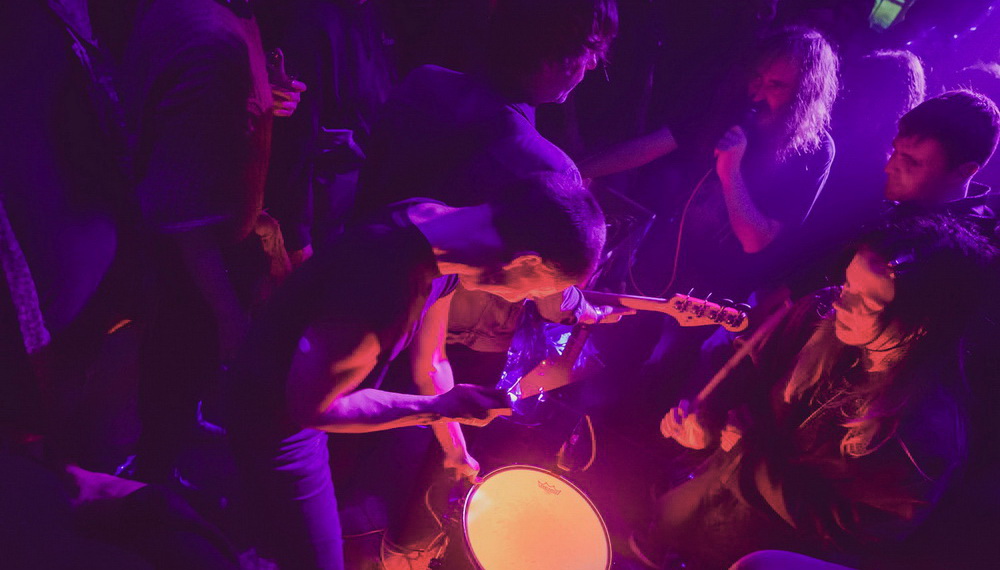
It’s like the art world and the deconstruction of space, having no barriers between you and the audience, right?
Oliver: “I think with the volume and stuff, we’re sort of putting ourselves in this experience and pull in the audience. When we all get together in a practice, it’s unlike any show we do. We couldn’t even play like we do at a show at home. It just not the same kind of thing” (laugh)
“You wouldn’t even want to be in this space alone, it’s dependent on everyone there. We don’t even try to do a real soundcheck because it’s just too crazy and too insane. It doesn’t really make sense to us to practice that, because it doesn’t really start until you really make it all happen. Whenever we do a soundcheck, it’s just for the formality of it all. We really don’t need to do it because it doesn’t make any sense”.
Sandra: “It’s for the crew. I want them to know what’s going to happen tonight”. (laugh)
Oliver: “And if we don’t (soundcheck), it’s like we don’t make an effort. But I don’t get anything out of it. But then, once you kind of go out into the crowd, I don’t know what happens to me. It’s like I transform into something else, like I’m just an audience member being part of what everybody else is watching and feeling, and riding the wave of whatever happens in the room. I don’t know. It’s like spiritual or something”.
Sandra: “I can only speak for myself, but probably for the two of you, too. I don’t want someone to have the same experience when going to an A Place To Bury Strangers show as they would have sitting at home on their comfy couch, listening to A Place To Bury Strangers albums. There has to be a difference to it”.
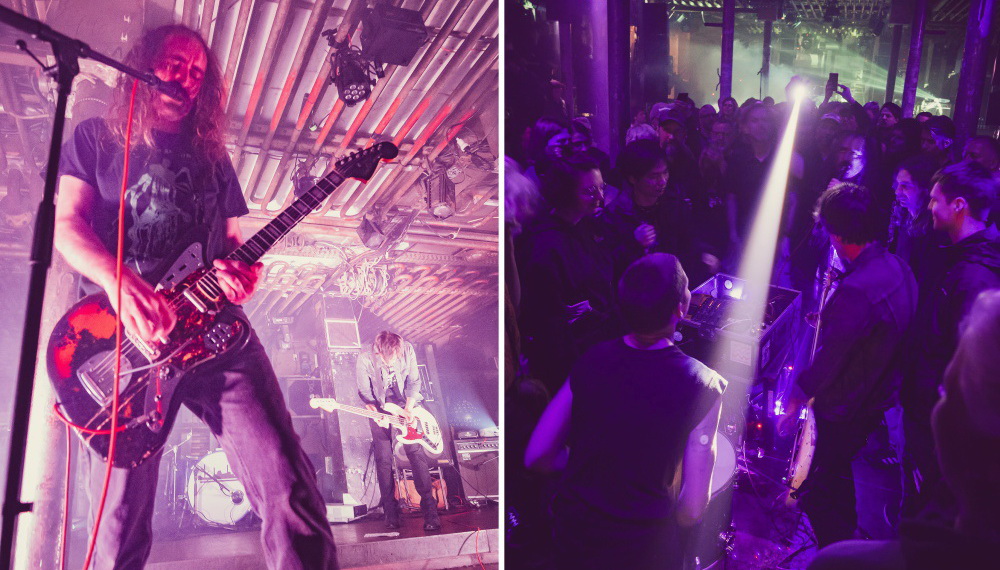
John: “Whoever sees us tonight in Hamburg is not going to have the same show in Bratislava. No way. We will never want someone to be like ‘Oh I can miss it, I saw it last time”.
But as you mentioned it, is there a new album in the works? I guess you have been working on a follow-up to Synthesizer while you released Rare and Deadly and may have something out next year.
Oliver: “Yeah, we’re working on a new record and have to wait and see what happens with that. We have no real plans, but we kind of try all sorts of different things, while trying some of the things we really like doing, so that’s the direction the band goes. But it’s really just kind of trial and error right now but it will be amazing”.
*****
I lost count on how many times the band has changed lineup, but I think this is the fifth lineup I’ve watched live since my first time at the Reading Festival in 2009. Have you ever thought of bringing back all former band members for a special night and switching people on stage between songs? Like the ultimate A Place To Bury Strangers night.
Oliver: “I don’t know how many times we have changed”.
John: “I think I’m the fourth bass player”.
Oliver: “Yeah, it’s easy to keep track of the bass players, but we’ve had a bunch of drummers. Is it six or seven”?
John: “I was actually a drummer at one point”.
Oliver: “But I was the first drummer; I played one day”. (laugh)
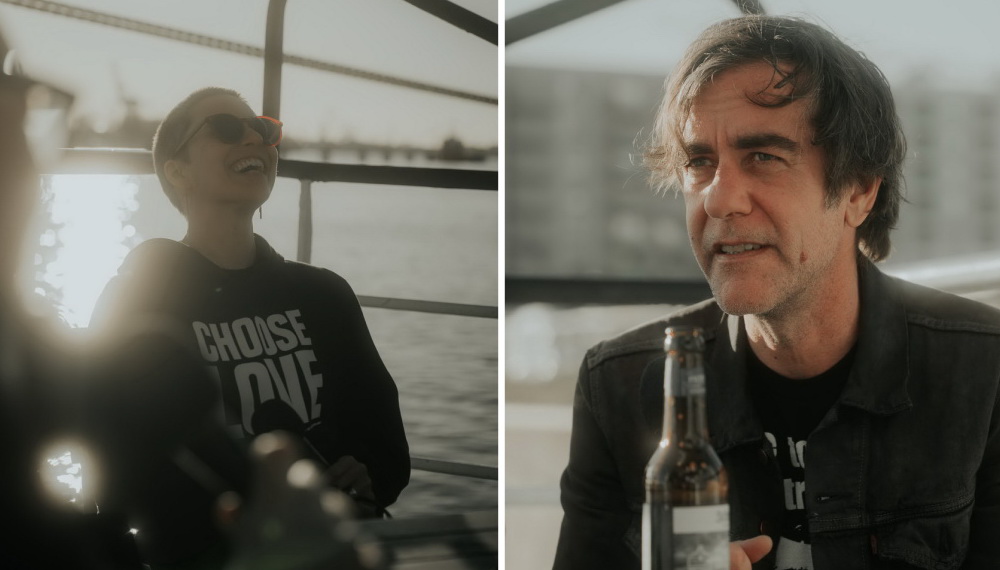
You’ve had the Spinal Tap dilemma with drummers, right?
Oliver: “It seems like we lost some on the way, yes”
Sandra: “But bringing back everyone? Imagine that many drummers. If you find us a venue with enough gear, we’re going to do it”. (laugh)
Oliver: “But this is the ultimate version of the band. I can’t imagine anything else”.
Sandra: “We could also set up multiple stages, and you’re (Oliver) the only one who has to run from one to the next, you know? So, we are all good, but you run”.
Oliver: “I always had a dream that it would be really awesome to play a show that never ended, and to just see how people would enter it. So, maybe that’s the night”.
*****
Photographer: Niko Schmuck
*****
A Place To Bury Strangers pages


