 Messed!Up
Manchester’s Trunc have just wrapped up their tour supporting Calva Louise, bringing their energetic live sound and passionate, angry lyrics to pockets of rebellious queer audiences around the UK.
Like many up-and-coming artists in today’s music climate, Trunc are widely independent, associated lightly with Marshall Live and Incantation Records – a label run by vocalist, songwriter, and now producer, Martha Phillips. Trunc’s latest single, ‘Bored’ was recorded and produced entirely by the band, with Martha taking full responsibility for the production. Since its release, ‘Bored’ has been featured on BBC Radio 1’s Future Alternative show, BBC Music’s Introducing Manchester show, and BBC Introducing Rock with Alyx Holcombe – a massive achievement for Martha, Sam (guitar), and Tom (drums).
Trunc have been around in the Manchester scene for a while, for many years under the name The Elephant Trees. However, the trio decided to leave much of their older catalogue behind when they discovered a new sound, starting the new band we now know as Trunc. The same line-up, a more aggressive tone.
After their opening set, I sat with Trunc in Manchester’s iconic Factory club to ask them some questions about their journey deeper into being independent, and what it means to be a rising artist in 2023.
Transitioning from indie label-pleasers to angry queer punk
You kept some tracks on Spotify (Terra Incognita) but have gotten rid of others. Was there a specific point with the new stuff where you realised this was where you wanted to go forward? Was there a conscious decision made here?
Sam: [to Martha] Do you think that Terra Incognita was already a point where we realised what we were doing was different?
Martha: Yeah, that was exactly it. The change probably started with ‘Survival’. When we first wrote ‘Survival’ it was a very different direction. We’d come from (at the very beginning) just drums, bass, guitar, and acoustic guitar. Then, when we started writing ‘Survival’, we realised then, things were going in a very different direction. And then with Terra Incognita, that was an even bigger soundscape. So, I suppose, when we started playing to a track, and we allowed ourselves to work with more instruments than we could actually play, I think that’s when we started becoming a different band. And then, after we started releasing Terra Incognita, we thought “Fuck it”, it doesn’t really make sense anymore – to be The Elephant Trees, those little babies.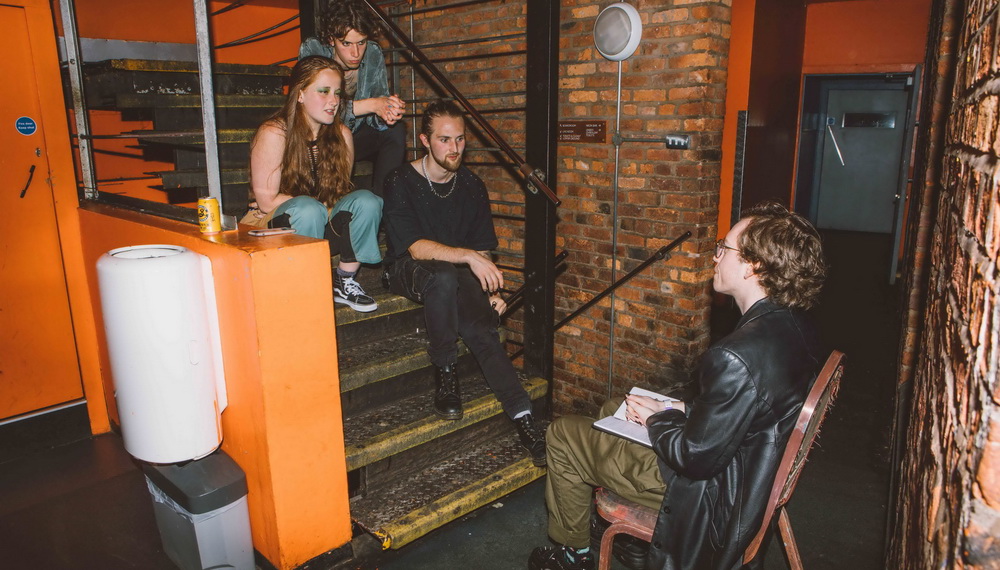
Sam: And it was also almost to free ourselves of the baggage of before. Terra Incognita became the start of this – a jumping-off point. Like, okay, we’ve started to explore all these different sounds, these ways of writing, and who we are as people, and what Martha is talking about. As well as Martha also taking much more of a lead on production. It was all really through COVID, I think it just took us a long time to realise it was right to be a new project.
Martha: I do think it comes from the fact that I started producing stuff. [Sam] made the bassline for ‘Survival’, for example, on a MIDI synth. But I think all of us collectively started thinking about the sound of our instruments, rather than just the parts we were playing, and that was probably a shift.
Tom: Yeah, because it was the first thing that we fully produced demos for, and then took the demos to the studio, instead of it just being live ideas or something that only [Martha had] worked on.
It seems to be a trend – more people taking the production on themselves.
Tom: Yeah, and then you’ve got to perfect it.
Sam: It means that, even though Martha is the driving force, Tom and I – from that point – were more able to talk about the song as a song.
Martha: Yep. I hadn’t really thought about that. ‘Survival’ was the very first track we took into the studio that we hadn’t played live yet. And then the Terra Incognita EP – obviously we hadn’t played live because of COVID. And it completely shifted the way we worked. Rather than playing the songs to death and then taking them to the studio, we kind of brought them in with this fresh idea, like “anything could happen! We could do this, or we could do this!” Rather than saying, “No, this isn’t how we do it.”
Sam: It was not, “This is how we play this, what should we do with it?” It’s, “What is this song?”
Martha: [Martha puts on an ironic tone] Oh my god, I’m learning so much about myself!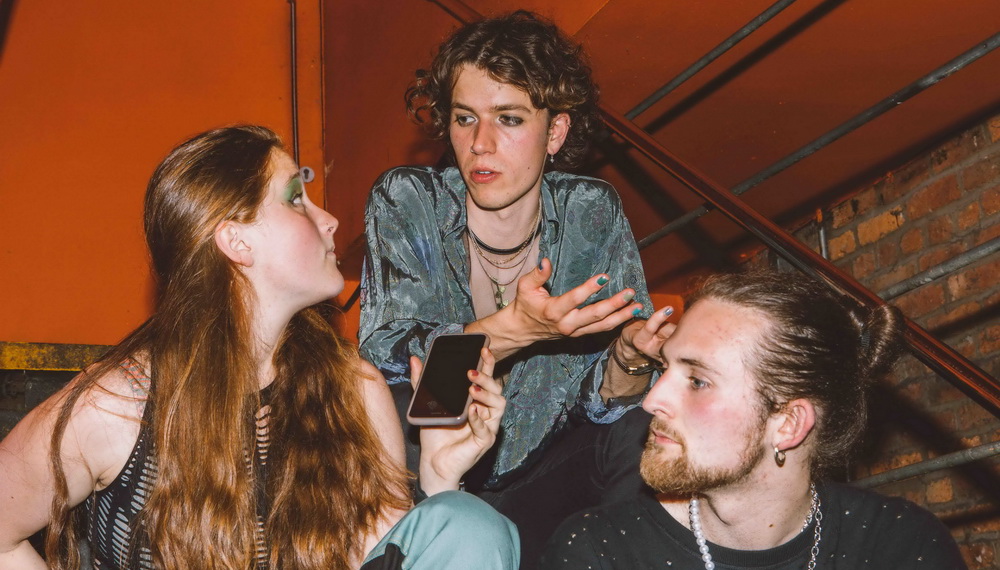
You were more indie, where the new style is obviously a lot angrier. Do you find that helps you to express yourself more?
Martha: There’s so many different ways I could answer this question; there’s so many different things that led to us being angrier. Like the state of the world – you can’t not be angry. And I think you probably see that in the majority of bands these days, everyone’s getting a bit angrier.
Sam: I think even if you look at what’s happened to Radio 1 pop, we’re hearing more aggressive stuff in the music that the average listener is listening to. I think that there is a shift in that outside of just [Martha], but I think that’s accompanied by what Martha has done as a songwriter.
Martha: I also think, through the pandemic, everybody was stuck with their own thoughts for a long time. And I think, just being isolated from everybody else, I kind of realised how much of the music I was making was for other people, and was for the expectations other people had of me. And I definitely used to censor myself. And I think now, on the other side of that, I’ve kind of got a bit more of a “Fuck it” attitude, “This is how I actually feel.” Which is ironic, because I was originally writing for other people in the hopes that more people liking us would mean we were more successful, but the more we’ve stopped giving a shit about what people think, the better the music’s been, and the better the reception of the music has been.
Sam: I think it’s also been coupled with a similar shift to being more authentic and unapologetic in everything else we do – in the way we present ourselves and the way [Martha talks] about issues. And I think that the music, naturally, is going to be slightly more unhinged [Martha laughs] and chaotic and more angry, because, in all of the facets, we’re thinking, “Who do we want to be? What of ourselves are we trying to put forward?” Rather than what we want people to see. And I think the music has maybe followed that same trajectory.
Rebellion and lyrical intention
As individuals, the members of Trunc have long been outspoken on social and political issues that affect many people in the UK. From ethical veganism to LGBTQ+ movements, and climate change activism, the three are unafraid to criticise many of Britain’s conservative ideas, and their new music is centred around this. One such movement is Extinction Rebellion, a global climate crisis protest that has gained infamy due to the wide disruption its members have caused to climate-destroying initiatives, and the mass arrests that have occurred subsequently.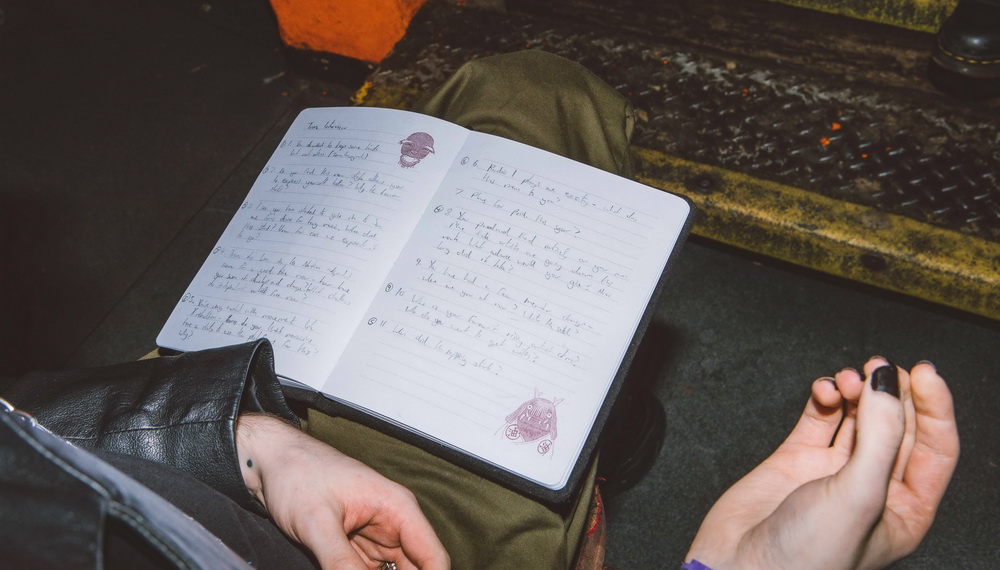
Martha is quite involved with Extinction Rebellion. [Martha shows me a pin she is wearing, brandishing the Extinction Rebellion’s ‘X’ logo] There it is! Do you think that artists, big or small, have a duty to use their platform to stand for things politically?
Martha: It’s a good question. I don’t think everybody has a duty because everybody is doing the best with what they’ve got, so I wouldn’t want to say to some people, “Why are you not speaking out about these issues?” Because you don’t know what’s going on in their life, they could be just barely scraping by, and for them to even think about what’s going on in the world might be enough to tip them over the edge. But I would say that personally – we don’t have a massive platform, but we have a teeny bit of a platform – and personally, and I think the rest of us feel the same [she looks at Sam and Tom], that it would be immoral not to use that platform in a good way.
Sam: Yeah. And it would be inauthentic to ourselves, to not. Because it’s such an important part of who we all are, and if, in all other ways, we’re trying to put forward more of ourselves, then that almost comes naturally with it. And I think, what I hear in [Martha’s] songwriting, at least, is you’re talking more about issues that you find important, but from a place of, “I want to talk about something,” not, “I should write a song about climate change.” It’s, “This how I’m experiencing the world,” and it just so happens that it’s a big part of how we’re all experiencing the world.
Martha: Some people find it really easy to write love songs. I find it impossible to write love songs. And that doesn’t mean I don’t feel love – I feel a lot of love, but writing, to me, is a therapy – it’s a cathartic release. And the things I feel most passionate about in any sense, whether that be angry or whatever, then I have to talk about them. What do you think? [Martha looks at Tom] Sorry, you don’t want to talk, do you? [Martha laughs]
Tom: No. [Everyone laughs]
Sam: What do you have to say about the relationship between the British Left and Eastern Europe in the 1980s? [Sam and Martha laugh]
Tom: Don’t get me started.
Sam: For reference, that’s Tom’s Master’s dissertation.
Martha: Nerd!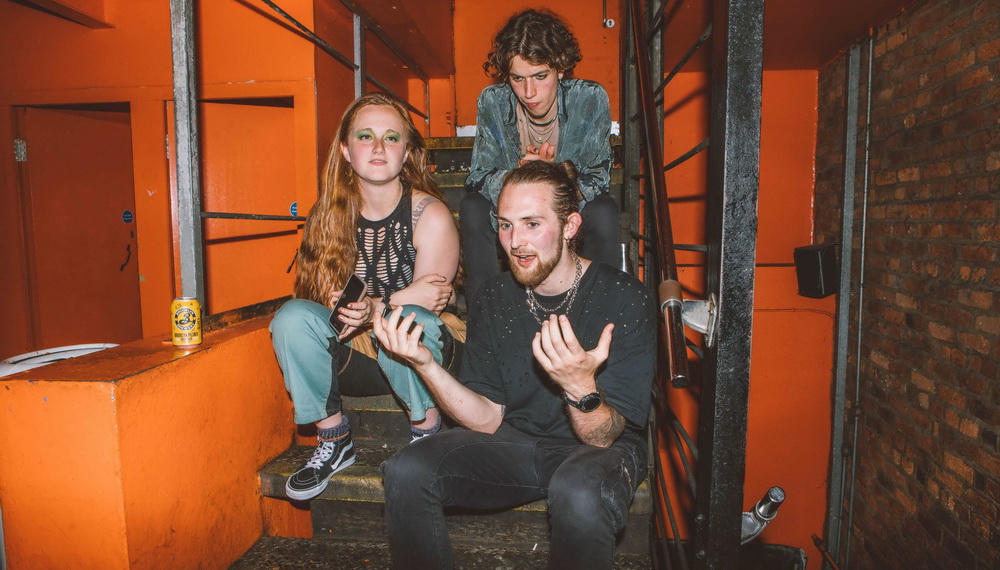
When ‘Survival’ came out and you were transitioning to newer stuff, Sam mentioned to me that Martha wrote the lyrics by writing it down quickly, and you played it and it immediately came together really well.
Sam: Yeah, you said you’d just written three or four pages of ‘blegh’ on the train and came home and I’d written [the synth bass part]. And you were like, “Wait!”
Martha: Oh yeah, you’re so right.
Sam: Wasn’t it called ‘Broccoli Something’?
Martha: Yeah, it was. I was just thinking about that. I do have it in a notebook somewhere, it was something about Broccoli.
Sam: It was just pages and pages of angry lines.
Martha: There’s like five other verses that didn’t make the cut.
Sam: Should we do the extended cut? It’ll be like nine minutes long.
Martha: Yeah, maybe we should. I need to dig that notebook out. I’ll send you a picture. I will send you a picture because I’m even sure it has a drawing of broccoli next to it.
Where did the rapping start? That’s pretty cool. [Martha laughs] Because, obviously, it lends itself really well to the style, and you can get a lot of lyrics out there, and say things that you want to say.
Sam: At Twenty One Pilots?
Martha: Yeah, probably. The first song that we did it on was an Elephant Trees song called ‘Uncomfortable’, and ironically, I felt really uncomfortable doing it, and I was really nervous for us to release that track because I’d never really done that before.
Tom: It’s kind of like Ed Sheeran rapping.
Sam: Yeah, that fast, melodic singing. That’s slowly evolved, I think, as you’ve felt more comfortable delivering it.
Martha: Because nobody really wants to hear a lower-middle-class white girl talking fast, do you know what I mean? So, the angrier I got, the more comfortable I felt. I think if you just talk politely about the sad little feelings you’re having… [Martha laughs] But as the lyrics started getting angrier, the delivery started getting angrier, and I felt more comfortable doing that.
Sam: Even now, it’s almost transcended rapping. It almost sits somewhere between that and the almost post-punk, think like IDLES delivery, where it’s aggressive delivery without melody. In some cases.
Martha: Yeah. I suppose [you can see it] with ‘Bored’.
The struggles and challenges of going independent
We’re seeing a lot more artists taking things into their own hands and becoming truly independent. What challenges have you faced over the course of learning how to produce things on your own? What are the pitfalls? For new bands coming into this area, what advice would you give?
Martha: The first challenge, which is the most obvious challenge, is trying to get a decent sound. Especially as we are recording in a shipping container, which has terrible sound qualities anyway. But trying to get the perfect snare in a shipping container… [we laugh] We probably need to be a bit more adventurous with our mic placements. I think, at first, it was just supposed to be a vehicle for writing. And I use Logic Pro which is, in my opinion, the most logical tool for songwriting. There’s plenty of other DAWs out there, but this one is just really quick and responsive to putting ideas down and putting structures down.
At first, I didn’t intend to be producing our own stuff, it was just for ideas. When we realised that we were super skint and that it was our only option, the challenge were getting good live sounds. I was comfortable with MIDI – putting synth ideas down – but when it came to actually recording the live instruments, that was really difficult. I think it was fun understanding, though, now that I’m producing things…
Now that I’m recording these guys’ ideas as they come, it’s really cool to start understanding how they work. While I do produce and mix everything, that’s not to say [Sam and Tom] have very clear ideas of the sounds they want to create. And Sam’s taught me a lot about how to get a good guitar sound. And using reference tracks has been very helpful. There are a lot of terms I didn’t understand until I was watching [Sam] messing with [his] pedals. Tom will say, “Yeah, I need a fatter snare.”
Tom: That’s right, I just shout words. Just make it sound like this, please?
Martha: Like, I don’t know what you mean!
Tom: And we’re working with a £30 mic in a shipping container, and I’m like, “I need this sound.”
Sam: “Why does it not sound like Metropolis?”
Martha: Exactly.
Sam: We did have that one day where [Tom] and I recorded drums without Martha there, and the drums themselves sound awful, but we recorded some disgusting breakdowns. [Sam laughs]
Tom: That intro, that we did [earlier]…
Sam: We did that without Martha knowing.
If you put enough distortion on it, it’ll sound fine.
Sam: That’s what we did, yeah! You can hear so much phase on that crash.
Martha: On ‘Bored’ – it suits the track so it’s fine – there’s a lot of Bitcrusher on the drums. And it sounds sick because that’s how it’s meant to sound, but I am curious how the tracks are going to sound without the Bitcrusher distorting everything.
Have you got any plans for Pride?
Sam: Go and have a great time!
Martha: I haven’t actually got any plans for Pride right now.
Sam: Are you doing any Incantation stuff?
Martha: I kind of feel like I should, but I’ve done events around Pride and there’s been no one there because they’ve all been at Pride. So I really want to show our support somehow…
Sam: Keep asking until they let us play again?
Martha: Yes. True.
Sam: Maybe set up a pop-up stage right next to the entrance?
Marta: Maybe we actually just enjoy it, this year. Without any stress. I do find it a little bit overwhelming, sometimes. But, Pride as a concept obviously is fabulous, we’ll definitely be at the parade. And there is – not for this year, but for next year, potentially – we have got plans to maybe have a float in the parade as Incantation. And the plan is to have bands on the float – a float stage. I’ve said it now, it’s going to happen.
Trunc has a strong, inclusive community of die-hard fans and friends surrounding them, and their experiences over the past six years operating in Manchester, and beyond that from their hometown of Leeds, makes Trunc one of the strongest personalities in the Northern queer alternative scene. Their recent radio successes are a sure sign of what is to come, as the three fall deeper into their unique identity, sound, and self-driven love for music and activism.
*****
Photos: Courtney Turner
Photo gallery
*****
Trunc pages


*****
Messed!Up recommends
