 Messed!Up
The global pandemic prompted delayed releases, lower album sales without physical copies, and canceled tours. The common reasoning behind delays was to be sensitive to the current climate but some artists didn’t let it stop them from releasing a new album planned months in advance because they felt that their music needed to be released to help the world dance again.
Armed with a cannon of indie anthems that any band in the indie rock scene would kill for, The Luka State had built up momentum with a series of hooky singles and EPs to pave the way for a breakthrough when they released their debut album Fall In Fall Out in 2021. But it came out at the height of the pandemic and touring was a non-option for almost a year.
However, rather than putting everything on hold the band went back to the studio and started writing new music and embarked on their debut album tour a year later, headed back home to record their sophomore album More Than This, and jumped straight back on the tour circuit.
The second album from the Winsford four-piece is a state-of-the-nation address that explores issues including social inequality, mental health battles, and addiction, all told from a very personal perspective. Messed!Up met up with frontman Conrad Ellis in Hamburg a few hours ahead of their gig at Häkken and chat about using their platform to do positive change, how their second album accidentally turned into a concept album, and growing up in a small town in North West England.
‘This record turned out to be a concept record by total accident’
It’s great to have you back in Hamburg. After all the expectations you built up with your single and EP releases ahead of your debut album two years ago it must have been a huge disappointment to not have the chance to hit the road for a full tour right after you released it. But you’ve done lots of touring on the back of the record last year, and now you continue directly with the second album tour.
Yeah, after covid we just had to kind of jump straight back in. No rest for the wicked really, just back on it because everything was on hold for so long. And also, when our first record came out there was no way of touring it because we released it at the height of the pandemic and there were still a lot of people who wanted to hear those songs off that record. It made sense to hit the road for an album tour even if it was a year late.
More Than This is about one month old and I guess you can do a first reflection on how it has been received so far and compare it with your debut album.
The first record did great in England and we reached number seven in the independent UK official charts which was amazing for a band of our size, and the reviews of our second album have been good so far. The shows on this tour have been selling out which they didn’t on the first, and we’re just riding the wave of the record really and play as much as we can.
But I still feel that it’s a very difficult industry in the sense that the goalpost is constantly moving, and the industry is continually changing post-covid. It was a tough industry anyway and has always been the pits of hell (laugh). But post-covid is a lot harder and I think that bands of our size that try to break through may find that the platforms aren’t there anymore. You got to hit the road and you got to double down on social media these days which is a fucking pain but it has to be done. It’s a necessary evil of being in a modern band and being a modern musician.
For a band of our size, nothing is instant anymore while it would have been, maybe, ten or fifteen years ago. Today, it’s a process of accumulated success, of all these things accumulated over a period of time.
I remember some really great reviews of your first album, especially reviews pointing out that it was an album full of hit singles. How much pressure did you have when you got back into the studio to write the second album?
I don’t think there was any pressure because we were just so in love with what we did on the second record. I found a new writing style as well, the whole band found a new way of working, and with the advance from the first record deal, we turned our rehearsal room into a studio which made many things more efficient.
We’d lock ourselves in our rehearsal room every day and didn’t leave until we had a piece of music. If that piece of music was good I should say, and it wasn’t always, believe me on that (laugh). If it wasn’t good, I’d take that home and write lyrics and melodies to the music we had and constantly evaluate what we had until I had something to take back to the band, show it to them, and then it would come full circle. Then we’d write bits together again.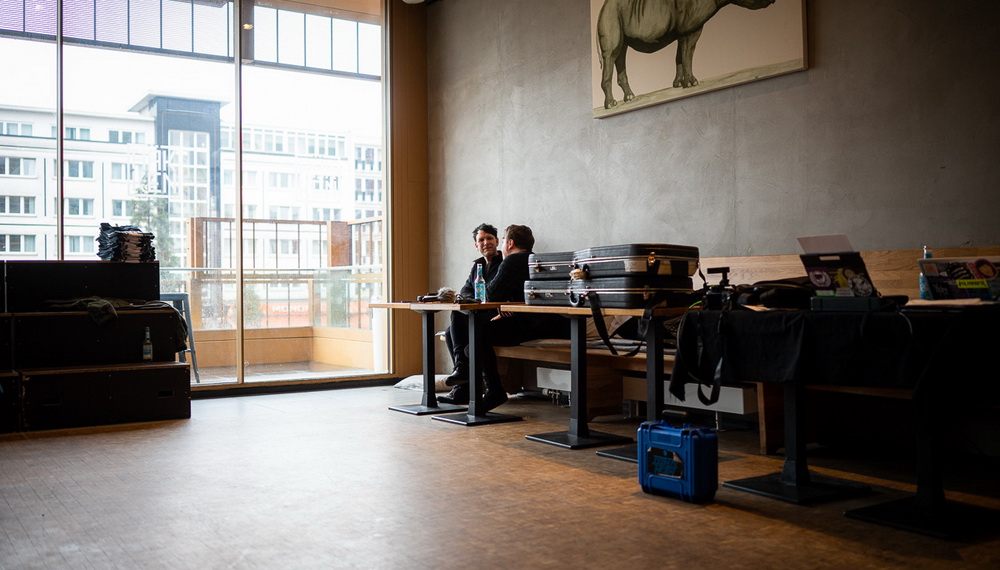
The process of writing the record like that made us fearless, and it’s just such a liberating feeling once you find the right style that suits your band. Once you’re all in it together and write it together rather than just one person bringing the song to the band saying “This is what we got” – and everyone added a bit – you find a new groove.
But we didn’t feel any pressure on this record which is strange because you should’ve felt it.
But it also feels like you let the lyrics decide what songs you picked for the album.
Totally! An album is a journey from start to finish. It just so happened that this record turned out to be a concept record by total accident and there were cases of serendipity that were quite cool, and it kind of led its own path by accident I think (laugh).
It’s all down to the headspace you’re in at the time and the topics you want to sing about. You know, if you’re pissed off at the time or if you’re starry-eyed in love because you will write different kinds of records, won’t you?
You started as a band releasing singles only and then you turned those singles into a debut album. I really love the way you built up expectations with that first album and released singles that you collected into EPs which later were put together into the album.
Yes! I kind of love that technique, you’re keeping everyone’s attention to be engaged because we live in a time when people’s attention span is so short, and we have to find ways to stick out. We live in the Spotify era when people might only listen to the top five songs and won’t explore an entire album necessarily. The idea behind that is just to keep releasing music so everybody is constantly hooked.
We did it slightly differently with More Than This because it was a different record, a different release and it’s a whole different kind of universe for us. It makes sense to keep it separate and do a different kind of release.
But isn’t there a risk that people will be disappointed when the album is released later and it only contains two or three new songs?
Yes, and we’ve had those conversations a lot and there have been some people saying “Is that all?” (laugh). That was kind of the main reason for not doing it on this record because we felt we had done that already, but that had to happen with the first record as a way to keep everyone’s engagement up because it did do that people didn’t forget about us. It was kind of a necessary evil.
On More Than This, we were more conscious because we didn’t want the repeat of that kind of comment. You don’t want people to have heard everything, you want them to come back with fresh ears to fresh music. You also got to be snappy and ready to dig deep and get out there. The process of writing it [the second album] has to be a real magical process in order for you to release a piece of art that you’re really a hundred percent happy with. You don’t have as much time to release that second album and need to know what you want to do already when you start on it.
At the forefront of making positive change
Throughout history, musicians have written songs in protest to governments and social injustice in an attempt to raise social awareness, and for The Luka State it’s no different.
Frontman Conrad Ellis translates different social topics into lyrics and mix it up with political aspects of modern day England. But just writing about it wasn’t enough, the band took action to make positive change. During the filming for the ‘More Than This’ video, inspired by an encounter that Ellis had with a single mother of two while he was delivering food parcels during the pandemic, the band decided to donate their budget to The Trussell Trust, which supports a nationwide network of food banks.
For The Luka State making a positive change through the medium of music is important, especially when you have a platform to speak from.
You talk a lot about different themes on the second record on your social media channels and I’ve read a lot about you raising awareness of different social problems, and you also took action when you donated your video budget to a food bank. Does it all come from your own experiences?
Hundred percent! In one part of the record you follow the journey of a young man’s mental health from really poor conditions to becoming better and coming through on the other side, and that’s intertwined with stories of addiction, substance abuse, and trauma.
But there’s also a political aspect on this record where I sing about the political climate in England at the moment, where people live off food banks and have to go through a cost of living crisis which is just terrible, they’re important to speak about. In rock and roll in this day and age, I feel that topics aren’t spoken about enough, especially topics that we need to talk about. It may be difficult for me and you to sit here over a beer and talk about some of the topics on that record, but through the medium of music and through the power of music, it’s easy to digest and take onboard and think. Once you heard it, you can sit with it and think about it, maybe relate to it, and that opens up the door for conversation.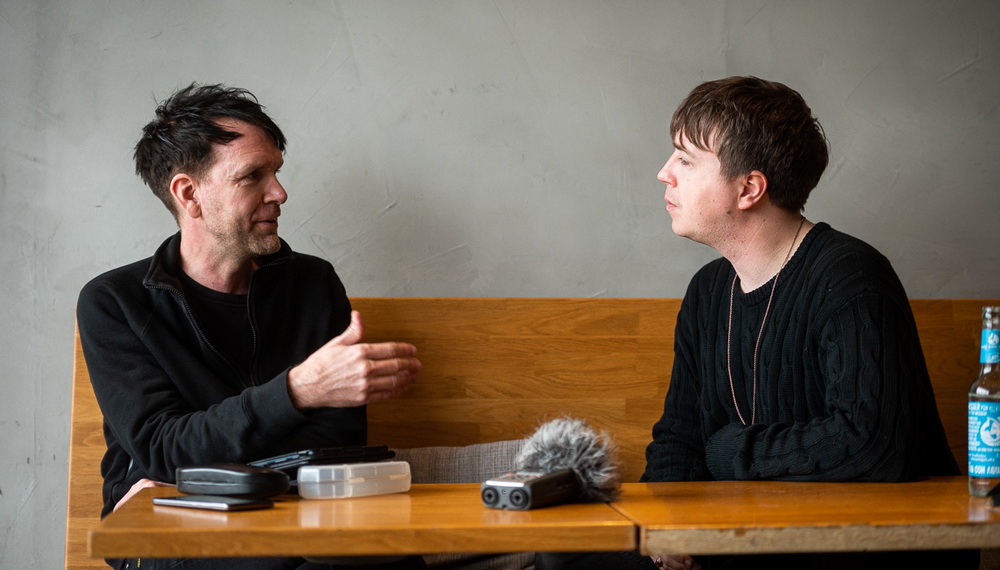
It’s one thing to sing about these topics but without taking action and showing that we fucking mean it, I think we would void the topic of conversation that we’re speaking about. It’s important to show that you care and that you are at the forefront of change, and I feel that as a band if we have the means to do so even if it’s a drop in the ocean, it’s still adding to the size. It is important that we do take action where we can.
And as a band you grow an audience after a while and get a platform big enough to reach out to people and make them aware of these kinds of problems.
Of course! When you mention platform, especially having a platform to something positive that can lead to change, taking action upon that is the best point of call because you have the accessibility to speak about the topics you care about. For instance, in England Marcus Rashford [Manchester United football] ran a campaign about free school lunch meals, and that was a really punk rock thing in my eyes.
When you talk about platform, that’s about someone in a higher position with the means to do change and that has been able to do so. We kind of took inspiration from that because that campaign [Rashford’s] was the most punk thing you can do, to take on the government and win single-handedly. So platforms are very important when you have the means to make a change.
Another theme on the album that especially stands out to me is that you write about moving out of town or running away. Is it about you trying to leave Winsford?
Yeah, it’s a small working-class salt-mining town in the middle of the North West situated in between Liverpool and Manchester. It’s really nothing to do there (laugh) but I think we are the musicians that we are because of where we come from and it has made us the people we are. I feel that these things shape us as characters and shape our personalities.
But when I sing about that it’s a form of escapism because I find writing a very therapeutic tool for myself. I feel that when I’m writing in this form of escapism it’s something that’s always real to me. I kind of escape through my own lyrics (laugh). Home is just a base I guess. We all treat it like that and if you treat it like that you kind of have a healthy relationship with it.
I’m not trying to leave, I still live there but mainly for financial reasons because I can’t afford to live in the city (laugh) but we’re also very much a working-class band. I sing about wanting to get out and I think that people from those small towns kind of understand where I’m coming from and connect to us. There are thousands of towns all over Europe that are like that, industrial towns with not many people there where the employment rate is low and the crime rate is high. They exist everywhere, not just where I’m from.
It is a form of escapism, it’s like painting a picture of escapism just like Dylan used to paint pictures with words. It’s the same kind of writing technique I guess.
*****
You have done lots of touring after the pandemic and did your first American tour last year, returned to England for a national tour and now you do a few dates in Europe. Are you planning for your first full festival season this year?
Yes, I would hope to get out to a lot of festivals this summer but I think we’re going to do a tour this summer anyway, another UK tour and another European tour, and we’d love to go back to America again, obviously.
We’re very much a live band so we kind of always want to be on the road. We want to be here rather than being home (laugh). Although I’d love to be home with the misses and the dog, don’t write anything else (laugh).
We’re still dipping in and out of the real world and the not-real world, and this is not the real world I guess.
*****
Photographer: Kevin Winiker
*****
The Luka State pages


*****
Messed!Up recommends
