 Messed!Up
Imagine your band just released their sophomore album, gained lots of media attention and had a bright future lying ahead – and a few months later you split up. That’s the story of Skuldpadda.
In October last year, the band announced that their journey has reached an end, and the band’s members dispersed in different directions. Front vocalist Michaela Åberg launched her solo project and the rest of the band engaged in new life projects. However, just a few months later, at the beginning of 2021, Skuldpadda’s Facebook page had been renamed and a few days later five of the six Skuldpadda members announced their return as End of Fun.
Drawing on a similar sonic palette, End of Fun released the single “Thelma & Louise” in May, and yesterday the band’s debut EP I Feel It All, Forever smashed onto the scene with an online release show at QTECH in Gothenburg.
Messed!Up met up with the band a hot summer day in Gothenburg and chat about their quick return to the scene, building up a new reputation as End of Fun and pushing their sound further out in dreamkraut territory.
The Comeback
Let’s start with some explaining. At the end of November last year you announced that Skuldpadda split up, but it didn’t take long until you returned as End of Fun.
Yeah, but at the same time we did say that we’ll return in the future, but we didn’t say when it would happen.
When Skuldpadda split up we didn’t know how long it would take for us to reboot, restart and do something together again. We had to reflect on how we could do it with fewer band members or if we would get a new guitarist into the band before we could announce End of Fun. We also had to think about what impact it would have on our live shows with one guitarist fewer, but we decided to let Michaela fill in on keys and add some weird electronic sounds instead of getting a new guitarist.
How was the discussion on getting a new guitarist versus Michaela on keys? As Skuldpadda you had quite a massive guitar sound.
We had quite many discussions about it and really had to reflect on what we would lose, but it’s so much easier to rehearse with just one guitarist. It will probably be different live, we have to see when we’re doing our first live show as End of Fun and how it works out. It may happen that we bring in an extra live guitarist at times, but it feels better to be five rather than six in the band.
But we also had discussions on whether we should get another keyboarder in the band but decided that Michaela have to do double work instead (laugh).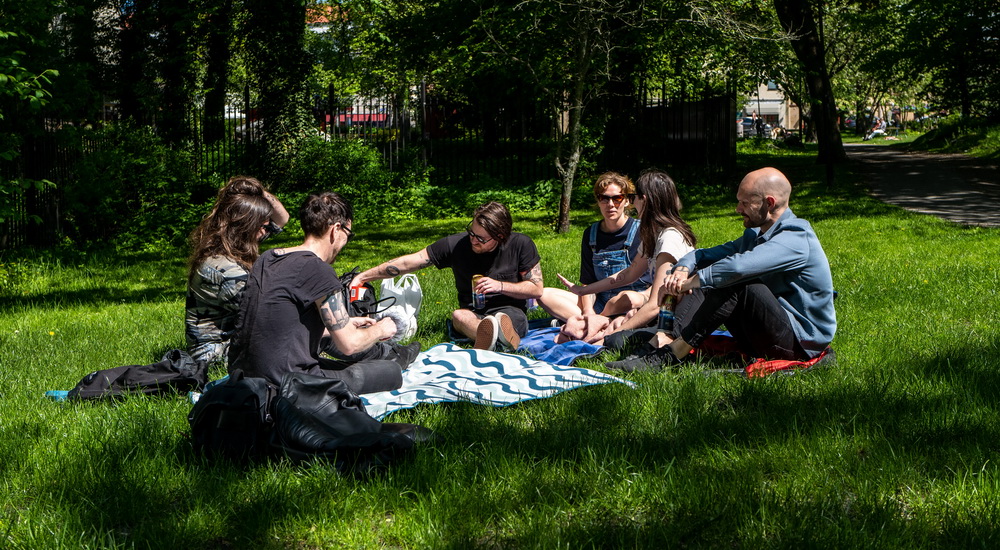
But why did you change your name? After two albums as Skuldpadda you’ve worked up a brand that people know about, especially after the second album Commitment that drew accolades across Sweden, and now you have to restart again. Don’t most bands keep their name even after losing a band member?
It wasn’t fun to have a name that stole attention from the music, it was just too much focus on the name. Some people loved Skuldpadda while others hated it. End of Fun is neutral and will let us focus on the right thing, our music.
We also felt that it would be great to get a fresh start although we sort of stick to the same sound as Skuldpadda, but there were things we wanted to get rid of and this was an opportunity to do that. No matter the cost, it’s better this way.
Does it mean that you will cut all ties to Skuldpadda and not use the brand, and the songs, to get attention as End of Fun just to have a clean start?
It’s no secret that we are the old Skuldpadda, we won’t hide the fact that we made two records, but we’ll never promote ourselves like “Hey, here’s Skuldpadda with a new name”. We’ll probably play a few Skuldpadda songs live as well, especially in the beginning because we haven’t written that much music as End of Fun yet, but in the long run Skuldpadda will fade away. It’s in the past and we’re looking forward to the future.
When Skuldpadda started we didn’t really know what we wanted to do, just that we wanted to play music. Everything, all ideas, turned into songs; we didn’t sort anything out. If someone had an idea for a song, we used it (laugh), but music-wise it was a too diverse sound. That actually made it a bit hard to know what Skuldpadda wanted to do at times. Today we know what’s good and not, and we know what songs will work together to get that important theme on an EP or an album.
Maybe we wanted things to happen a little bit too fast in Skuldpadda. You know, we did our first gig just two weeks after the band started, with two of us playing new instruments and me [Michaela] having massive stage fright, a really horrible show for me (laugh). But the audience liked it. Two months later we recorded our first EP even before we had enough songs for a full EP and we had to write the last one in panic (laugh). Skuldpadda may have pushed it too hard, we just didn’t understand it at the time.
That’s what’s different today, we know how to do it and also know that it’s ok to let it take some time to get it done. But we’re also one step ahead now and have the next thing ready when we release the first. Let’s say that End of Fun is more organized, shall we?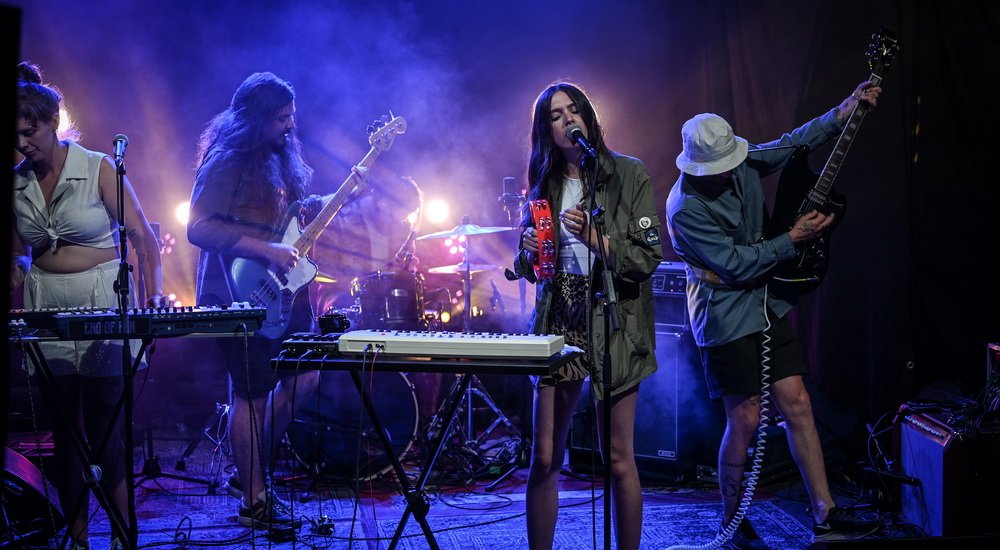
I was thinking about all the experience you’ve gained. What would you do differently as End of Fun?
Probably what we just said, that an EP needs to have a theme or a common idea and not something put together of four completely different songs.
We also know more about how we want it to be and usually think “What would we like to listen to?” when we pick the music for singles and EP’s. In Skuldpadda we could leave that decision to our label, but now we know what works out and not, we really don’t need any advice on it.
We also do things differently. When we worked with our [End of Fun] EP we carefully picked what songs go best together and rehearsed quite much before we started recording. On Commitment [Skuldpadda’s last album], a good demo was enough to get a song on record but when we played it together later it felt like “This is not really us”. We just recorded songs before we rehearsed them together. Live it sounded completely different because we couldn’t really recreate it.
That’s an experience we brought with us from Skuldpadda, to not do it like that (laugh).
But isn’t it something defining for the psych/krautrock genre, that music is created when you’re jammin’ and it doesn’t need to sound the same every time?
Yeah, but it’s not easy to work like that. It’s a lot easier to know how to play the song when we rehearse it and have something to build on when we do it live. Just listen to “Thelma & Louise”, the single off the EP. We did a short studio live session when we released it and it sounds just like on record, and we like it. Of course we may change songs live, but we like to have the live version on record from the start.
The End of Pop
The 1960s gave birth to loads of new music genres, music that still inspires bands to recreate pieces of the ‘60s brilliance fused with modern pop/rock music. End of Fun snatched the best of the era’s psych rock and krautrock and fused it together into something for the 2020s: dreamkraut.
Already as Skuldpadda they were defined by long psychedelic parts in their music however with influences of pop music. As End of Fun they have eliminated their pop influences and steer the machine into plain dreamkraut territory, and they promise to continue in that direction.
Your debut EP I Feel It All, Forever very much continues where Skuldpadda left, it’s a similar sound. But Skuldpadda could also be poppy at times and it seems like you have eliminated the pop elements in End of Fun.
Exactly, we just skipped the poppy pieces from Skuldpadda. End of Fun put more focus on long instrumental parts and complex song structures which works better with the type of music we want to play; and all that is intentional on our side.
It’s also the type of songs we like to play live, the pop songs we always played reluctantly and we never got any feeling when we play them live. It’s not the same as playing krautrock-inspired songs live, that’s what End of Fun is about.
It will also be more obvious what you want to do when you drop the poppy side of the music. To me, it sounds like you belong at Berlin Psychfest or Levitate in Austin rather than at the Way Out West Festival. But do you think that people who know you as Skuldpadda will be disappointed when you’ve dropped the pop influences?
People are kind of open to this type of music as well, especially in the indie scene. It’s pop/rock music in some way but coated in a psych rock framework with the long instrumental parts that belong with it. Today, people call it psych rock or kraut, but twenty years ago it would have been rock music.
”Dazed and Confused” by Led Zeppelin is twenty-eight minutes long and no one called it psych rock at the time even if it contained twelve minutes of noise in the middle (laugh). If people could listen to that, they can probably listen to our much shorter songs as well. We’re quite confident that people in the indie scene will like this kind of music as well.
But we’ve also reached a point where we don’t care as much anymore about how people receive our music because we have done it on two records already. We like it and that’s good enough to believe that the audience will like it as well. As Skuldpadda we didn’t always know if it was good but today it’s like “We know that it’s a great EP”, and really don’t care if it doesn’t fit in the scene or in any template on how songs should be done. If no one wants us to play at Pustervik [venue in Gothenburg] then we won’t do it, we just play somewhere else.
When you have released two records you also know that it’s not a big deal to release music. Your first record it’s everything, today you feel like “Cool!” and then you know that it will fade away already the next day and you’ll start to work on the next record (laugh).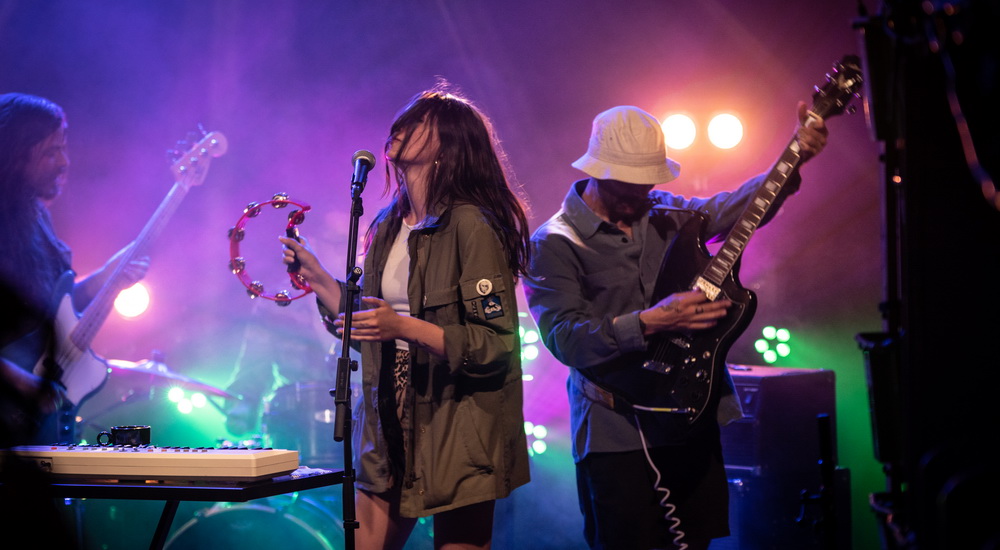
Having your songwriting capacity in mind, does it mean you will have another EP out before the end of the year and a debut album for End of Fun next year?
(laugh) Let’s stop there for a second, shall we? Our second EP is ready for a release soon but the album has to wait a bit longer. However, we have lots of ideas to work on. Our advantage is that we have our own studio and usually record new music while we’re rehearsing.
We’ve always been working really fast and have been very productive which makes it possible to pick among lots of ideas, and when you do it like that you always move forward, you don’t get stuck. Since we started Skuldpadda we have released one record every year, but we could have released three if we would have been allowed to. The problem is that you have to wait for anything to happen, the whole process around releases is very slow. You record something and then you need to wait at least six months before it’s released.
This time it has been a quick process though. We signed with Something Beautiful four months ago and the EP was released yesterday. That’s a good sign (laugh).
Like you said, End of Fun also release music on a new label, Something Beautiful. You didn’t have the opportunity to continue with Kning Disk? Or did you want a fresh start?
A little bit of both, it just slowly faded away. But we had a great collaboration with Kning Disk while we had Skuldpadda and also had a dialogue on continuing working together, but we decided to move on. It wasn’t like we were stuck, we only had deals for every new record we released, not that we had signed up for three records before we could leave. It was our own decision in the end.
Jesper, the labelman of Something Beautiful, called me [Michaela] and wanted to release my solo project and it has been great teamwork, why not do it with End of Fun as well.
Something Beautiful works from Stockholm as well which may open up for more shows in our capital. In Gothenburg it won’t be a problem to get shows, you already have a network, but adding the Stockholm scene must be a good strategy.
Most definitely, we’ll book the shows in Gothenburg and Jesper takes care of Stockholm because he knows the scene and has a network. Even better, he also has an international network and that’s very interesting for us.
He also works in a different way than we’re used to, a bit unconventional, and tries out things like not put too much energy into getting his bands onto the major Spotify playlists, just focus on playlists that will build a long-term fanbase. Usually, if you end up on a major playlist, your single will get boosted for a week, and then it’s over, but we want to have people that stay with us for the whole journey and that’s a much bigger chance to reach those if you chose another strategy.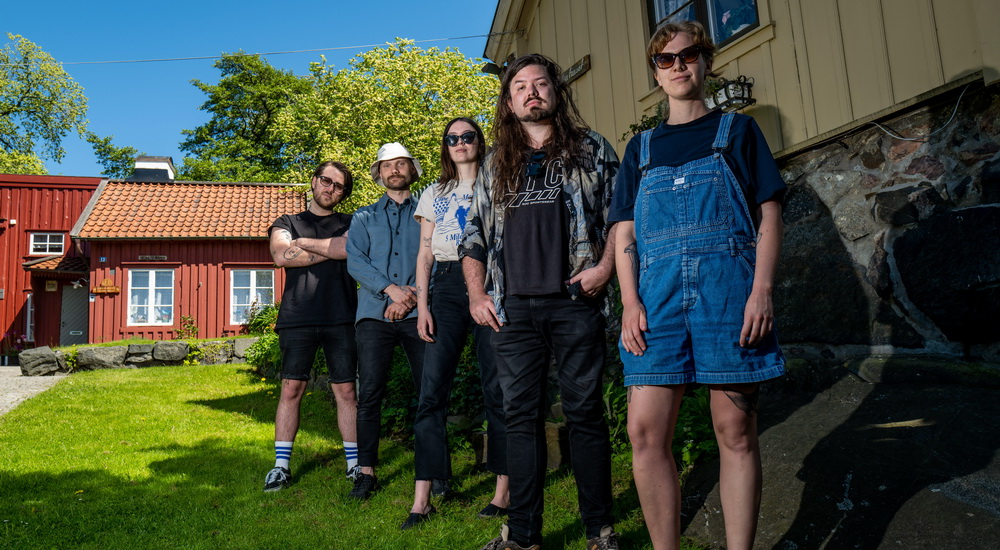
But don’t get us wrong, it’s a huge ego boost to get lots of streams but it doesn’t really represent who’s turning up at our shows and buy our stuff. Those are the people we want to reach out to, to meet the people who buy a t-shirt or a record at the show and have a chat. Those kinds of meetings mean something.
I know you’ve been more active than most bands during the pandemic because you’ve had the opportunity to meet and rehearse in your own studio, and you also have a lot more music coming up. Does it mean that you are keeping an eye on the live scene as it just has opened up for shows again?
Absolutely! 50-shows indoors or 100-shows outside, even 500 if people are seated, are great opportunities. We’ve already started to get in touch with people and have a few things in the works but we can’t tell you yet. But keep an eye open, something will happen soon (laugh).
Photographer (interview): ©Krichan Wihlborg
Photographer (concert): ©Richard Bloom
End of Fun pages


Messed!Up Recommends
