 Messed!Up
Victorious and flagrantly bloke-ish, Mando Diao stormed onto the indie rock scene with their debut album “Bring ‘Em In” in 2002. Soon after their debut it became clear that Sweden had its own band with the universal musical pedigree of Oasis and the same arrogance and tongue-in-cheek attitude that quickly earned them a following and lots of attention from media. Mando Diao became known for their public fallouts and cocky attitudes.
With international success and a fading distance to their teenage rebellion years, Mando Diao have matured, interpreted Swedish poet Fröding and morphed into something more than a simple rock act. With the 2012 record “Infruset” they reached out to a new audience and became popular across generations in Sweden. And in Germany they’re bigger than ever.
But things were about to change. For fifteen years, the group went through ups and downs with several changes in the band; both keyboarder Mats Björke and drummer Samuel Giers left the band, and in 2015 Gustaf Norén, guitarist and songwriter, left because he wanted to “work on new creative ideas” and was replaced by Jens Siverstedt.
When the band played a sold-out Sporthalle in Hamburg we sat down with bassist Carl-Johan “CJ” Fogelklou and chat about two decades on the international scene, their plan to follow-up “Infruset” and the family-friendly Mando Diao V.2.0.
Big in Sweden, iconic in Germany
In Sweden Mando Diao have been one of the major bands since the release of “Bring ‘Em In”, and here in Germany you’re almost iconic and play arenas. Tonight it’s 5 000 here in Sporthalle. How did you reach out to the German audience from the beginning?
I remember quite well how it started. We were on the train to Växjö [Swedish city on the south east coast] to play Popstad Festival somewhere around 2003 and in the seat behind us is this guy Henning Furbach, a German journalist from Piranha Magazin in Munich, and he was like “Wow, is it really you?”; he really liked our music. He interviewed Gustaf [Norén] between two coaches (laugh), and later in the evening at the afterparty.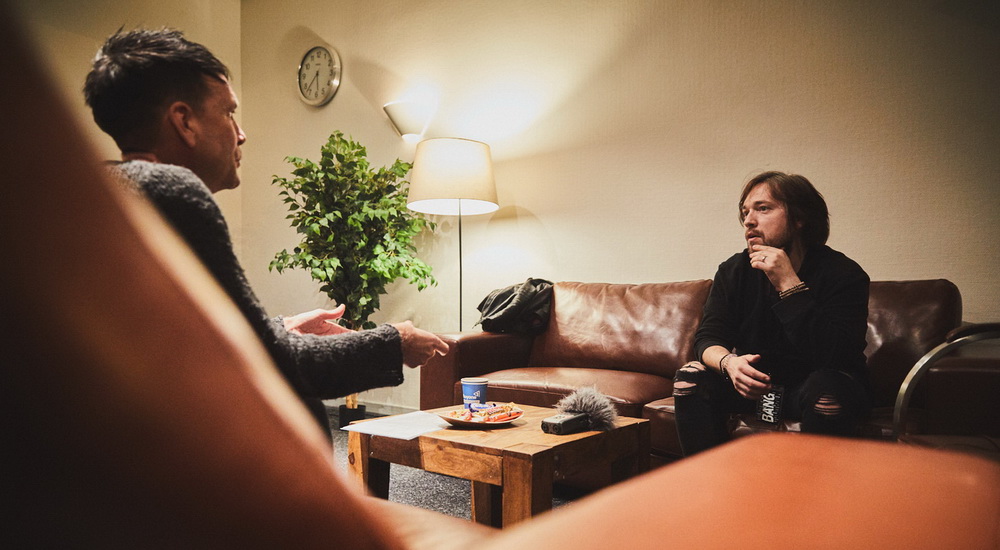
Back in Munich he played our music everywhere and for some reason EMI in Cologne noticed it, and they had this guy who was enthusiastic about our music and wanted to release it. But people at EMI just said “It’s not good enough, just let it be”, but he didn’t give up on us and when it finally happened it was a huge success.
You have a very long career with Mando, the band started somewhere at the end of the 1990s, and you had your breakthrough already with your debut album. That’s more than twenty years on the scene.
(laugh) That’s what people say, we have been around for a while but I’ve just been in the band for nineteen years.
It’s not really clear when Mando started. Björn and Hagge [Daniel Haglund] have been friends since they were kids and started to play together in ’97, but I don’t think they know when Mando really started.
We always say ’99 in interviews and I joined the band in 2000. But we’re not an old band, we feel very young (laugh).
Very early you gained reputation for being a band with an attitude and had this Oasis kind of cockiness, especially in Swedish media. But today you’re twenty years older and have families and have changed as individuals I guess. How has the image of Mando Diao changed since you started?
Oh, a lot has changed.
To start with; all of us have some kind of Tourettes and just say what’s on our minds, and most of the media image in the beginning was nothing but a teenage rebellion. We were much influenced by Oasis and Blur and tried to do something similar in Sweden but it was not really serious, it was about getting attention. And it wasn’t really honest and how we are, we don’t behave like that at all (laugh).
I think the way Gustaf acted in interviews probably enhanced the image of us as arrogant bastards, but that’s just how he is. Like you said, we have families today, live in houses (laugh) but at least no one has bought a dog yet (laugh).
But your reputation also gave you enough attention to make you stand out from other bands? To reach out to an audience is much more than doing music.
Most definitely, and we just continued doing it in media. But when we started to play outside Sweden we were like “It’s just so fucking stupid, let’s just leave it” and it was quite different, especially here in Germany.
In Sweden it was difficult to get away from the image as these cocky young assholes but when you consider our backgrounds you realize it’s nothing but wrong. I’m and educated musician and studied at the Royal College of Music in Stockholm and played classical contrabass just before I joined Mando, far from our media image. That’s not really something to be cocky about (laugh).
More than rock music
On their latest album Mando Diao focus on heavy rock riffs, a decisive step further into a new sonic landscape. But Mando Diao is more than rock music. With the Swedish ballad record “Infruset”, where they interpret the poetry of Gustaf Fröding, they gained national attention across generations in Sweden, and CJ reveals that there may be a new record on the same concept in the near future. 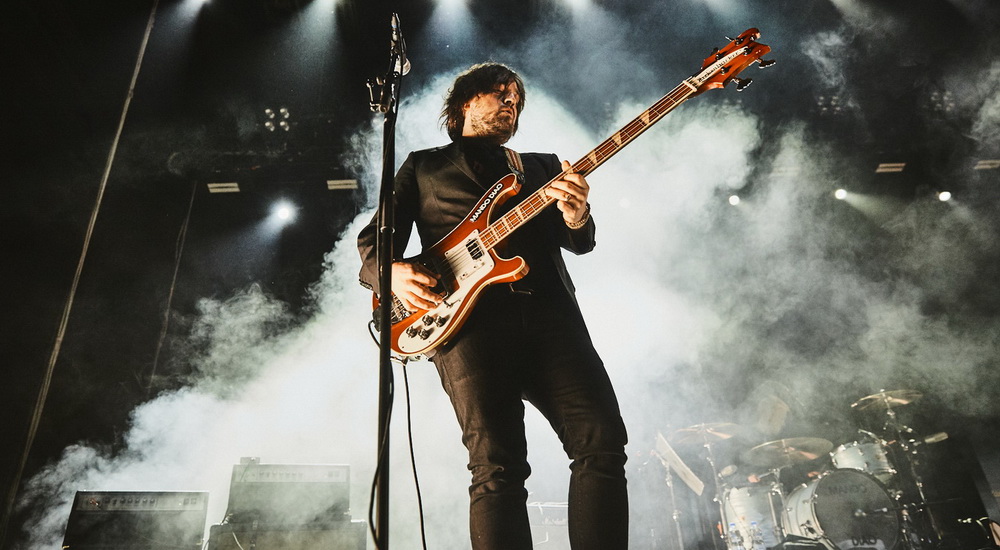
Gustaf left the band in 2015 and Jens took his place. How much impact did it have on the band in terms of songwriting because Gustaf and Björn wrote much of the music together?
All that about writing all the songs for Mando was something of a childhood dream for them, to be some sort of Lennon/McCarthy, but they didn’t write much music together at the end. Of course they met up to finish songs at times but they mostly wrote songs on their own, and Björn started to write songs together with Jens quite early, before he joined Mando, because Björn really wanted someone to write music together with. And I and Björn wrote songs together as well.
What really has changed is that Gustaf took care of media and loved it and was loud enough to draw attention to Mando, and when he left the band we felt a bit lost at the beginning, but that changed after a while and all five of us share that responsibility today. But we did lots of interviews together already when Gustaf still was in Mando and that’s not a huge difference today. Gustaf however was very clear about what we would say in interviews.
But music-wise it’s not a huge change, Jens is a great musician.
“Bang” is a step towards rock music with heavy rock riffs and a new sound for Mando. Was it about going back to your roots again or just a way to manifest Mando Diao 2.0 and a restart for the band?
It’s actually not about going back to something, rather moving towards something new. The reason for having these heavy rock riffs is that we have an awesome guitarist who can play those riffs.
I’m the only educated musician, the rest just picked up their instruments as teenagers and learned how to play, but Jens is an amazing musician and musically we’re much better today. That’s when it becomes fun to play heavy riffs.
Although you just released a great rock record Mando is more than rock music. “Infruset” was a huge success in Sweden when you tagged along the Swedish ballad tradition while interpreting Frödings poetry [Swedish poet].
That’s fun that you mention it because when I was in the make-up lounge of Swedish TV a few days ago the make-up artist asked me what kind of music we play and I said “Swedish ballads and rock music”. That’s what Mando is about, ballads and rock.
We listened much to Beatles at the time and naturally we explored that kind of music when we made the Fröding album [“Infruset”], and if you listen to it you can hear the “White Album” influences, but with Swedish lyrics and an interpretation of Fröding. That type of music we got from mixing the Beatles-type of music with the Swedish ballad tradition; and rock music we do because it’s just so much fun to do it.
And there’s a rumour that you will release more music like that.
For sure! We have recorded a new song but haven’t decided for a release date yet.
But we really need to careful when we do it a second time, to re-write the same concept once more, because we really don’t want people to think “Ah, that was a winner, that’s why they do it again”. It has to mature to a point when you feel that it’s fun to do it.
We really love to do it but everything comes in waves and we haven’t felt for it for a while because it was so intense and all-consuming. When “Infuset” was released we didn’t do anything else than Fröding, we didn’t play “Gloria” or “Dance With Somebody”, just Fröding for two years and after such a massive period it’s natural that you’ll be like “Ok, it was fun but it’s enough for now”. But the passion for doing something similar is on its way back again.
When you summarize what you have done so far it’s indie rock, rock and ballads. What is left for Mando to explore music-wise?
I’m sure I can speak for everyone in the band when I say this; we’ve always wanted to write a film score, that’s a huge dream for me.
We also love electronic music, techno and that stuff, but that won’t happen as Mando. All that started with “Aelita” but with that album we also realized “Ok, it’s all fine to try new things in Mando but people didn’t really like it” (laugh). It’s not a good idea at all to mix sushi with gingerbread because it taste like shit (laugh); it’s better to start a new project for those kinds of experiments.
And as we speak you perform three in-house shows on one of Sweden’s biggest entertainment shows, “På spåret”. That really symbolizes that you have left the cocky Mando behind and have become a band for an adult audience,
Yeah, and that’s so cool, just in the same way as Neil Young matured and became popular across generations (laugh).
The ultimate popularity in Sweden is if you would perform in the Swedish Eurovision Song Contest eliminations.
That will never happen, it’s really nothing for us. The only way we would have anything to do with it is if we write a song that someone else perform, that’s fine for me. Jens has contributed with a song already. But as Mando – no, it won’t happen.
”På spåret” [prime time family show on Swedish television] is fun because we’re in control and decide what we do, and that’s fun in a challenging way. It’s also a show that builds on a great sense of humor and some really amazing people working with it.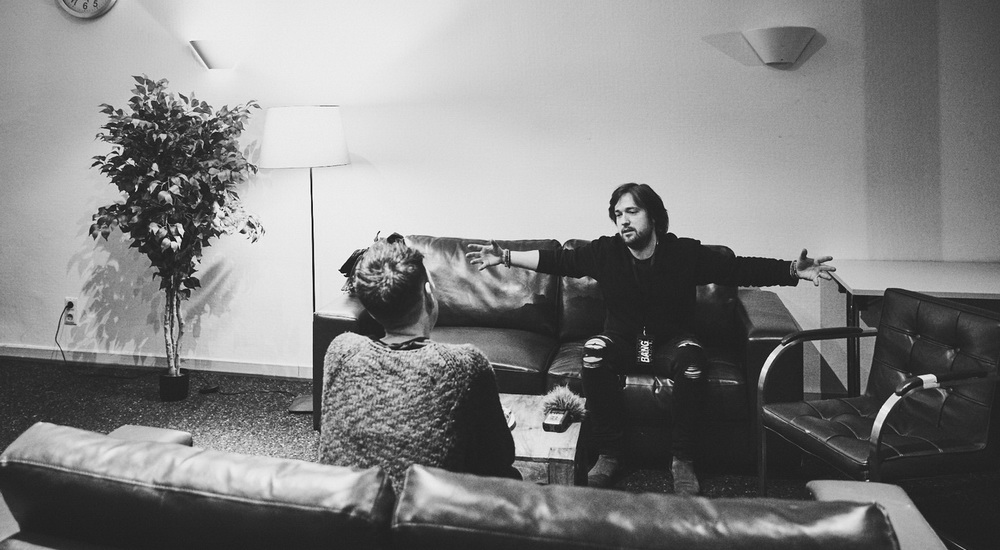
Just as a summary; does it feel as Mando Diao have managed to get through some sort of rejuvenation at this point and that Mando Diao 2.0 are here to stay?
That’s just how it is! The upgrade is done and it says “Ok” (laugh). We’re also very close at a personal level in the band and that is reflected in how we think about and play music.
Photographer: © Julia Schwendner
Photo gallery
Mando Diao pages


Messed!Up Recommends
