 Messed!Up
As festivalgoers get home from enjoying Roskilde Festival, Wacken, Reading/Leeds Festival and many similar events creating memorable weekends across Europe this summer, a warning has gone out that many events are surviving on such precarious finances that as many as one in ten could close down by next year, in particular those festivals run by grassroots organisations having a rough time fending off the competition from major festival corporations.
ParcelHero, doing industry research on the UK festival market, report that the rising price of security, the huge demands on infrastructure and increasing band costs could mean as many as 100 of this year’s festivals will not reappear in 2019. Their analysis is similar to those made in Sweden, by industry organization MusikSverige, and the ongoing debate about market control in Germany. In the case of Sweden major grassroots festivals as Peace & Love and Arvika Festival – classic festivals – became victims with the arrival of major German festival organizer FKP Scorpio and American Live Nation. Some festivals have managed to restart but can’t compete in terms of financial resources and many of those festivals are still pressured by financial instability.
In the UK, Association of Independent Festivals (AIF) have urged the competition watchdog to investigate Live Nation’s dominance of the music industry, warning that the summer festival scene is suffering. The AIF said Live Nation had a 26% share of the market for events with a capacity of more than 5,000 people, compared to its nearest competitor, Global, with 8%. AIF chief executive Paul Reed said “Simply put, this damaging market dominance needs to be given the scrutiny it deserves“. 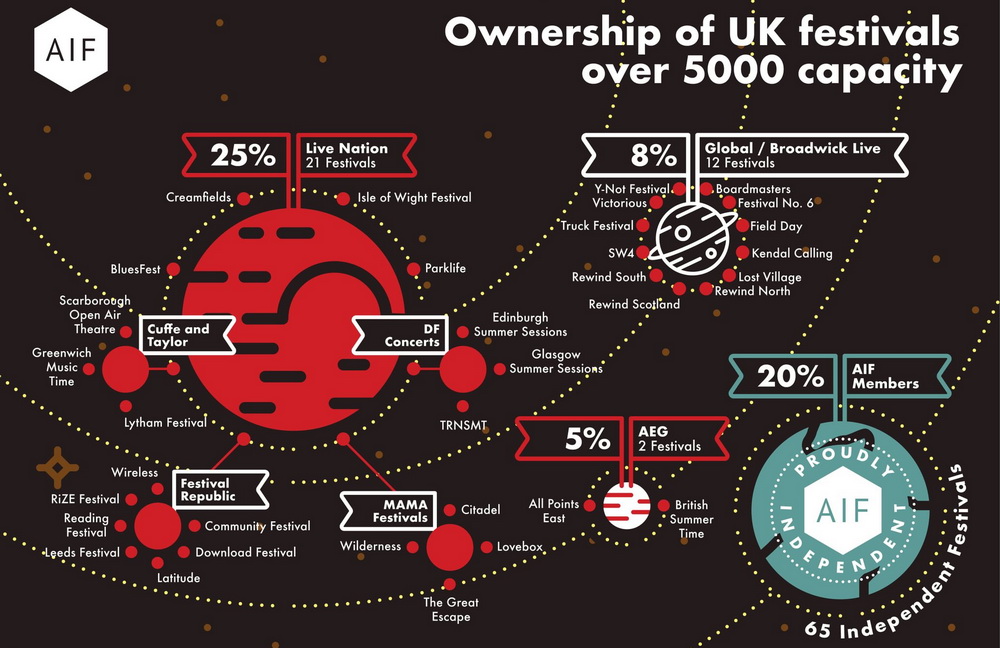
Live Nation’s high market share risk reducing choice and value for money, particularly given the company’s presence in ticketing, artist management and promotion. And the problem has been similar in Sweden (when something happens in the music industry look at Sweden, that’s where it happens first).
But the major problem of market control and a festival circuit dependent on festival “dragons” is to support up-and.coming acts. In my own research one Swedish festival organiser, who asked to remain anonymous, said that this also prevent acts from playing as much as they could. The organizer has been unable to book even small acts, paid less than 500€ per appearance, because they were locked into exclusivity deals to play only Live Nation or FKP Scorpio events, thus pointing out that “This is the height of anticompetitive behaviour, restricting bands from playing live shows. […] Allowing major companies to dominate festivals, and the live music sector in general, through vertical integration reduces the amount of choice and value for money for music fans“. 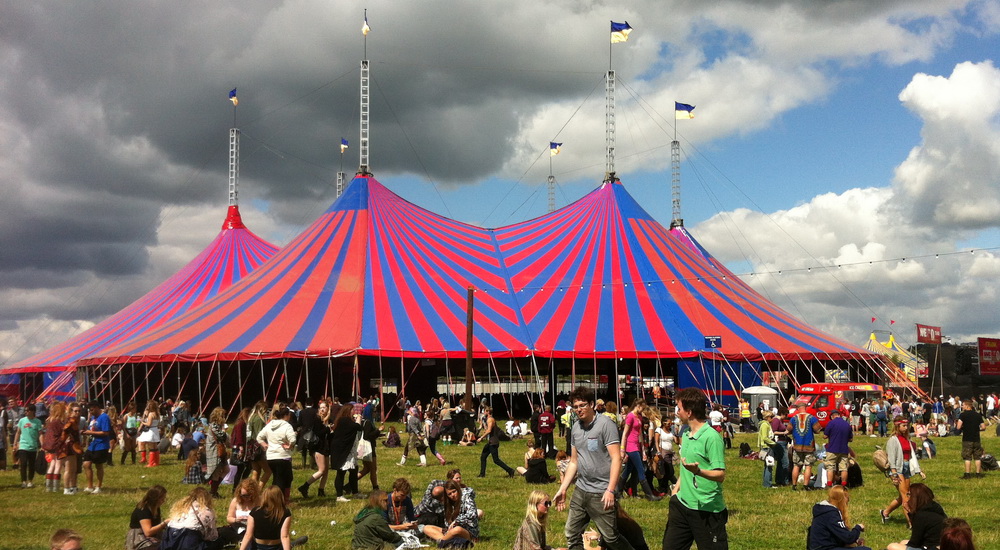
ParcelHero point out that there is no doubt that festivals have become big business – an estimated 1,000 festivals will take place in the UK through 2018, six times as many as 14 years ago, but despite visitors paying an average of £200 for a ticket, and big events attracting thousands of revellers, the amount of money they make can be tiny in comparison with the overall budget, says David Jinks, ParcelHero’s head of consumer research. Some of the smaller festivals at risk are run by enthusiasts/grassroots organisations [in which] everyone clubs together to pay for the event, he says. “It is music fans as opposed to business people. Some of those, if there is a poor summer, and if there are policing costs, they would definitely be endangered“.
A festival can run on a financial knife-edge, with one quarter of ticket prices typically taken up by VAT (Value Added Tax) and royalty fees to songwriters. The logistical costs are big too; water, electricity, waste management, while security must police the event. Then comes the costs of the actual live acts.
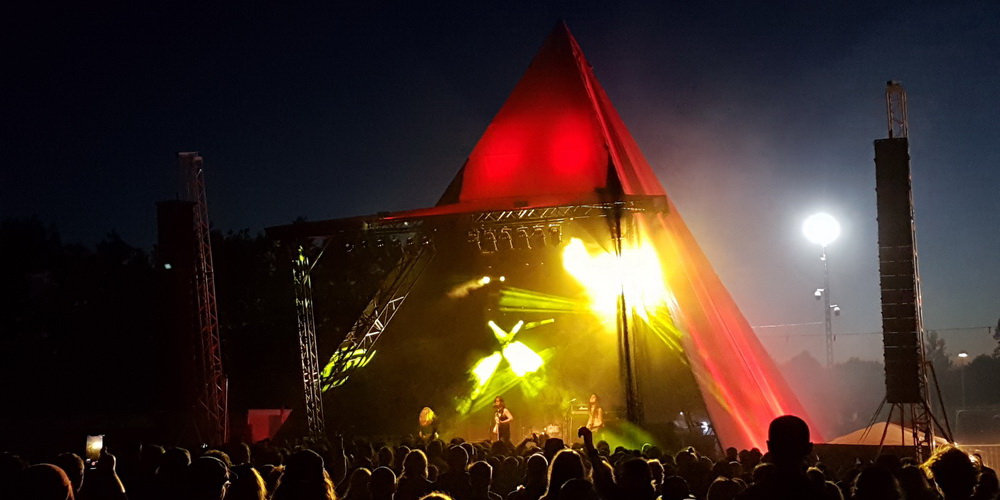
The reason for spotlighting this problem isn’t to make you as a reader to feel pity for those putting their soul into organising events. Even if I admire those people doing everything to serve the DIY ethos, and I have been one of them, you need to have an economy. Let’s face it; if you can’t find an economy for it, you have to let it go – that’s have the music business work out.
The major problem at hand is that reduced support to the “enthusiasts” festivals dramatically limit which bands you will have the opportunity to see on stage during the summer. That doesn’t mean that everyone who wants to organise a festival should be entitled to financial support but if there’s not a system of minor festivals you won’t get a new Arctic Monkeys or a new Muse because these bands also had to start at the bottom of the festival hierarchy before reaching the major stages.
