 Messed!Up
With influences of the 1960s and the golden age of psychedelic rock however fused into a modern mix of stoner rock and bits and pieces of grunge, Birth of Joy swings the psychedelic hammer into the 2010s and skillfully find the “psychedelic authenticity” of the sixties on their new album “Hyper Focus”. Messed!Up’s editor, marked by the psychedelic rock imprint since his early childhood years, met Kevin, Bob and Gertjan before their show at Goldener Salon in Hamburg.
Psychedelic rock is not dead, rather there are legions of young psych rock bands on the music scene alongside many original bands making comebacks. And there’s not only many new bands on the scene, psych rock festivals are popping up like kebaberias at Reeperbahn. There are psychedelic festivals, both in Europe and, in particular, in America, designed to showcase psychedelic talent, new and old, from across the globe. However, where modern psych rock bands fuse the original sound with pop music “going trippier” stretching the possibilities in bands as Tame Impala, Birth of Joy is keen on keeping the authentic sound of the sixties however without adhering to the hippie ideals of the sixties.
Although they gained much attention and play the major festival stages, there are still many barriers to cross to get wider recognition in their home country the Netherlands. However, with their fifth album “Hyper Focus” ther might be a change.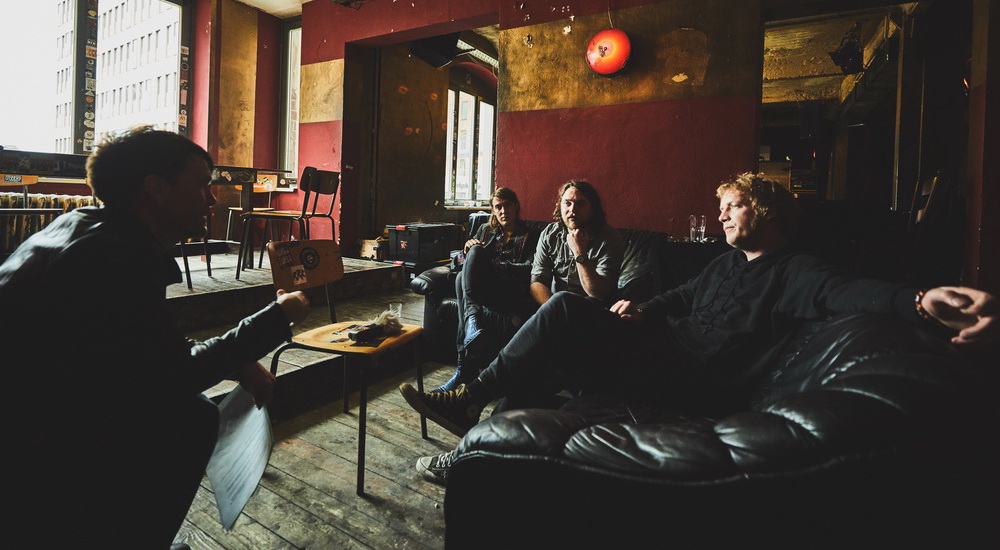
New album but yet to be recognized on home turf
You’re on tour with the latest album “Hyper Focus”, two years after “Get Well”. What is different from the last album?
For a start, we worked with a different producer. The last two albums, “Get Well” and “Prisoner”, were recorded with Joris Wolff in a church and the new album we recorded with Pieter Kloos in Moon Studio – that’s a big difference. He is more known for working with louder guitar-based bands and worked as a live technician for Motorcycle for about fifteen years. Pieter really knows how to deal with loud and psychedelic music and since we wanted something new, a different approach, it was a perfect fit for us.
We’ve always worked from the life approach but wanted to go deeper in that with fewer instruments, less “texture” in the music and find the unity of our own sound. What is also changed is that we’ve switched the organ from a Philicorda to a classic Hammond – after ten years that is kind of a change that influence the overall sound.
As you pointed out you changed studio location from the church to a new recording setting. Tell us more about the process.
The second time, when we recorded “Get Well”, we weren’t really inspired because of the same setting, same location, same routines – everything was exactly the same. Before we started to record “Hyper Focus” we really needed a new base and Pieter always goes to the moon studio why it was kind of logical to follow him there. He knows the studio well which makes everything easier.
Another big game changer is that we allowed us to use a lot of time to write “Hyper Focus”. We didn’t do many concerts and only focused on the new album which is quite different from previous recordings. “Get Well” was recorded in a very short time, in two weeks, which meant a lot of stress
It’s not only studio partners that have changed with the new album, you also changed label from Suburban Records to German label Glitterhouse. What is behind that change?
For similar reasons, a change of plan, an injection of new blood in our veins. We also used to have three different labels – one for the Netherlands, one for Germany and a French label – but with Glitterhouse we have gathered everything in one label, and that makes it all easier. We still do the distribution in Benelux but for the rest of Europe, and I think in America, it’s Indigo who distribute our records.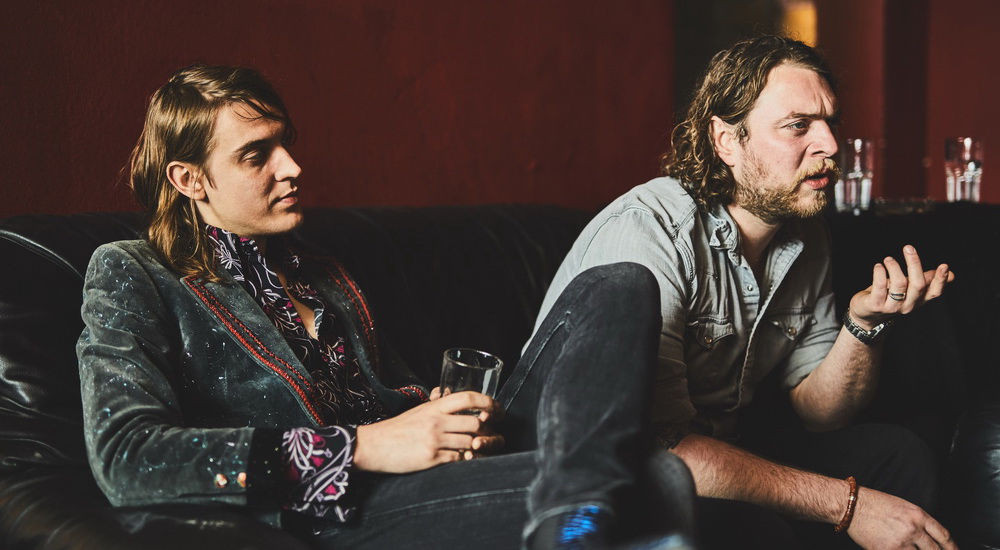
You also seem to have worked much with the lyrics since it’s not the “standard” contents but mean something if you listen to it. How do you work with lyrics?
There are several ways to write lyrics. I [Kevin] like the approach of starting in improvisation when we’re jamming and find words spontaneously but it doesn’t always work out why you have to work with words – visions, rhymes or what feels good in the moment. On “Hyper Focus” we went to a bungalow for a few days, sat by the fire, drinking a few beers and having a good time in general which helped me to think about ideas how to express the thoughts into lyrics. It was quite an interesting way to work with it and I really want to develop that way more.
As today you have released five albums and been doing this for more ten years, 2005 if I remember it right, how do psych rock in general and Birth of Joy in particular, work out in Holland?
It’s getting better and better. I [Gertjin] will not say that we are bigger and more well-known in France than in Holland but we play there more and more but hopefully we get more fans everywhere, also in Germany
Usually airplay – radio, tv etc. – is important and I guess psychedelic rock isn’t that hot in terms of getting radio time?
We don’t get airplay, not at all really. Sometimes late at night (laugh) but we would love to have it during prime time. I [Gertjin] don’t know how it is in other countries but in the Netherlands the Dutch radio is terrible. It’s only pop music or hip hop stuff, and I don’t really listen to the radio anymore because it’s just boring music. The radio medium has lost its power a bit when everyone can listen online.
How about America? The States have a long tradition of psychedelic rock and still have quite big psych rock festivals. Does it work out better for Birth of Joy in America?
Not really. We’ve been there a couple of times, such as at the South by South West Festival [SXSW] where we made five shows – it was fun – and two similar festivals in LA and New York but nothing have happened over there yet and I guess nobody really noticed us (laugh). But at that kind of festivals you usually play several times during a week and there are quite many bands to compete with, it’s tough.
If you want to succeed in the States you need a million dollar on your bank account to buy promotion, half a year of touring there, and you need to get attention from college radio. There is actually this band from the Netherlands, Chef’Special, which settled there for a few months and tried really hard, and in the end they kind of succeeded. That’s the way you should do it; pack all your stuff and go across the world – sacrifice all if you want to do that – but we choose to try out to get bigger in Europe first, and then, maybe one day, take the step across the ocean to the States.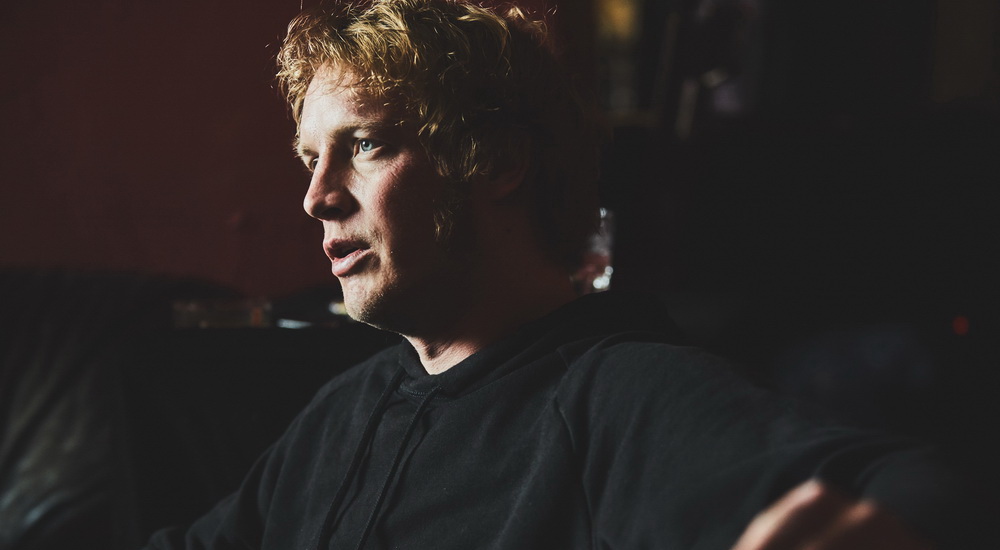
There are quite many new niche festivals in Europe having popped up the last 5-10 years that you may benefit from?
Absolutely! That’s where we need to go. We have an almost full festival tour with shows almost every weekend, sometimes two or three festival shows a week across Western Europe.
The making of an album and the future of psych rock
Most psych rock bands agrees that psychedelia is about more than just music. Sometimes it could be a mindset and a viewpoint more than it is a sound. But it’s not a surface culture of trippy hippies with flowers in their hair spreading the message of peace and love like we saw in sixties. The modern psych rock movement has been brought together by the internet and is by nature global.
However, although younger psych rock bands have modernized the sound of the sixties rather than slavishly copy it, there is in many cases the rule of “authenticity” to consider in the psych rock genre. Sure, even if music software today have options to manipulate the sound via plugins to make it sound like old tape, broken tubes, crackling amps, old plate reverbs and as many other features of the sixties sound, some bands still prefer “the real deal” – the original authenticity – in the creation of new music.
From my experience technology has a huge influence on how music sound and in your case you want to get the authentic sound of the sixties/seventies. Is it a struggle to find the right gear to get that authentic psychedelic rock sound, which very often is the result of a nice set of old amplifiers, a Fender Rhodes or a Hammond organ? These pieces are quite rare and expensive today. How do you create this genuine sound of the sixties?
Good question, and Pieter brought some fantastic guitar amps with him to the studio, specifically the VOX AC30 [amplifier], also called the “Magic Vox”, from the sixties and a Marshall JTM 59 – or was it 45 – and together it was fantastic to listen to. I [Kevin] even asked him to turn down the volume because I couldn’t hear the drums anymore (laugh) – really awesome!
The whole process of recording was very transparent. When we recorded the previous two albums in the church, they were very clean but with Pieter Kloos there was a lot of “signal bleed” [sound leaking into amps for instance] that gave a transparent visualization if you listen to the music. It give you an authentic sound, it’s not “plastified”.
What’s most interesting with you is that you have a very productive pattern in terms of releasing new albums. In general it is two years in between albums. That’s kind of being very productive. Do you have an organized work process, some sort of structure, when re-starting the process with a new album?
It mostly mirrors us being back from tour when we ask ourselves “What the fuck are we going to do” (laugh) and we just start rehearsing again, and it ends up in “Why not a new album” – and then we try to make a new one.
We have a tendency to get part of the songs we play really fast which makes it easy to create something new and find a new direction, where we’re going, finding new ideas, new inspiration.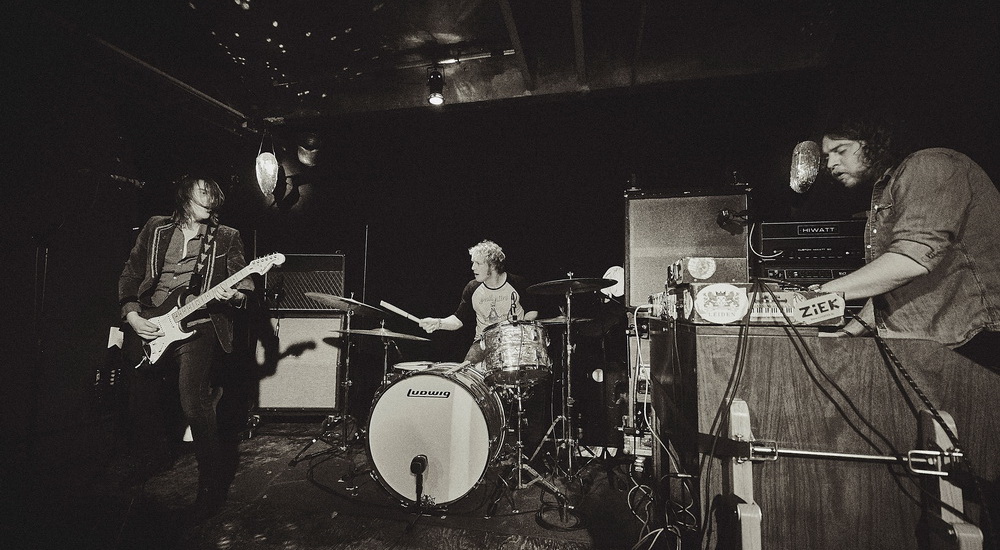
But where do you get new input to start writing a new album? Other bands? Your side projects? Or just jammin’ in the studio?
You fiddle around with something you just created on the spot, maybe while we’re going around Europe, and then someone says “You should remember that”. That means that we have all these small bits and pieces, a start of songs, and then you combine these fragmented pieces and work on it.
We also jam on stage which ultimately turn into a new idea. And of course other bands – modern music, not only bands form the sixties – inspire us as well. We listen to everything from jazz to heavy metal, and everything in between (laugh). Even classical music is on the playlist.
And it ends up in psychedelic rock in the way anyway?
It’s difficult to put things in a box, everyone wants to put music in categories, and if you want to call it psychedelic rock it’s fine for us. We call it “Birth of Joy”, our own music. It’s not one style in our music, it’s a mixture of styles (laugh).
Birth of Joy has been going since 2005 and a few years before I guess since you met at the Herman-Brood Academy. After almost fifteen years with Birth of Joy and five albums, haven’t you felt for doing something else in music?
Well, sometimes we do. We are involved in two other projects alongside Birth of Joy; Bob and I [Gertjan] have Baskar, a fusion jazz kind of thing, and Kevin has The Cinema Escape, an electropop project with a lot of old school synthesizers such as old Russian synthesizers, and Moogs and Junos with some industrial influences but also Kraftwerk – I love Kraftwerk [Kevin].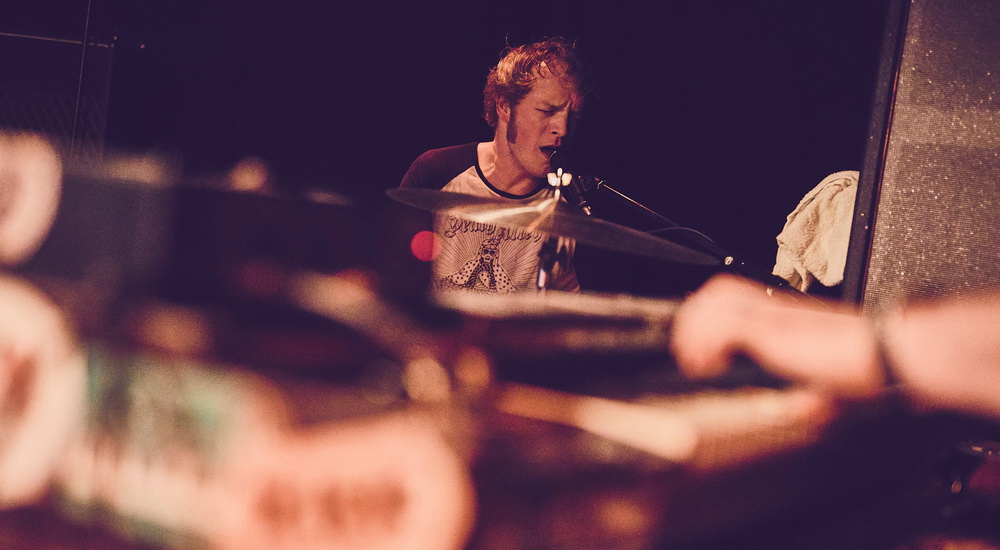
Considering your roots in psychedelic rock and its origin in the sixties and seventies, and the fact that music genres have developed much since then, what is different in modern psychedelic rock that makes it different from the sound of, for instance, The Doors, Jimi Hendrix and Cream? Is there something new to offer or is just pure nostalgia?
I think you should look for the mixture between psychedelic rock and stoner, psychedelic rock as Death Alley, a rock band actually but with this very long song that I [Gertjan] think is psychedelic rock with a hard rock feeling. You have to find the bridges connecting styles in psychedelic rock and not just listen to what The Doors did.
Is there any natural place for psychedelic rock today if you consider fans, gig opportunities etc., in particular when you think about how much rock music in general has been diffused over several new rock genres?
A few years ago there was also this movement to make it look sweeter, to take the psychedelic look and the appearance of the music, use the melodies, and transform it into something cheesy and poppy with singers that sing with a high-pitched voice [Kevin shows us] all the time. What’s the name of this band with a very psychedelic sound but extremely poppy? Tame Impala! Listen to their songs and you can see all the psychedelic projections, but in its essence it’s nothing but pop music with a psychedelic rock sound. I [Gertjin] don’t really like Tame Impala but I think they made a great job taking the sound and turning it into something modern.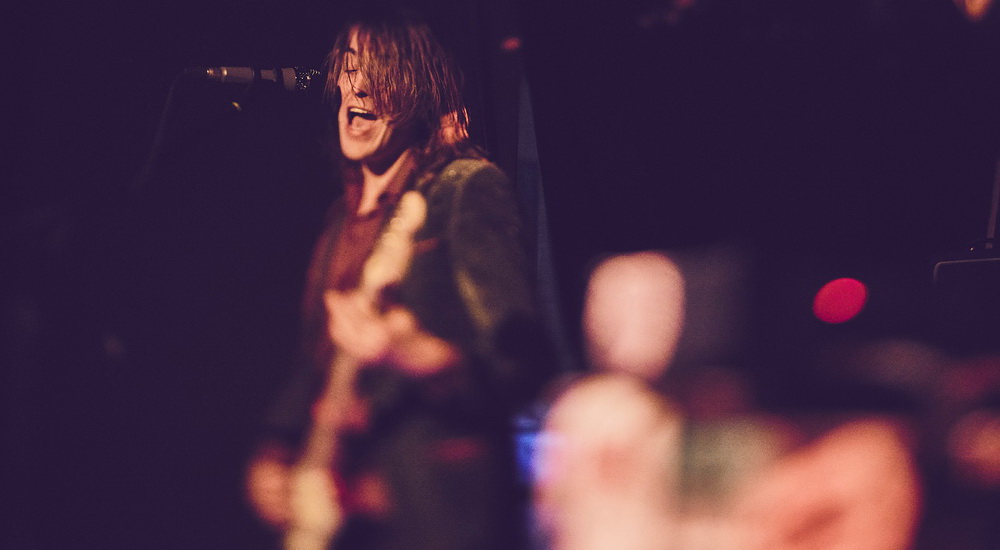
Hearing the influences of the sixties on record is one thing but on stage you also embody the elements of the sixties psychedelic rock tradition. What is your take on your live shows?
Most of it comes naturally on stage, that’s what come out of our way to collaborate on stage. We also noticed that the crowd kind of liked our way and we try to use it to our advantage, not consciously though. We like to entertain, to have fun and have a good time! It’s fun to hear people say like “You’re so into the music when you’re on stage” but you don’t really think about it. Maybe it helps us out that we have been doing this for ten years now
So what can your Hamburg fans expect tonight?
Fire and a rock n’ roll show! (laugh)
Photographer: © Julia Schwendner
Photo gallery
Birth of Joy pages


Messed!Up recommends
